
Finding Pockets of Light
A lot of photographers pack up when the sun hits its peak. For me, it is one of my favorite times to shoot.
Many think that mid-day light is something to survive rather than seek out, too harsh, too flat, too unforgiving and for a lot of shooting situations, that's fair. However, for the past few years I've been chasing something that only exists because of that punishing overhead sun, not in spite of it, pockets of light.
What a Pocket of Light Actually Is
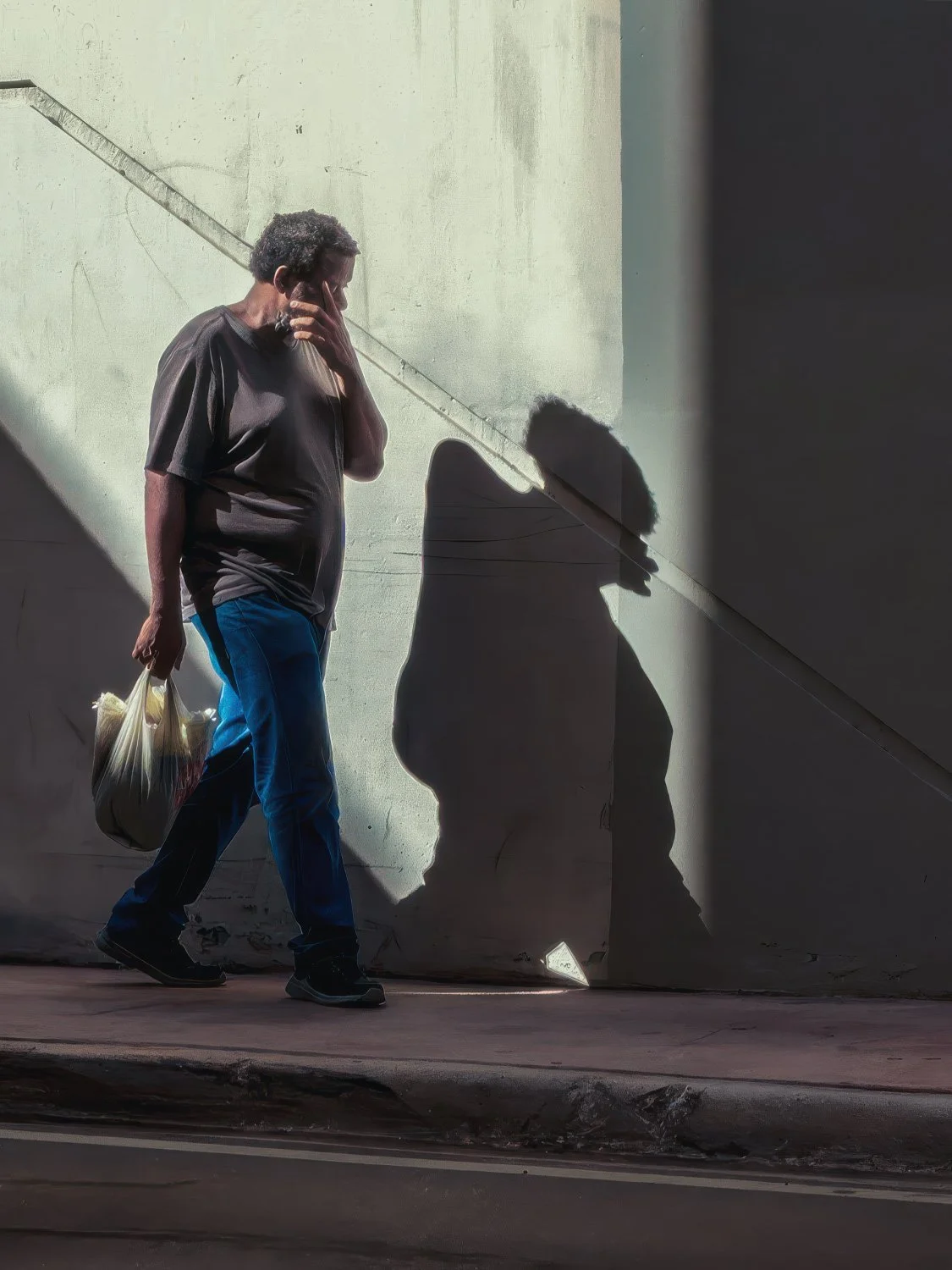
Miami's streets are full of natural light cutters such as buildings, colonnades, overhangs, construction hoardings, parking structures. At golden hour the light floods everything evenly and that's beautiful in its own way. But at noon, when the sun is nearly vertical, those same structures carve the light into something precise. A shaft. A pool. A diagonal slash across a wall.
The result is a defined pocket of light surrounded by deep shadow. Walk into it and you're lit. Step out and you disappear. That hard edge between the two is where the image lives.
Why Mid-Day Is Worth Your Time
The geometry of high sun creates conditions you simply cannot replicate at golden hour. A few things happen all at once:
The contrast is at its maximum. Hard overhead light means shadows are short, dense, and sharp-edged. The difference between the lit pocket and the surrounding darkness is as dramatic as it gets, no graduated transition, just a clean line.
The pockets are small and specific. This is the key thing. At golden hour the light is generous — it fills whole blocks and flatters almost everything. Mid-day light is stingy. The pockets are narrow, precise, and they move fast as the sun shifts. You have to find them, position yourself, and wait. That discipline makes the shot.
People are still out. Early morning and late evening have beautiful light but quieter streets. Mid-day the city is alive, workers on break, people running errands, traffic moving. There's no shortage of subjects walking into your frame.
The Shadow Is Part of the Shot
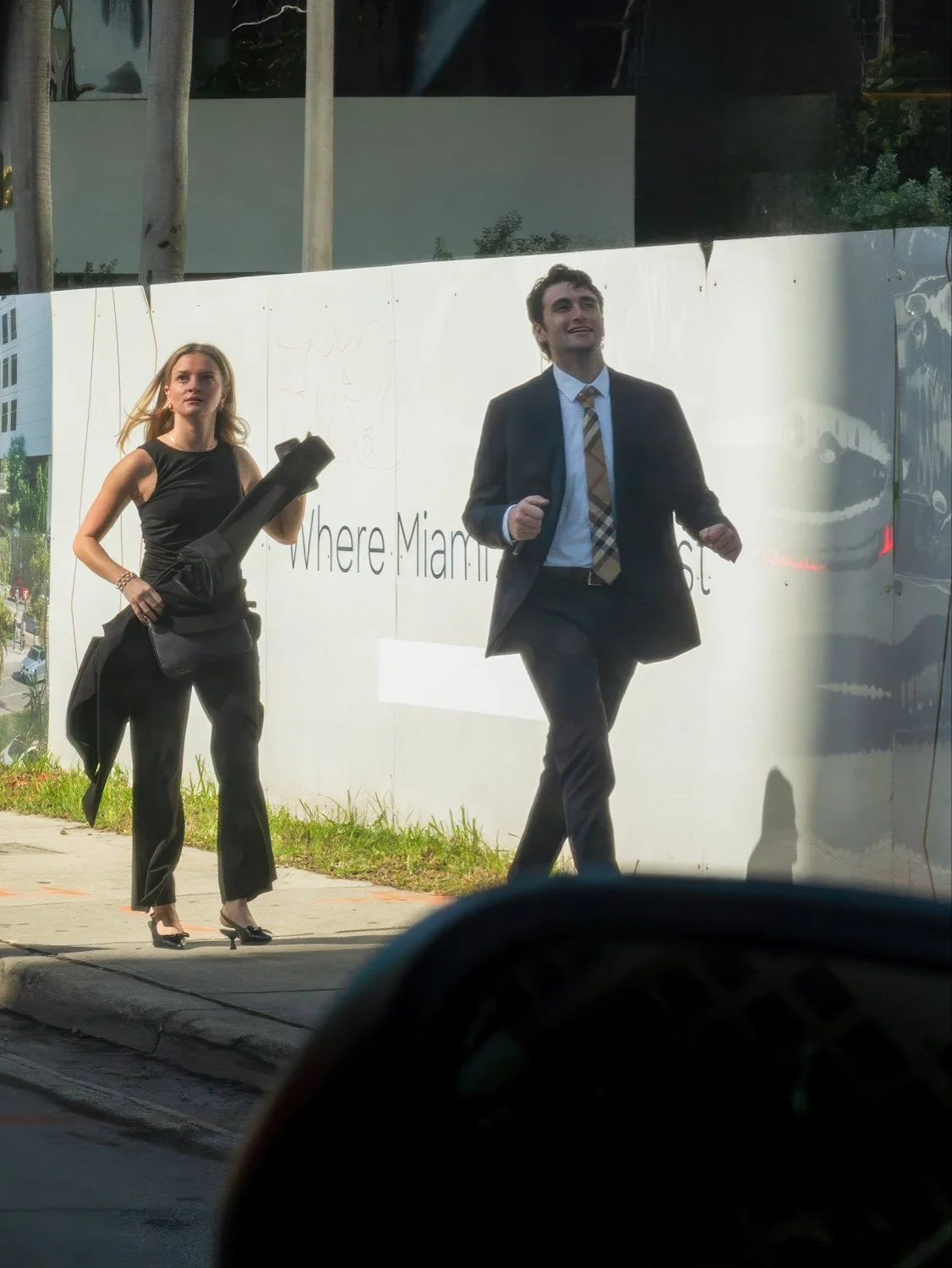
When light is this hard and directional, shadows stop being something to manage and become a second subject. In some of my favorite mid-day frames the shadow carries as much weight as the person casting it and sometimes more. Train your eye to see both when you're composing. Ask yourself: where is the shadow falling, and what shape is it making?
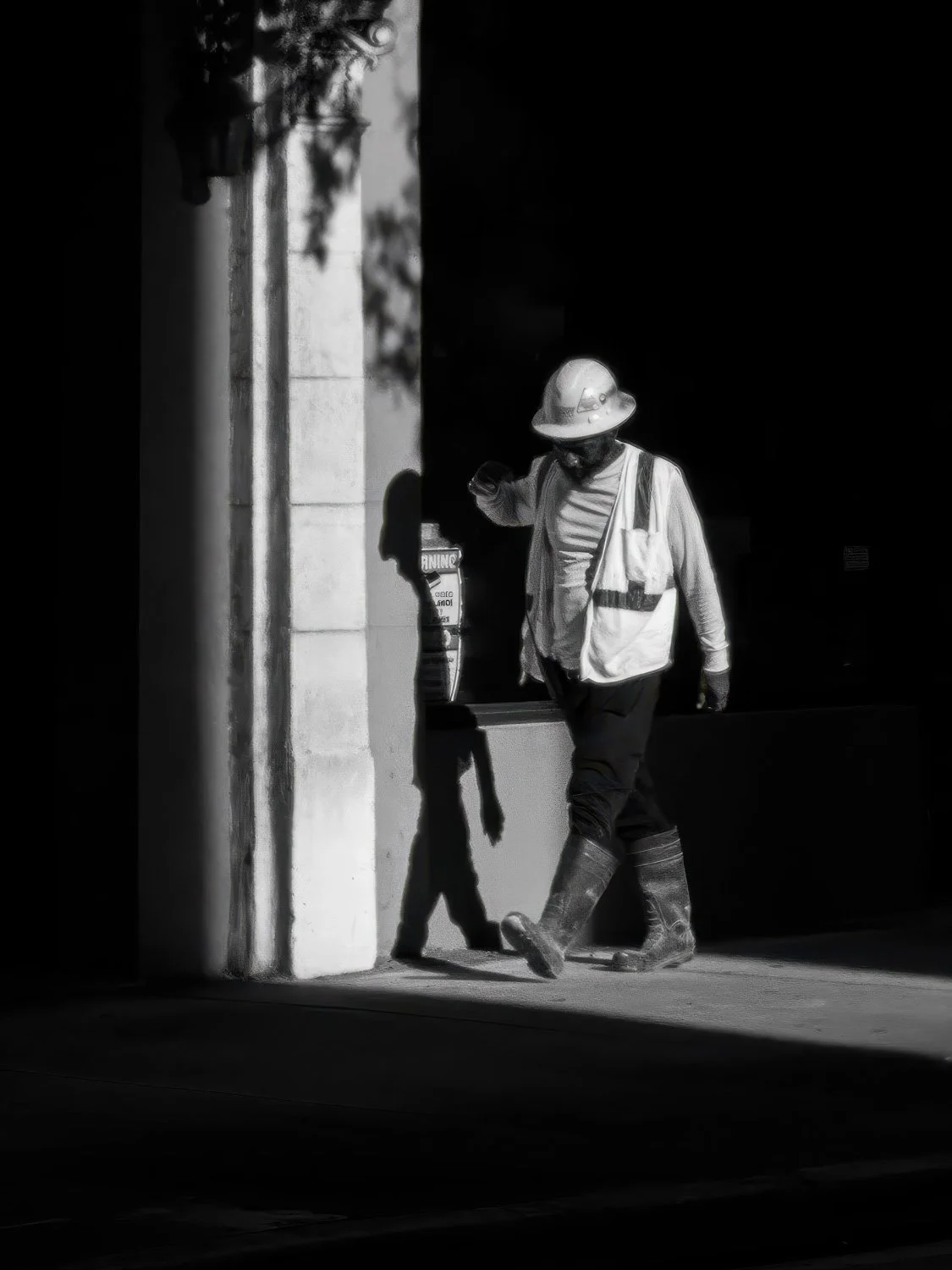
Removing color entirely is sometimes the right call. Strip out the warmth and the detail, and the only thing left is the structure of the light itself. The image becomes purely about geometry.
Light as a Corridor
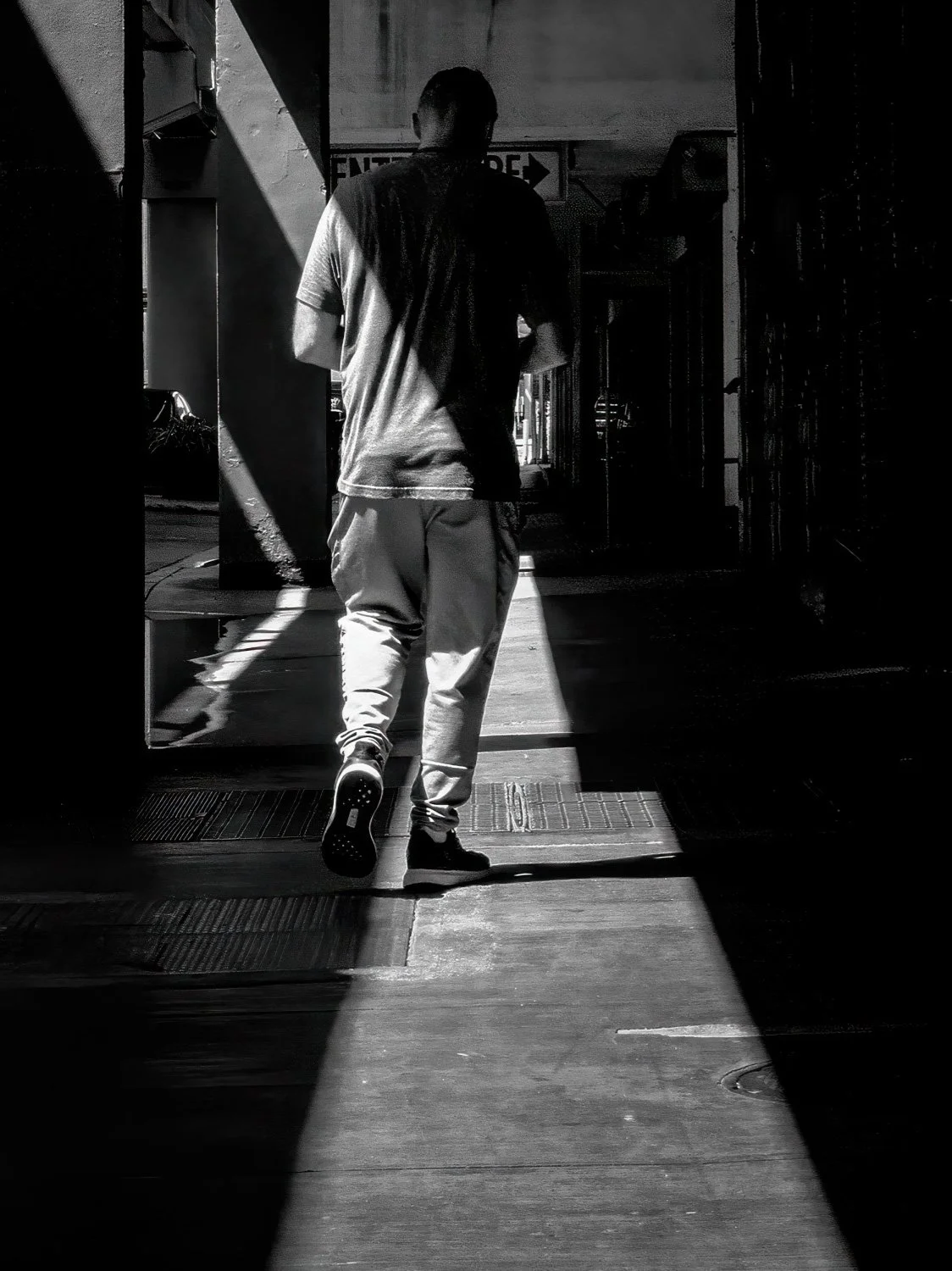
Not every pocket of light is a pool or a slash. Sometimes the light itself becomes a path — a corridor running through the frame with darkness pressed in on either side. In these situations the beam on the ground is the subject as much as the person walking through it. The figure here isn't standing in the light, he's navigating between two lit zones, moving from one pocket toward another. That relationship, the subject as a traveler through light rather than recipient of it, opens up a whole different way of seeing
Next time you're tempted to stay inside until the light gets "good," try this instead. Pick a block with a mix of open sky and shade, a colonnade, a construction site, a parking structure entrance. Get there around 11am or noon. Find where the shadow line falls and set up near it. Then wait.
The pocket will find someone. Your job is just to be ready when it does.
This is part of a small series on composition. See also Reflection Photography in South Beach, What's in the Foreground, and Frame within a Frame.
More Miami work in the Miami gallery