
Shooting low is the technique I come back to more than any other. Most people see a street from about five and a half feet up, and most photos get taken from there, too. These six were taken a few inches off the pavement, mostly in Wynwood, with two in Downtown Miami.
Why Low
The eye is used to one height. Drop the camera to the ground, and the perspective changes to something unfamiliar, so the viewer has to stop and work out what they’re looking at. That pause is the interest I’m after.
The man with the broom is a good example. At eye level, he’s a guy walking past a wall. From the ground, he towers over the frame, the purple and pink mural fills everything behind him, and his back foot is lifting off the concrete right at the lens.
The Camera
When I'm shooting low, I use one of my Sony cameras. The screen flips out, so I can drop to one knee, hold the camera down near the pavement and look down at the screen to frame the shot. With the viewfinder, or a screen that doesn’t tilt, that position is impossible. My eye would have to be where the camera is. A few inches of height changes the whole picture.Focus First, Then Manual
I set focus first, then switch to manual. Once it’s locked, I can move the camera around, nudge it lower, tilt it a few degrees, and not worry about the focus shifting every time I adjust. At ground level, you’re working partly by feel, so having one less thing to think about helps.
Water Reflections
Puddles are where shooting low really pays off. Standing over a puddle, you see a puddle. Get the lens down near the surface, and the reflection takes over half the frame.
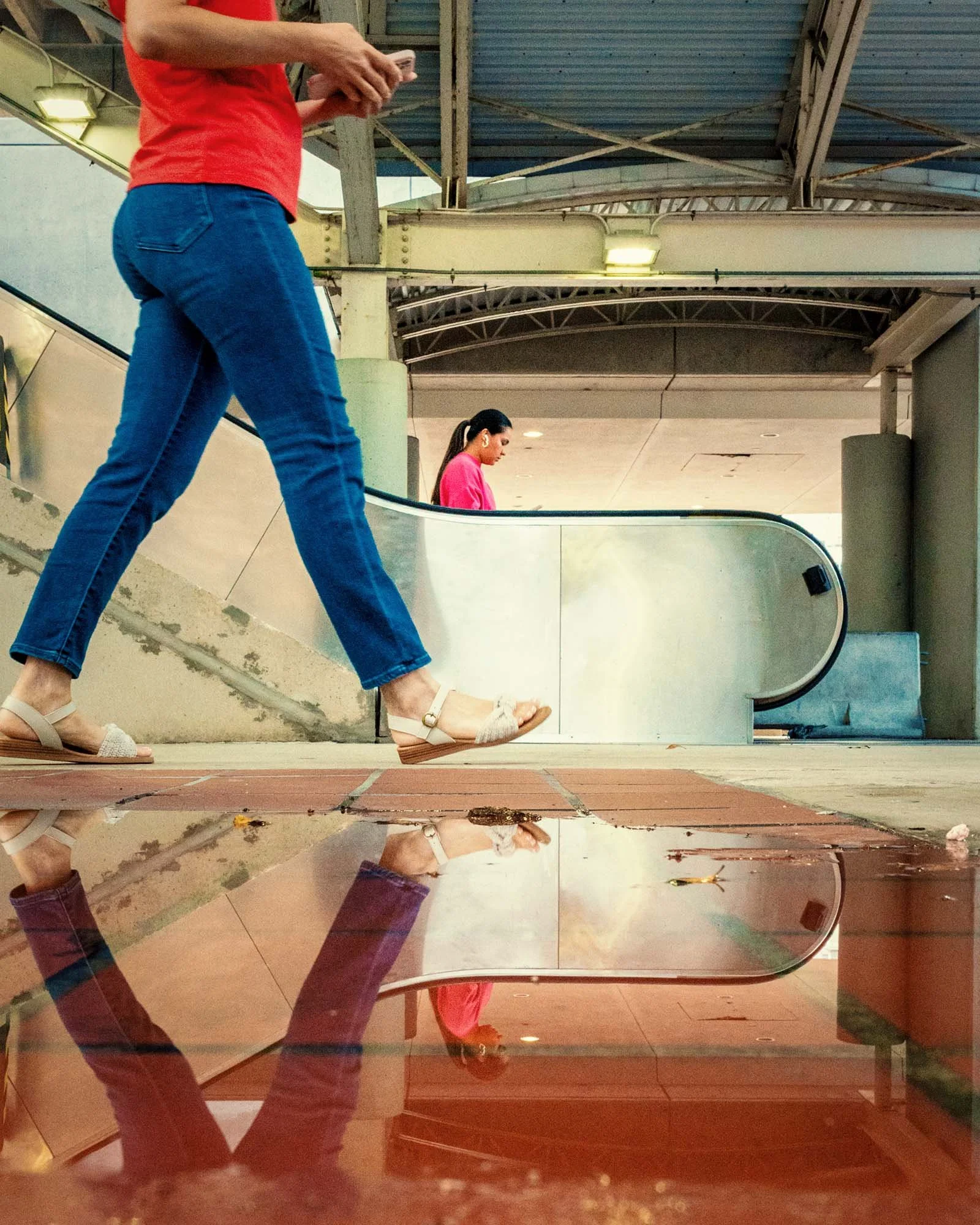
The woman in the red top is crossing a puddle under the covered walkway at Government Center, escalator behind her, and her legs come back upside down in the water along with the ceiling and the escalator rail. A second woman on the escalator, in pink, gives the background a point of focus.
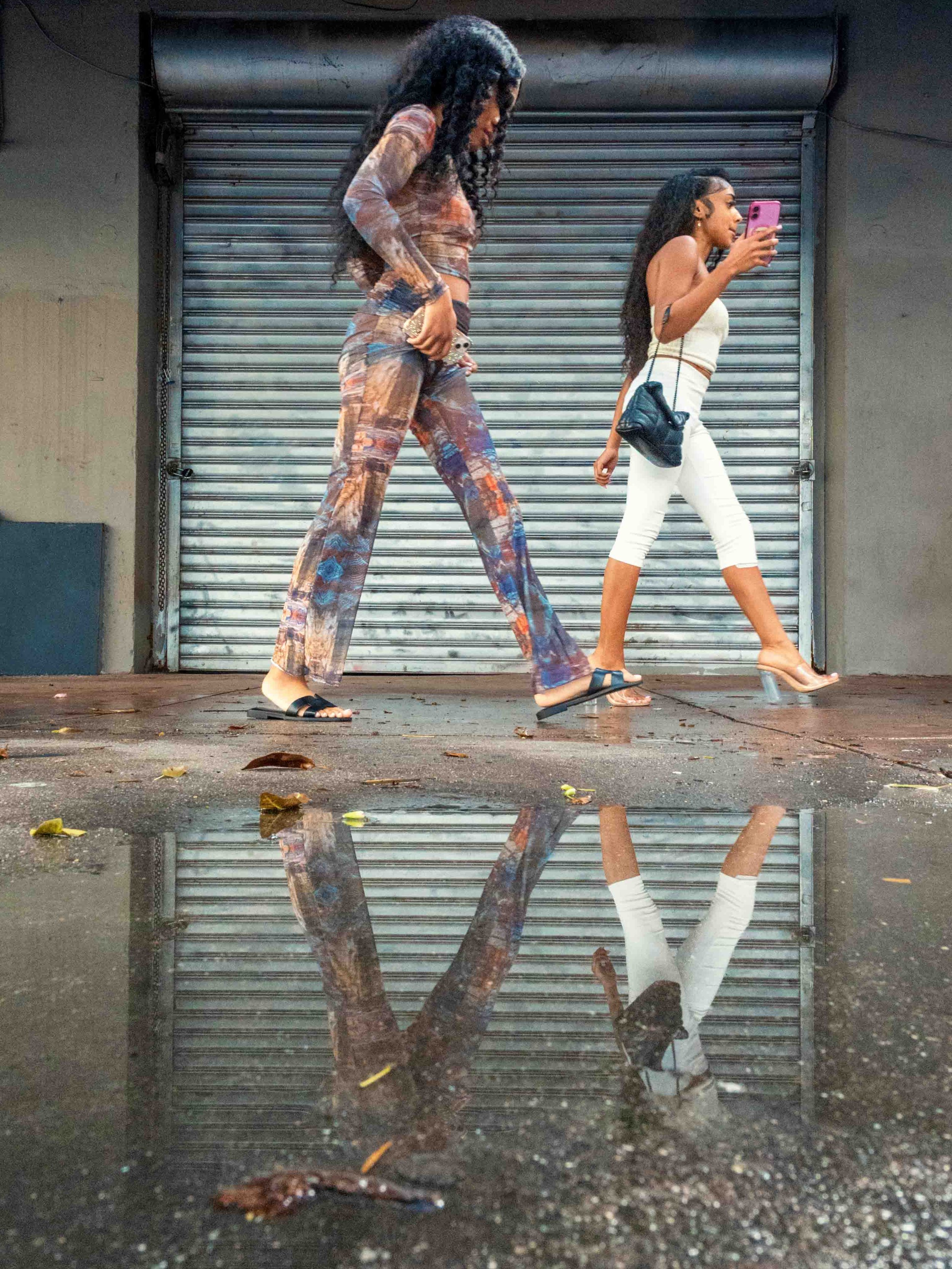
Same idea, different wall, this time on a Downtown Miami sidewalk. Two women walking past a metal roll-down shutter, and the puddle in front of them doubles both figures and the shutter lines. From standing height, that gray shutter is just a wall. From the ground, the reflection makes it a picture.
More Than One Plane
It works without water, too. Shooting low puts something big in the foreground, whether you planned it or not, with the scene stacked behind it.
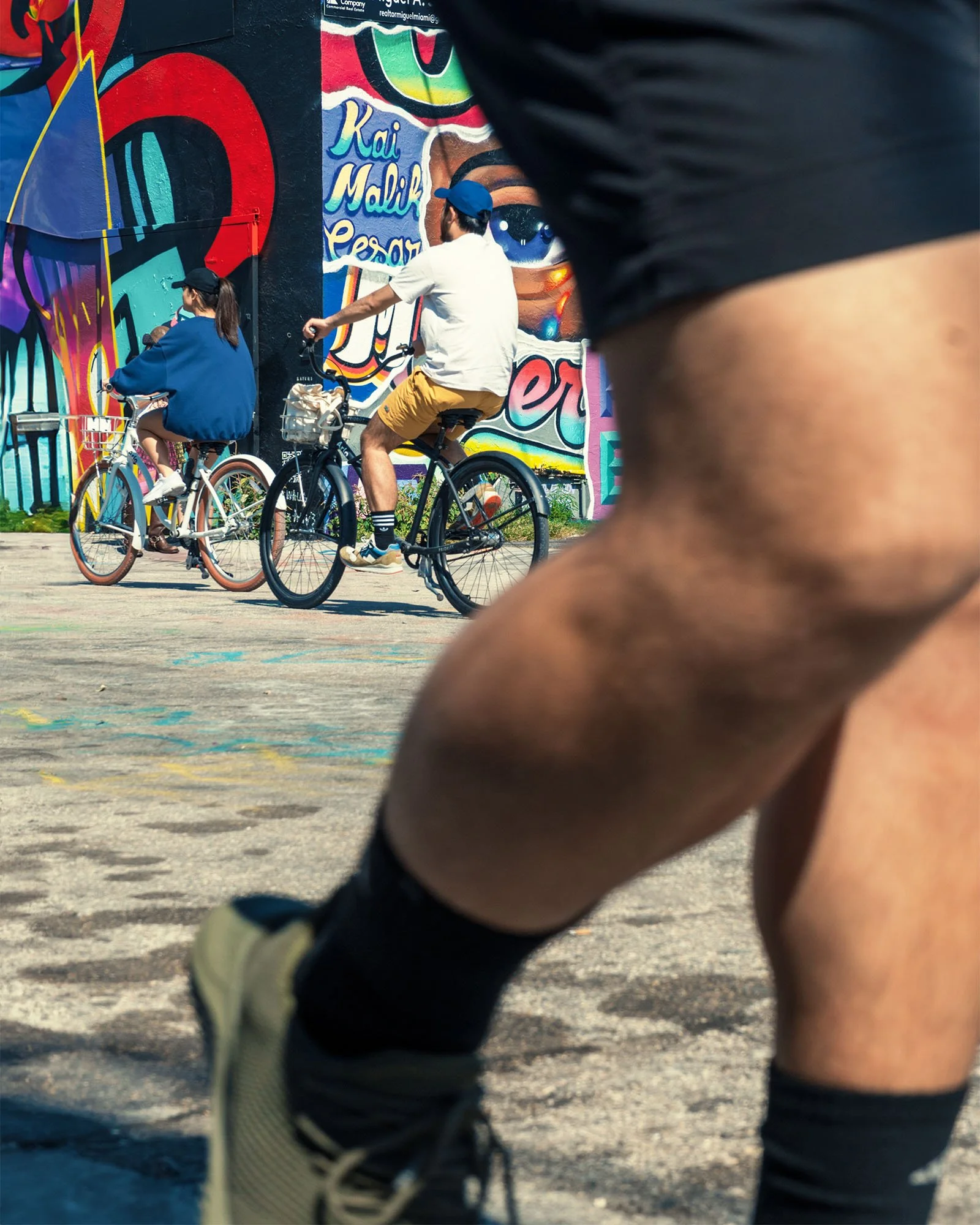
A pair of legs in black shorts and socks takes up the right side of the frame. Behind them, two people on bikes ride past a graffiti wall. Two separate moments in one frame, one of them a foot from the lens.
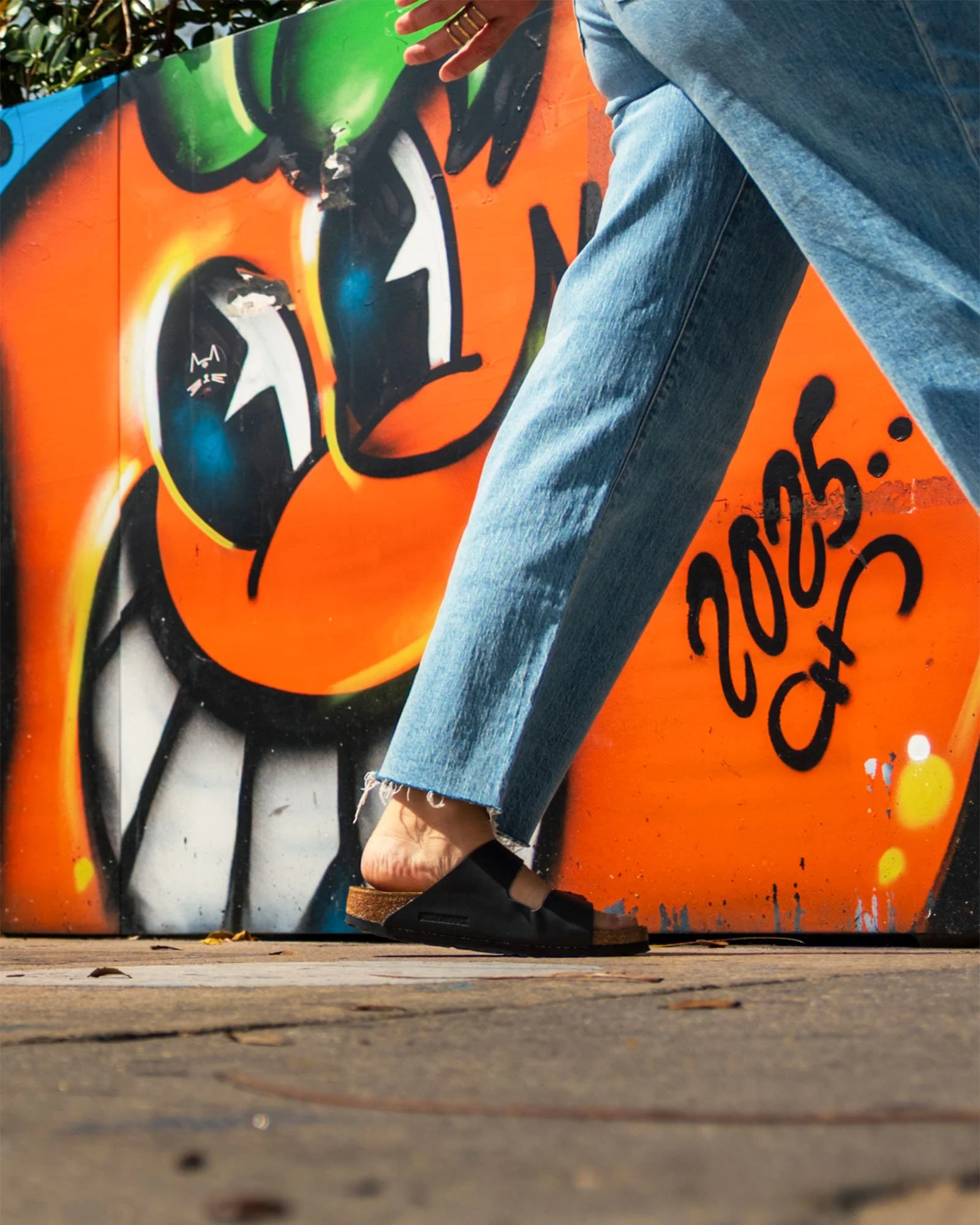
Jeans and a sandal mid-stride, cropped at the knee, in front of an orange cartoon face in Wynwood. The mural's grin is the real subject in the shot. The leg just gives it a reason to be in motion.
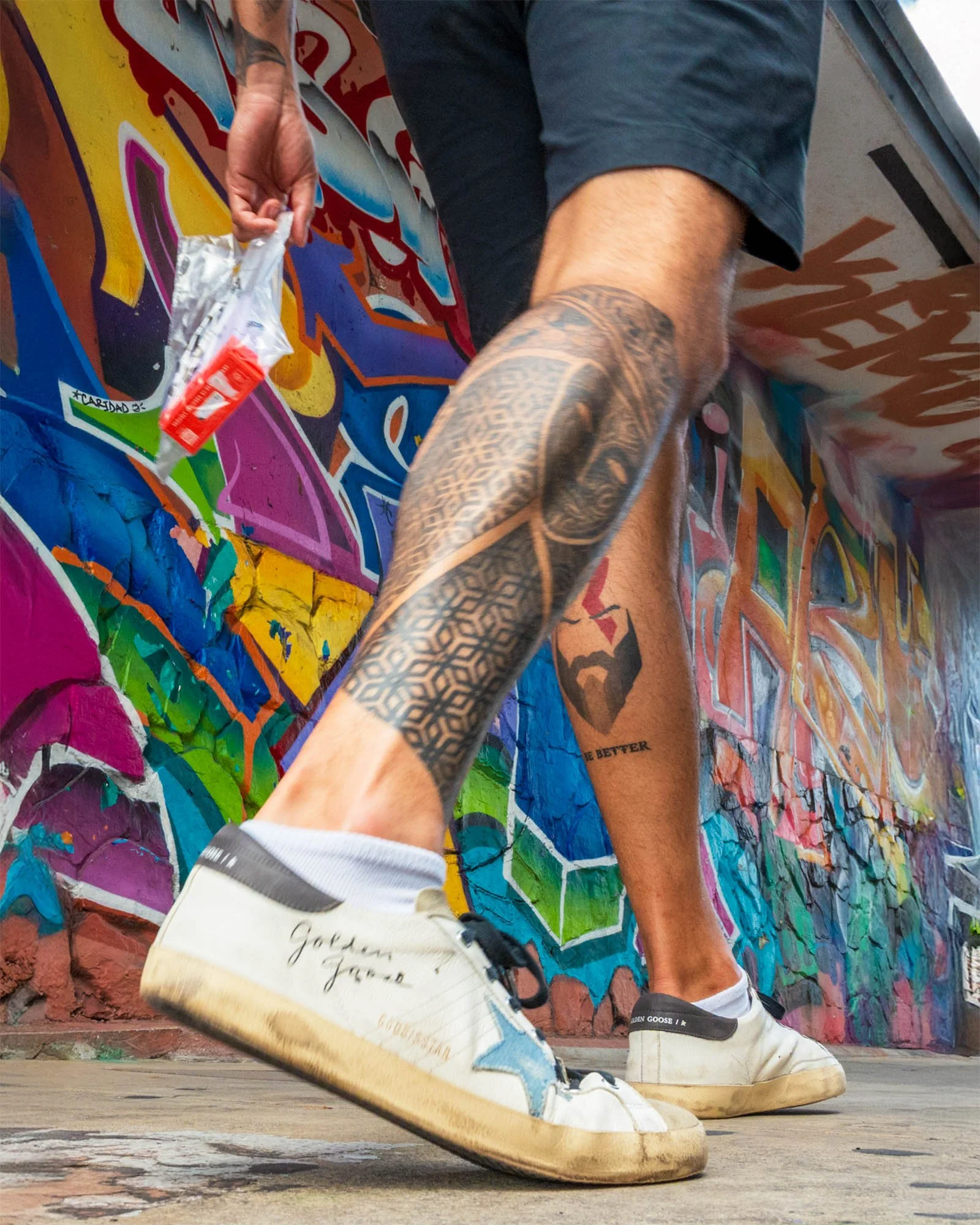
Tattooed calves and beat-up white sneakers crossing a graffiti wall, plastic bag swinging from one hand. Down here, the tattoos and the wall read as the same kind of surface.
Next time it rains, find a puddle and get the lens within an inch of the water.