
Miami's Wood-Frame Houses: One Side of the River Preserved, One Being Demolished
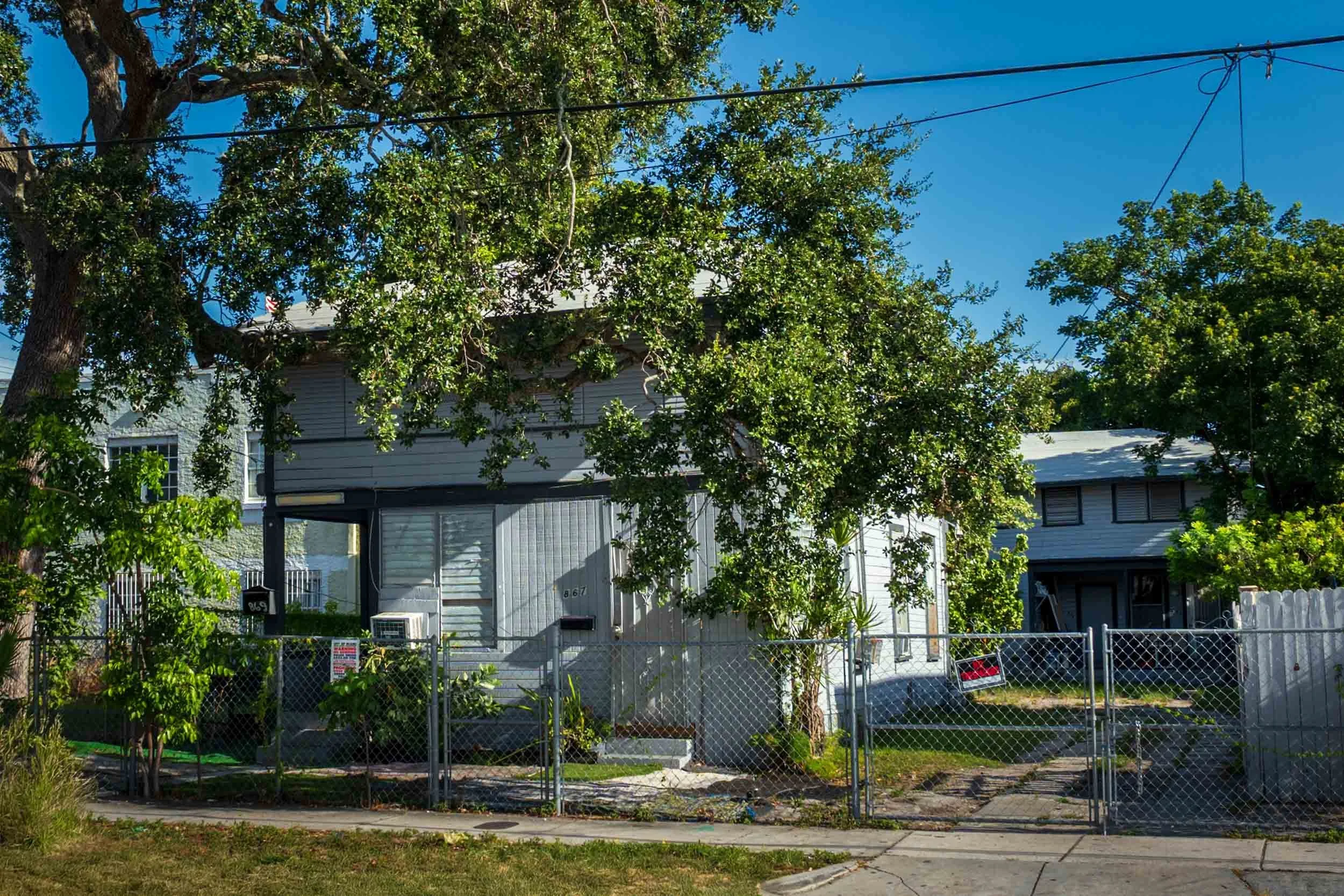
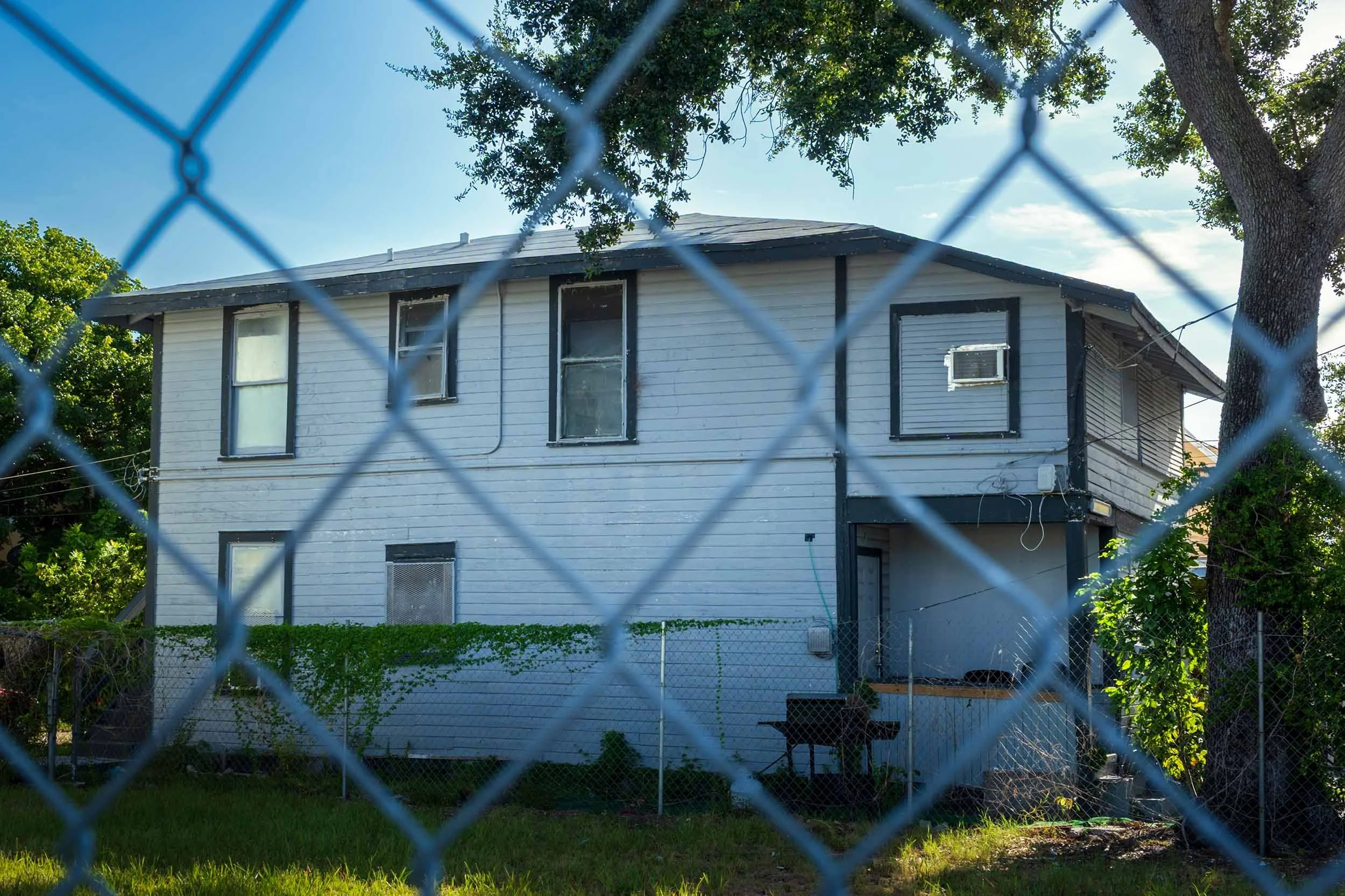
A pocket of Miami sits between the river and Flagler Street, NW South River Drive to NW 7th Avenue, cut through by the Little Havana trolley. The houses here run along NW 1st, NW 2nd and NW 6th Streets. Wood frame, low roofs, a lot of them dating to the 1920s. Only one lot on this walk, right at the corner of West Flagler itself, is currently fenced off for demolition. Several other houses nearby are already gone.
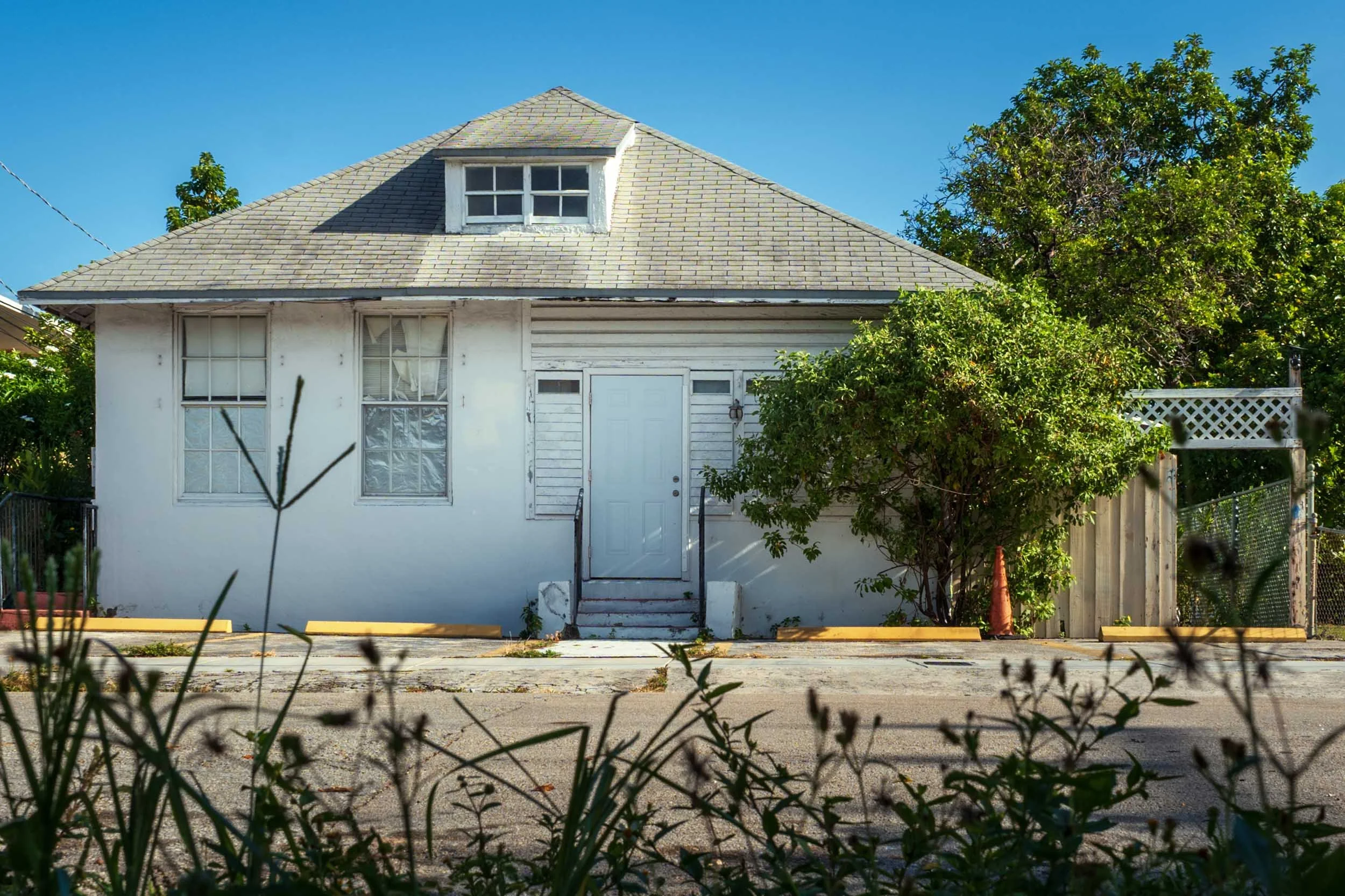
Same Houses, No Protection
Say Lummus Park in Miami and most people picture the one on South Beach, palm trees and volleyball nets. This is a different Lummus Park, a historic district on the Miami River with no beach anywhere near it. The architecture on these blocks will look familiar if you know it: same era, same Frame Vernacular style built during the 1920s land boom. Lummus Park sits directly across the river and was designated a historic district in 2006. This side of the water never was, and the difference shows in what's still standing.
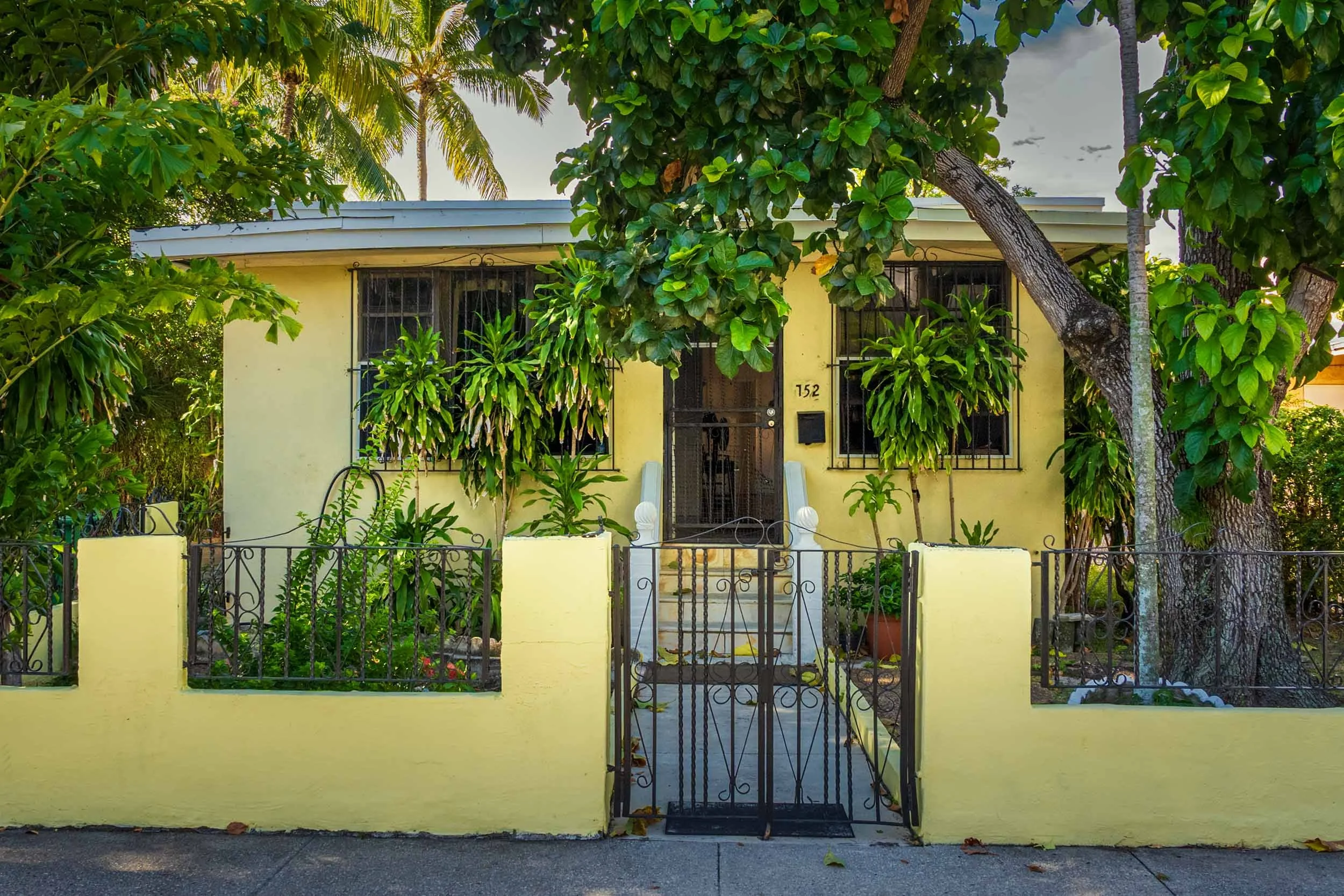
What's Already Being Cleared
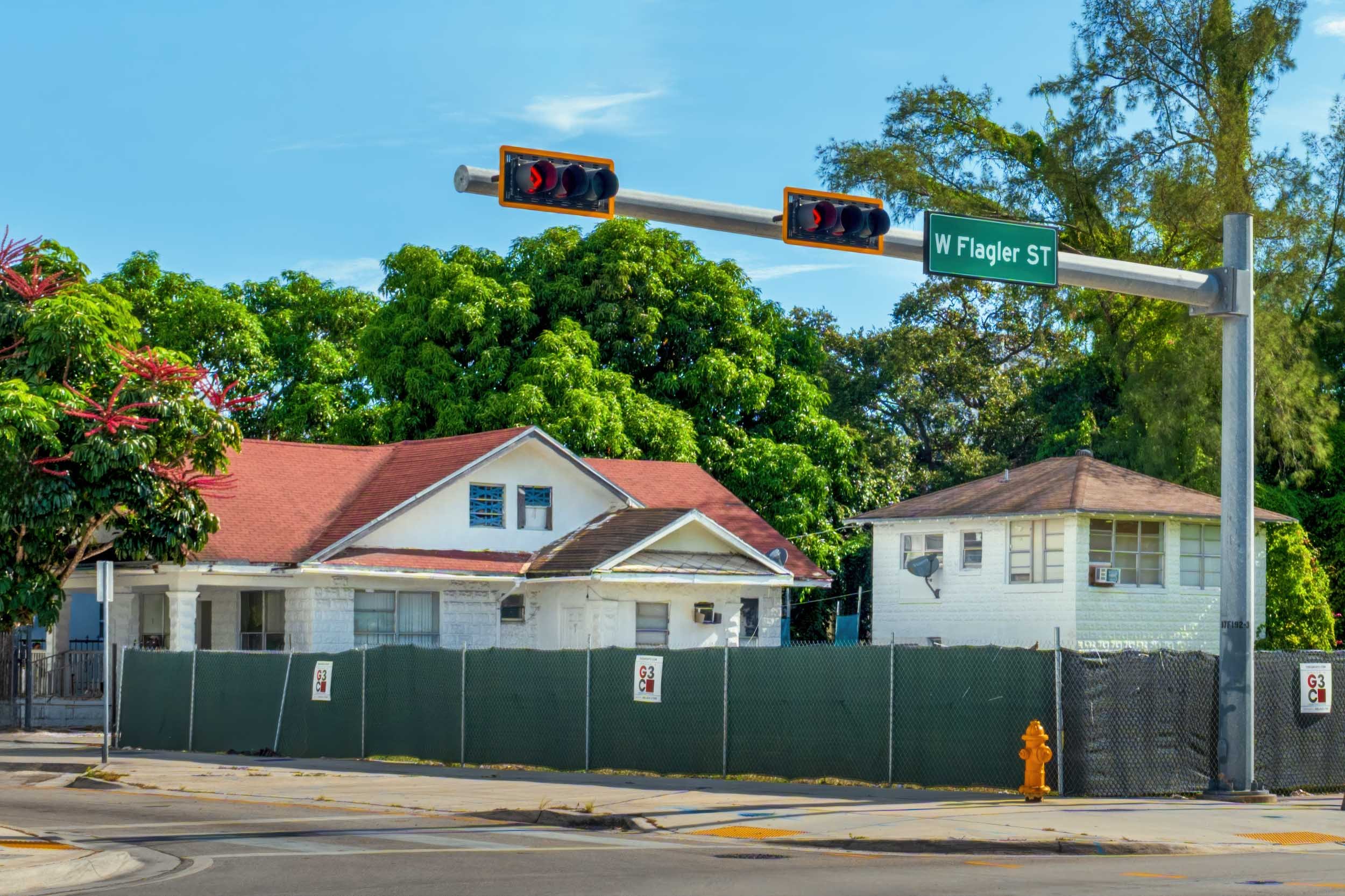
On the corner of West Flagler Street, two houses sit behind green construction fencing, a demolition contractor's signage zip-tied to it every few feet. One roofline is red barrel tile, the other a plain hip roof, probably a later addition to the same lot. Neither will be standing much longer.
The Ones Still Standing, Barely Visible
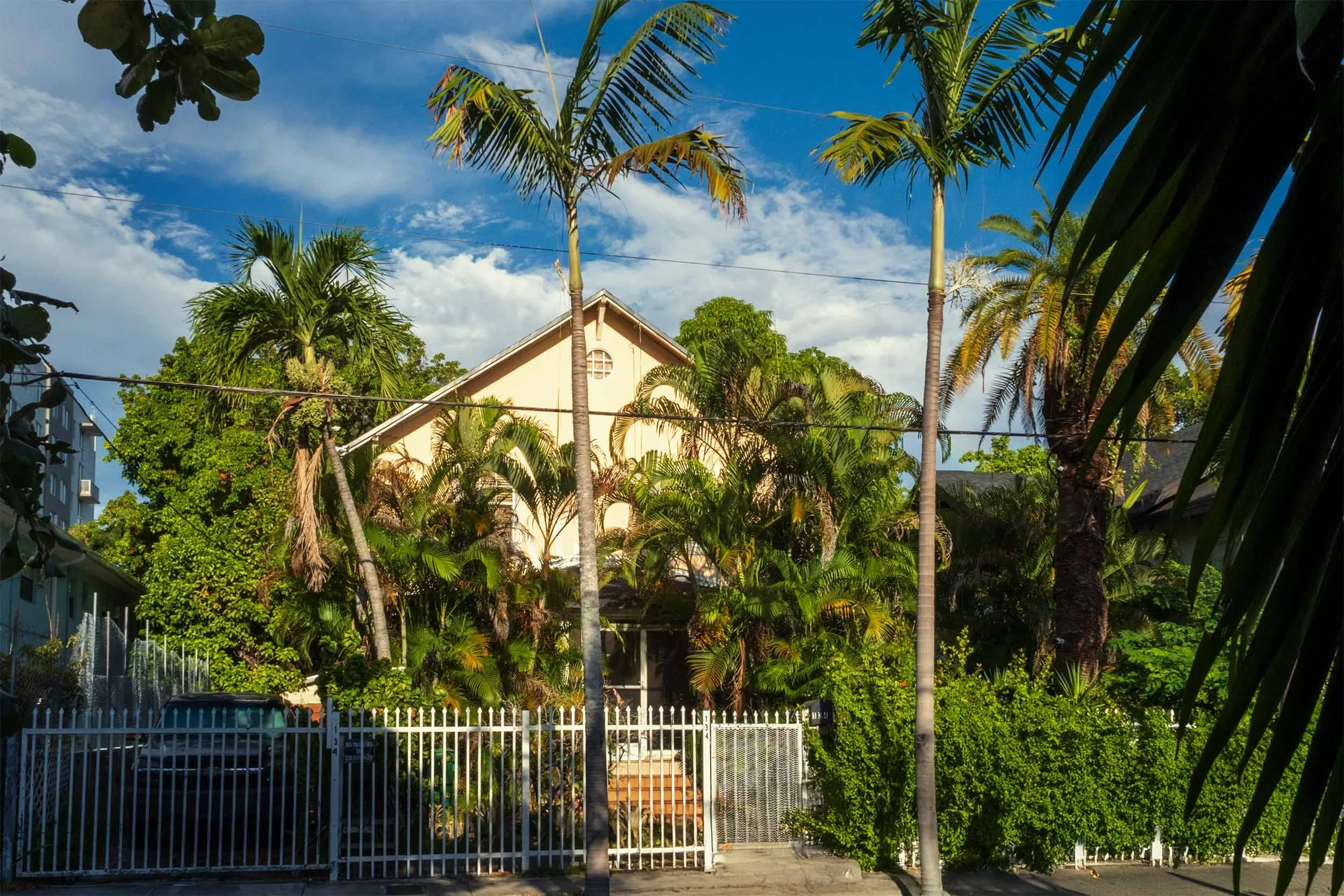
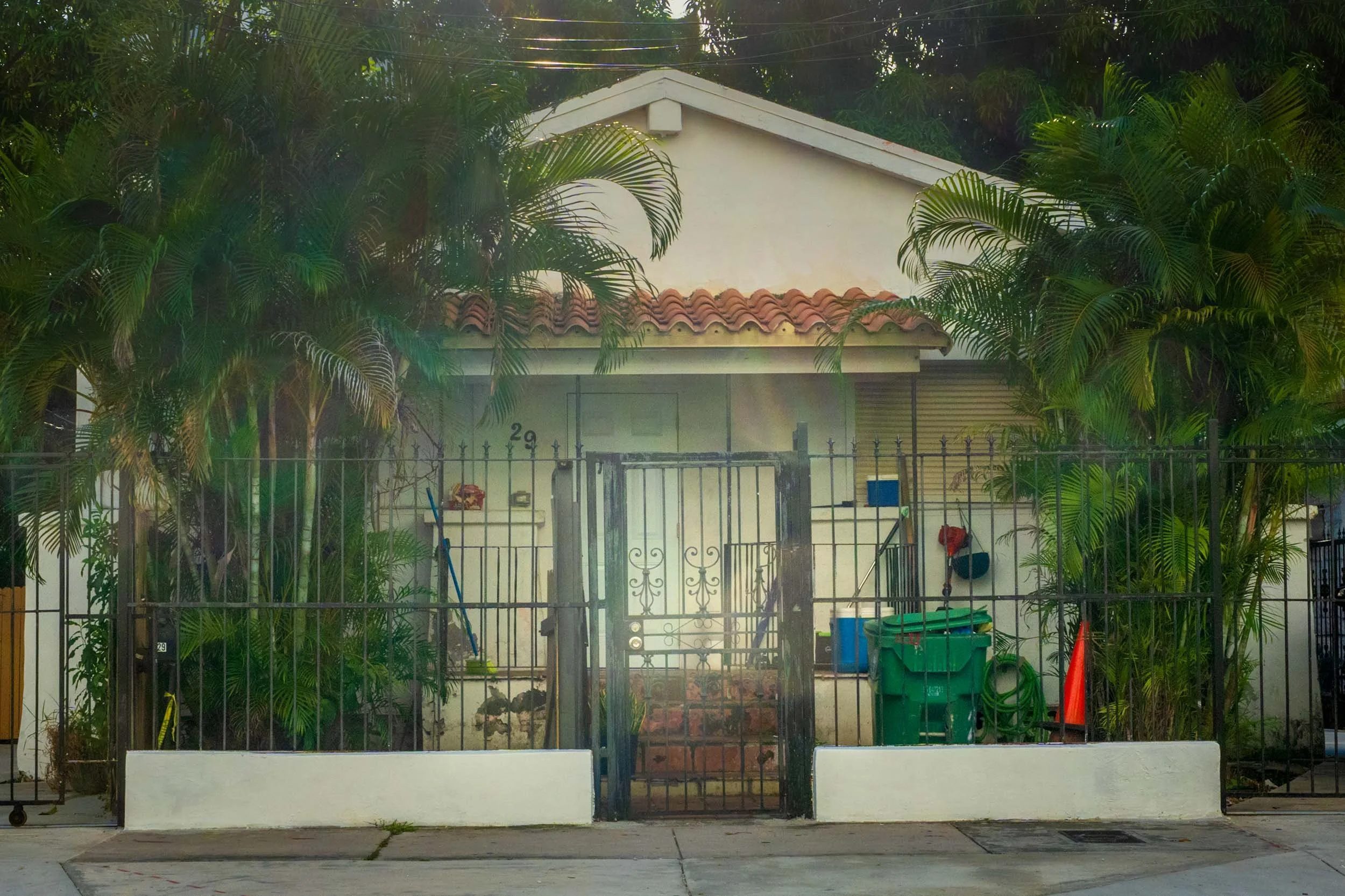
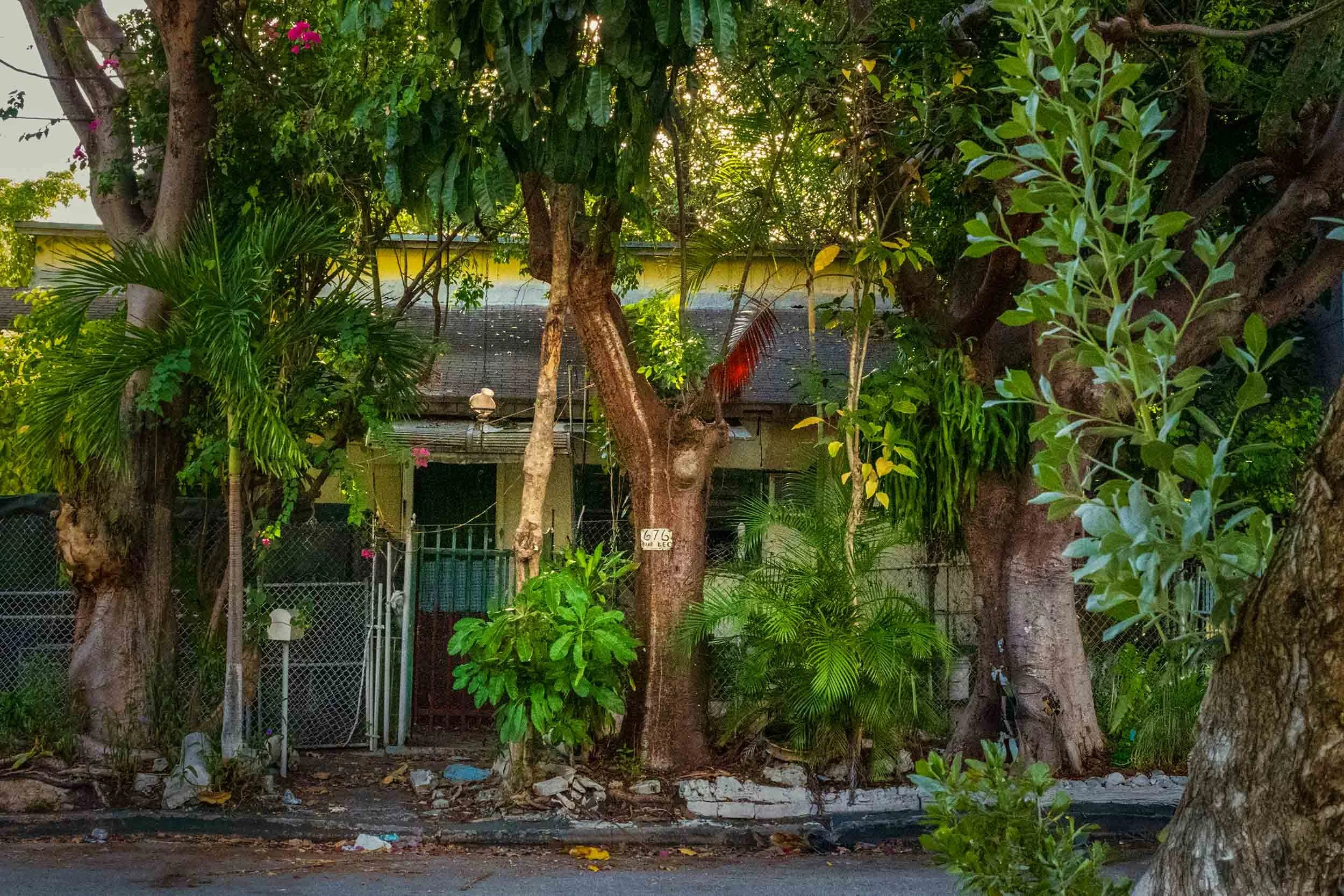
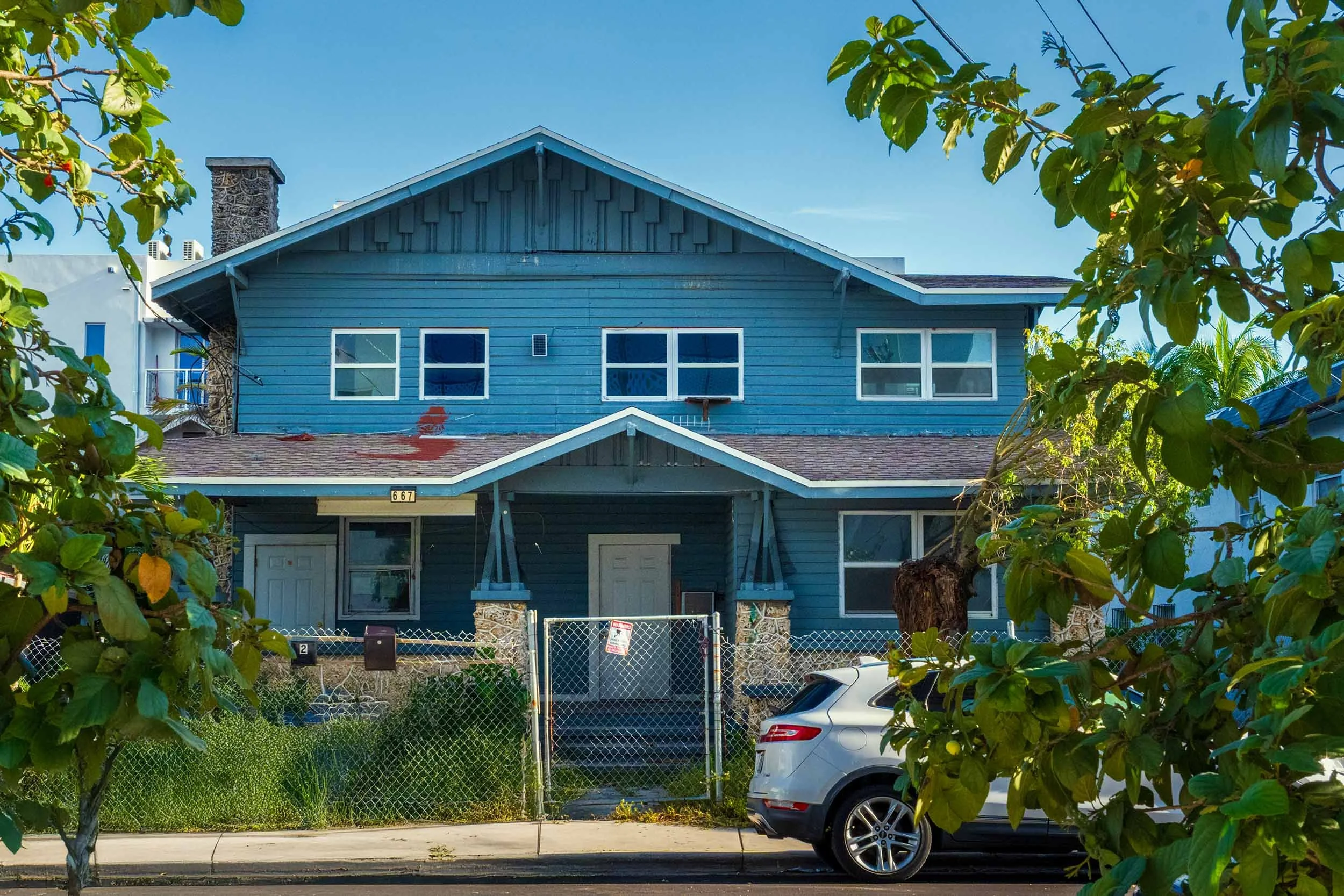
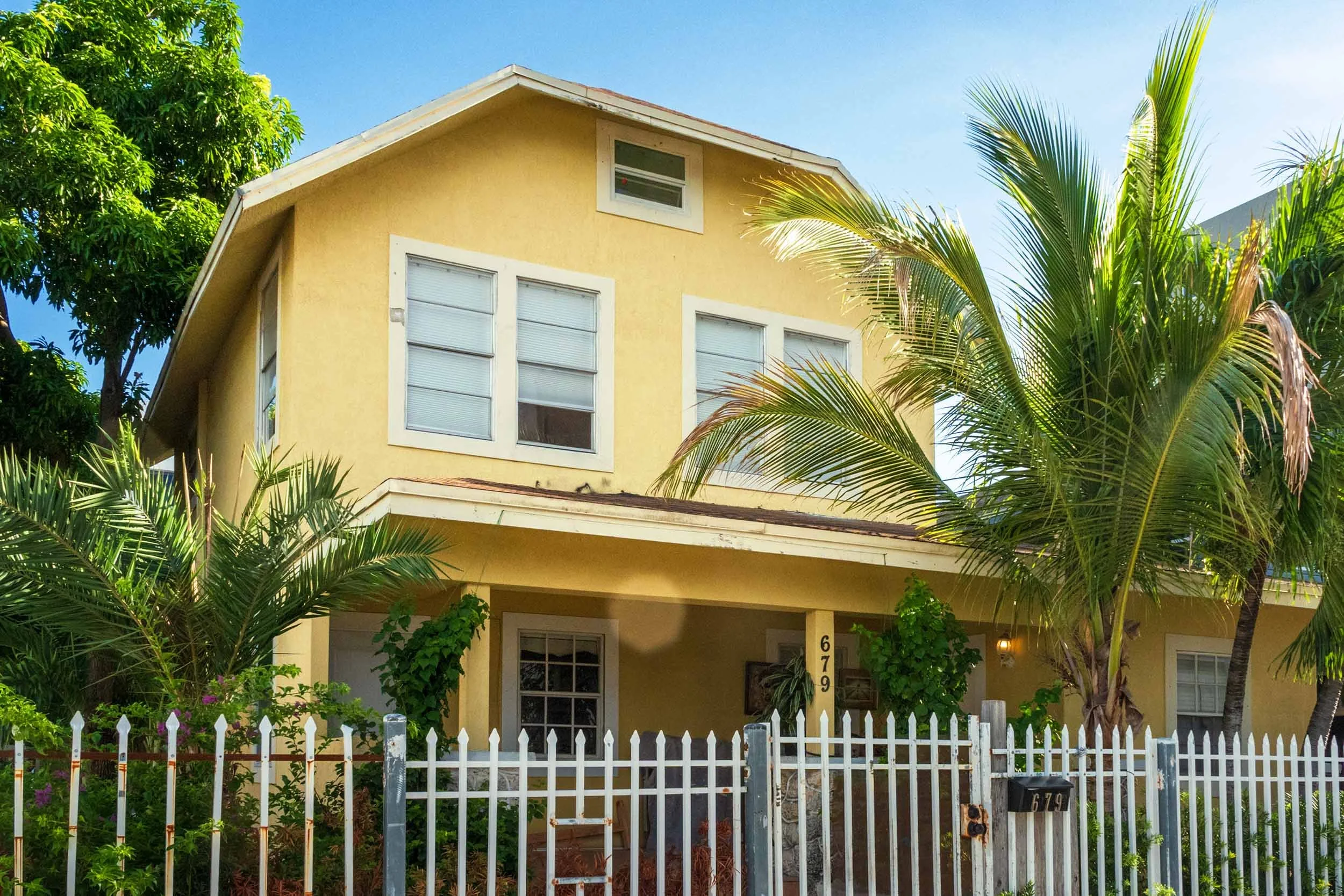
A lot of what's left on these blocks isn't gone. It's disappearing under its own landscaping, palms, ficus, bougainvillea, decades of growth nobody's cut back. Some of these houses are hard to even pick out from the sidewalk.
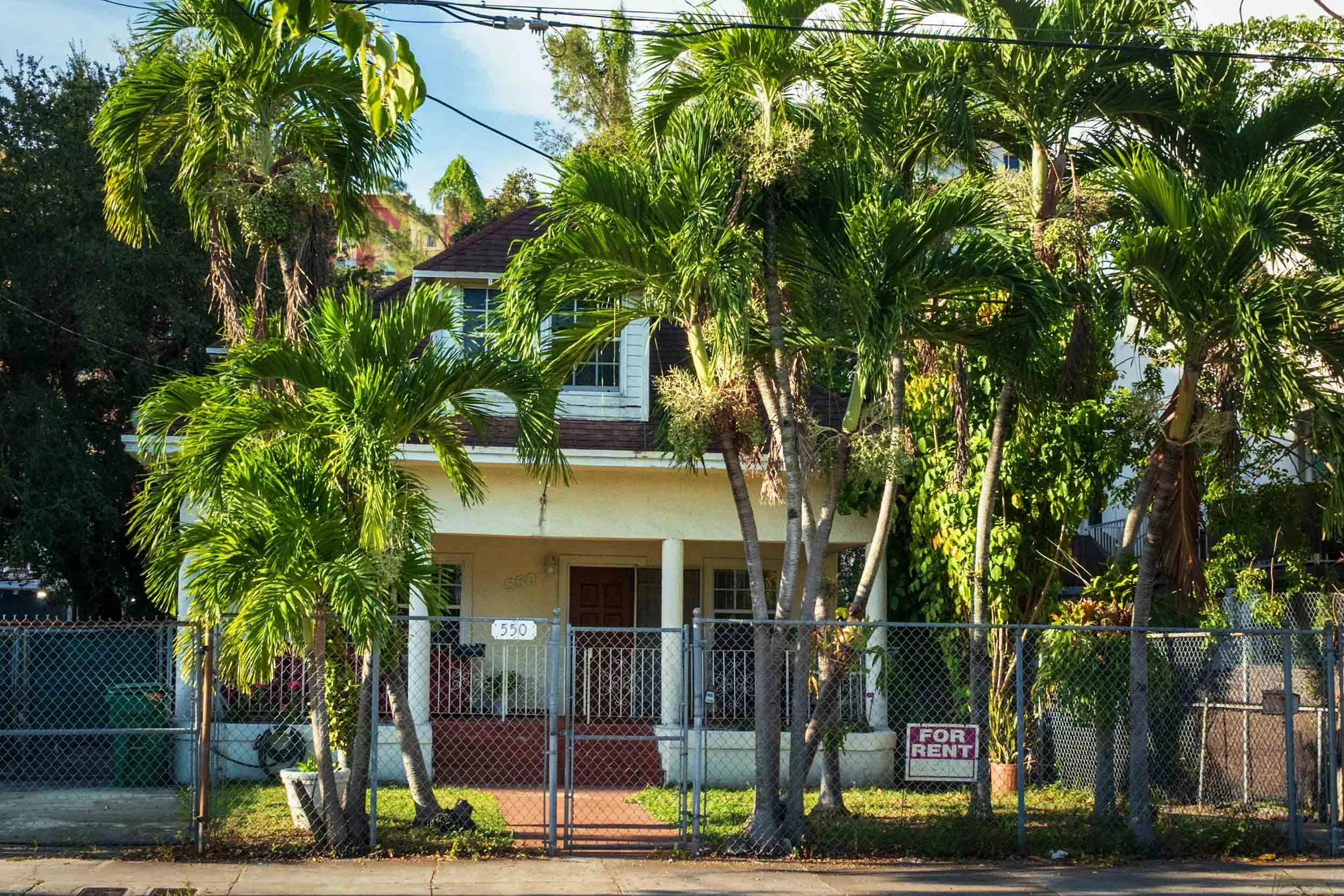
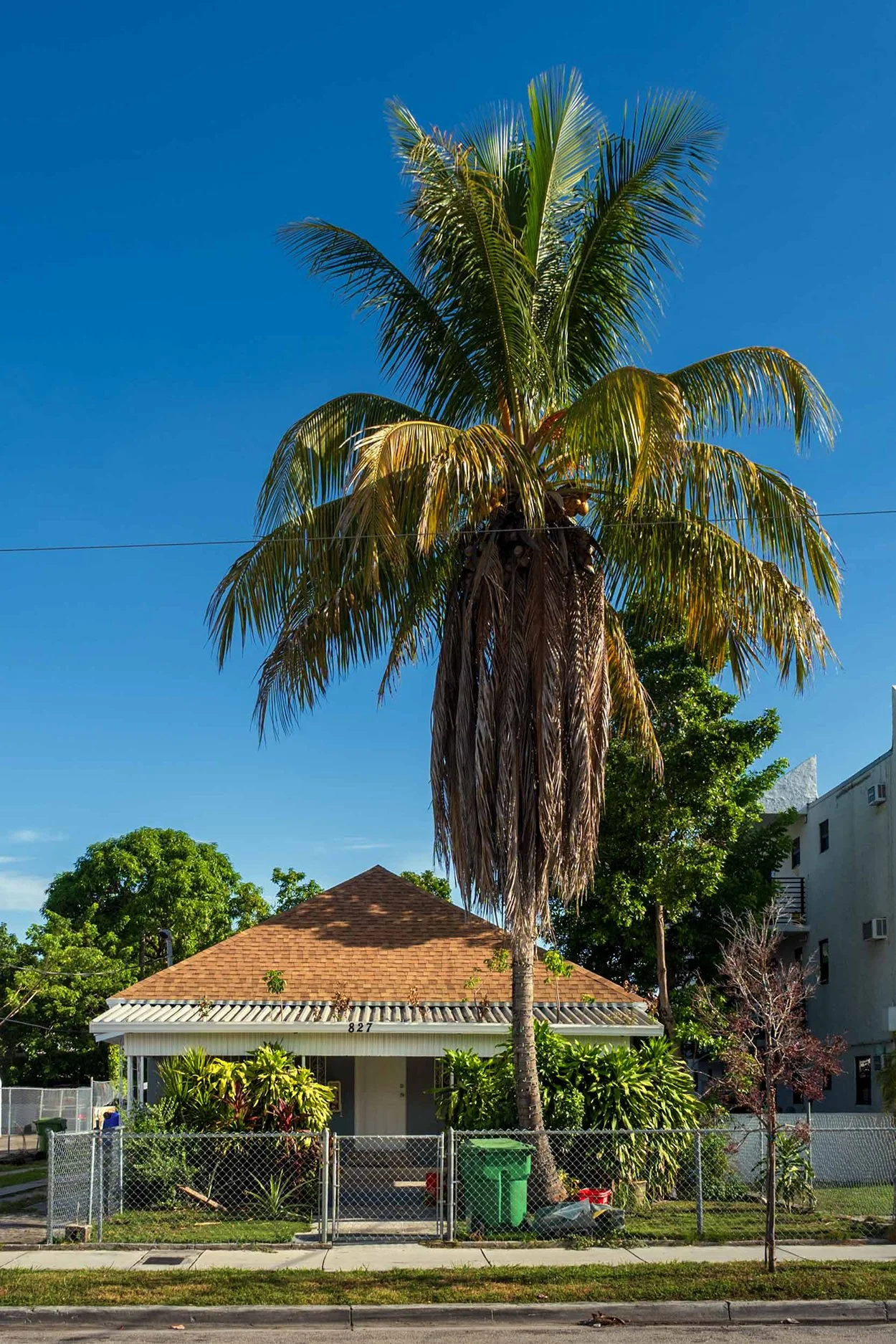
The house at 550 has a FOR RENT sign zip-tied to the fence, half swallowed by a queen palm. That's the pattern on this stretch: not condemned, not cleared, just quietly cycling through tenants while nobody invests in it.
New Money, Old Frame
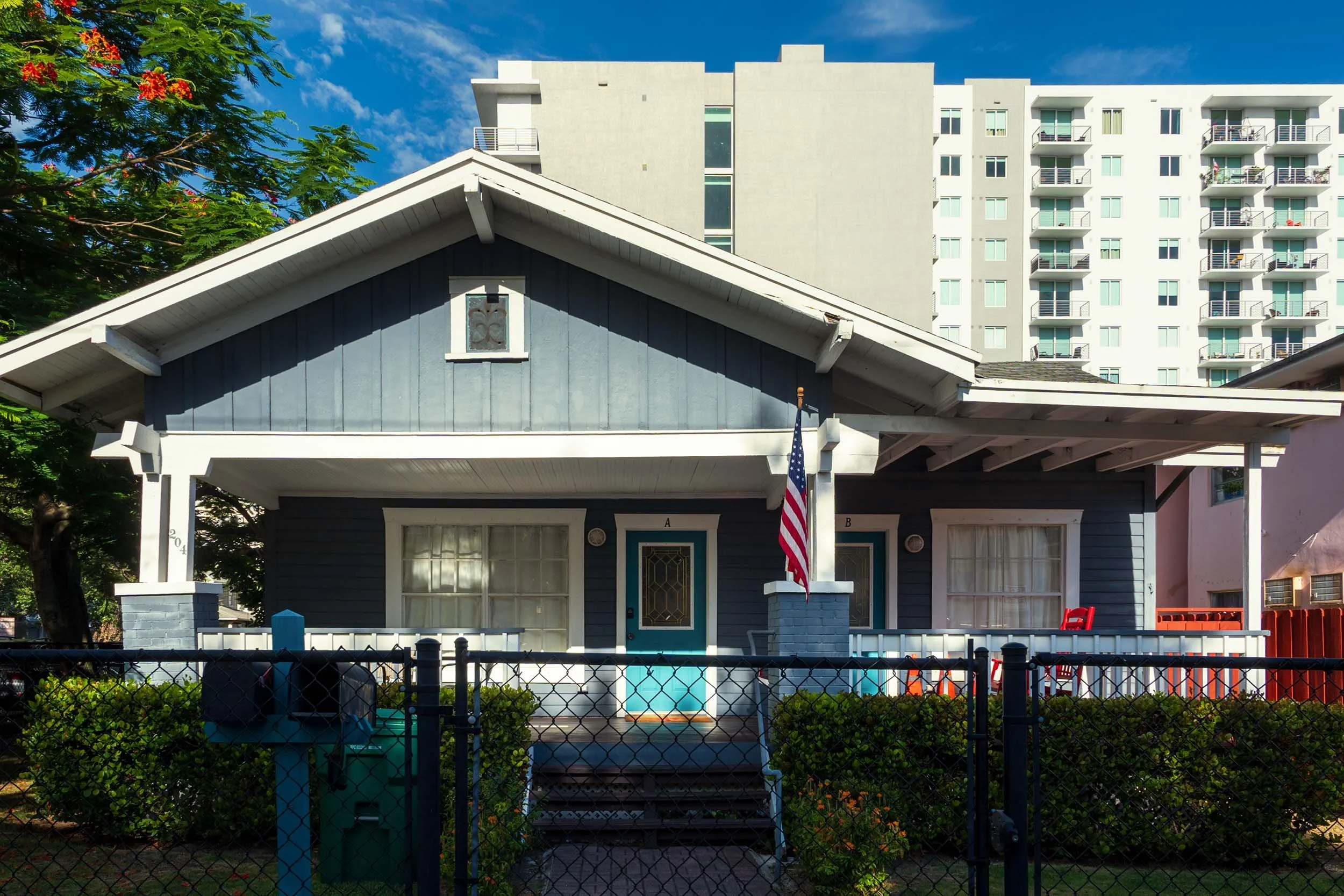
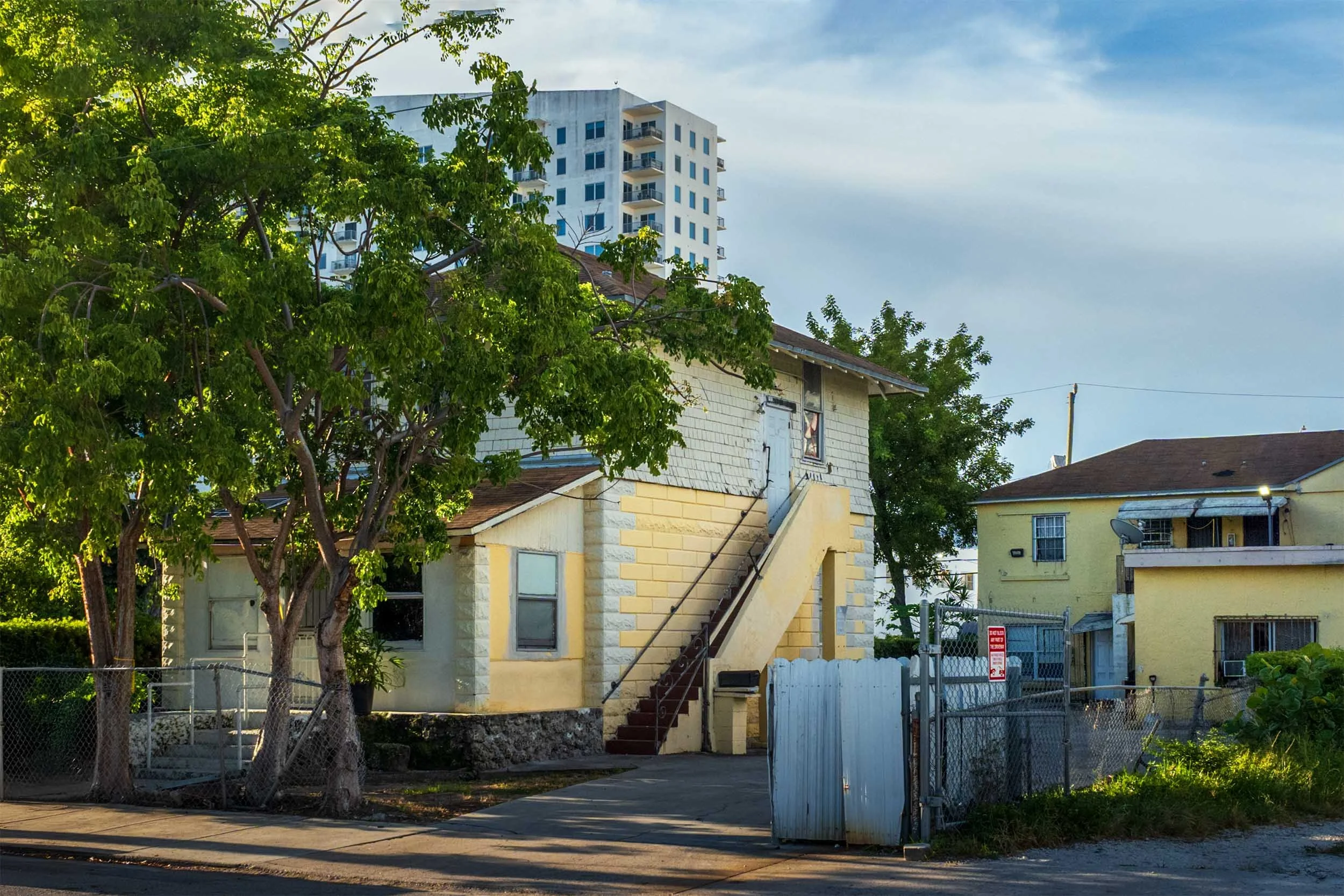
A few blocks hold both eras at once. An old bungalow roofline, a new high-rise balcony stacked right behind it. It's the same pattern you'll find in Overtown or Buena Vista: older housing sitting one block from new construction that's pricing the neighborhood out from under it.
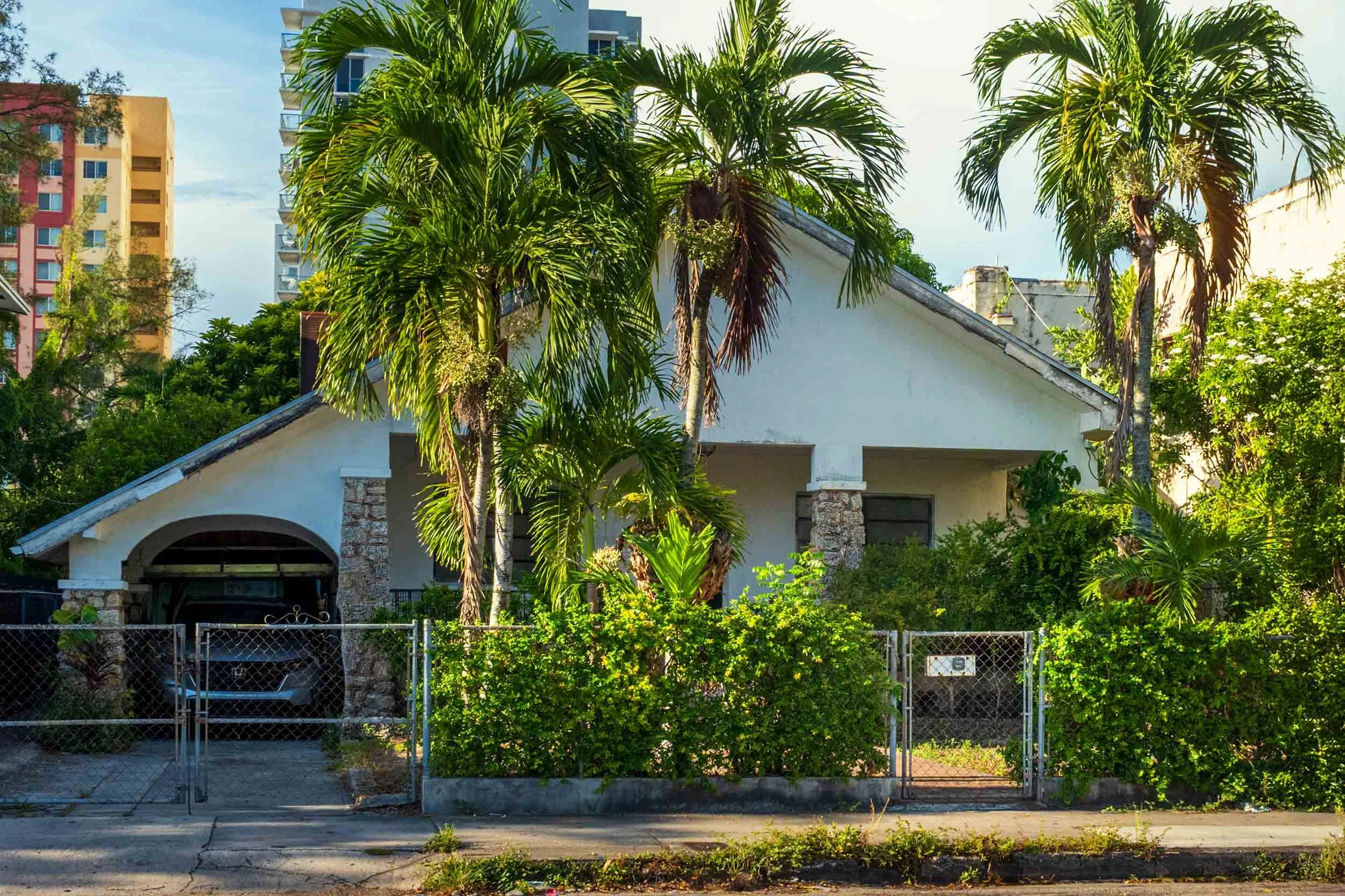
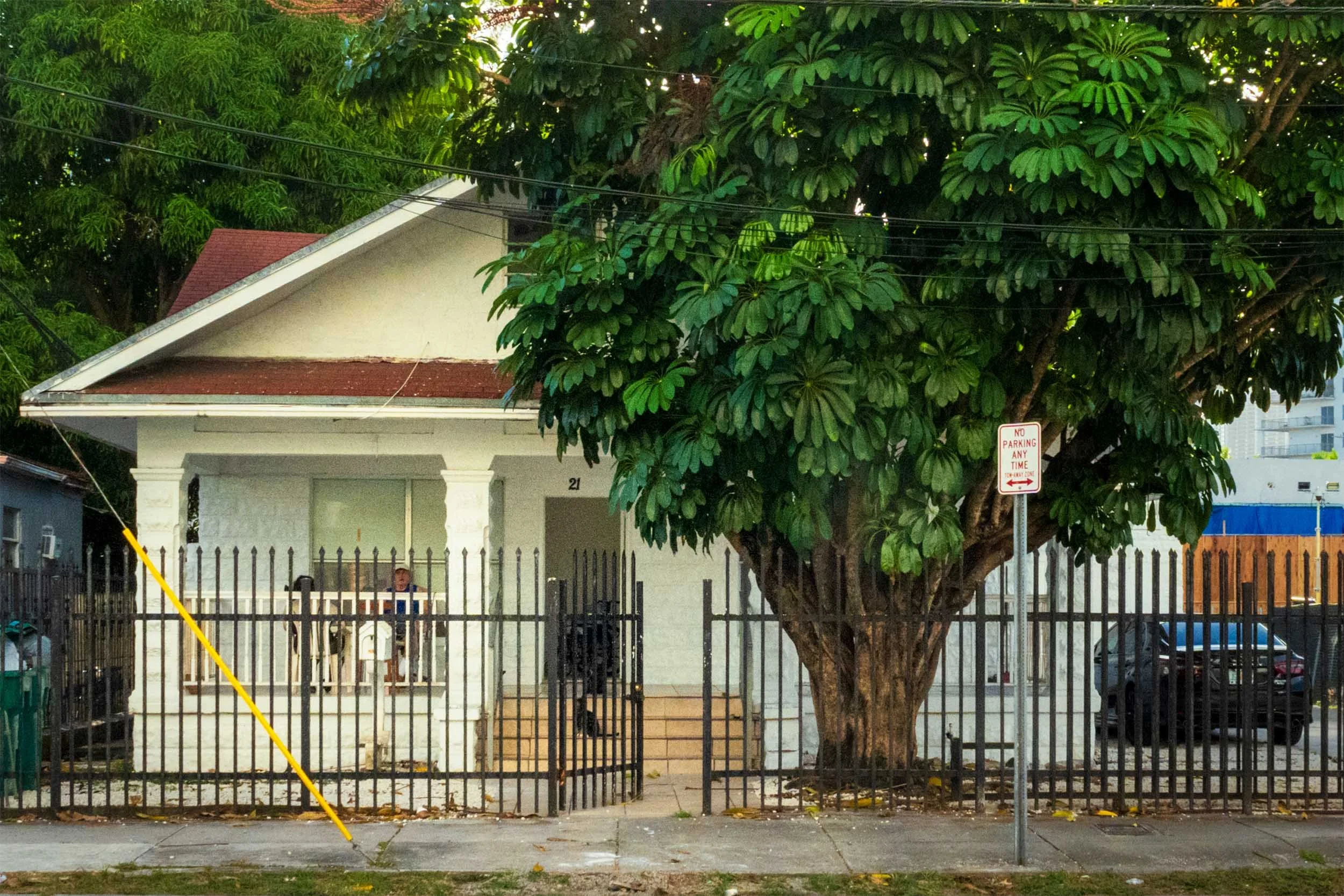
An older man sat on his porch under a schefflera tree big enough to shade the whole yard. This isn't an abandoned neighborhood. People live here now, in houses that might not be here in five years.
Behind the Fences
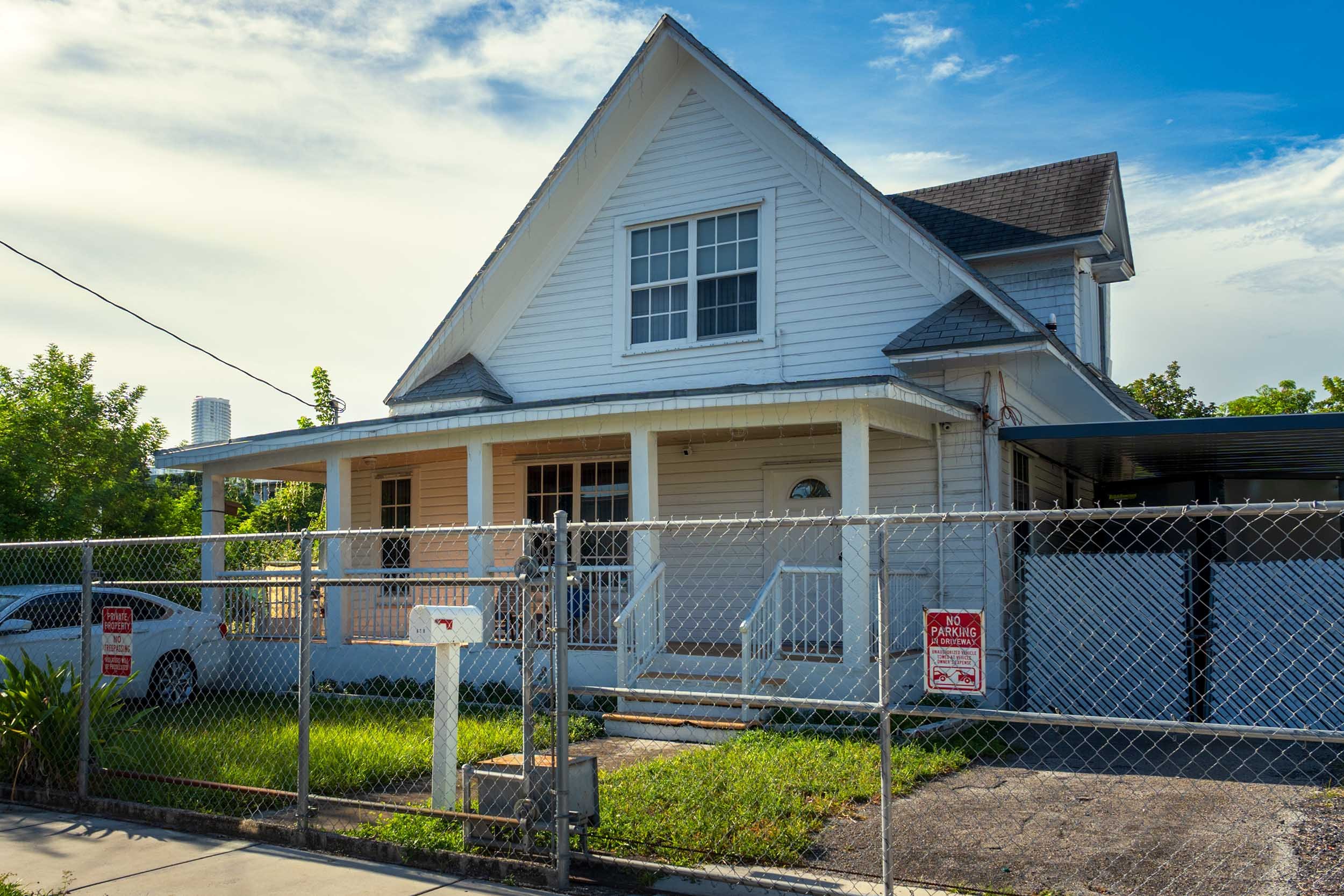
Almost every house on this stretch is fenced, chain-link, iron, wood picket, sometimes all three on the same block. The fences have been going up for decades, some for security, some just marking a property line before a sale. They're as much a part of the neighborhood as the houses themselves, and they'll disappear along with the wood frame once a lot gets cleared.
Go back before more of these corners get fenced off for demolition. Some of these houses won't survive the next permit cycle.
See more of Little Havana.