
The South Beach Lifeguard Towers: A Photographer's Complete Guide
Colors, history, and the best times to photograph Miami Beach's most iconic structures
I have photographed every lifeguard tower on South Beach.
Over the past ten years in golden hour light and stormy skies, I've worked my way along the full length of the South Beach shoreline documenting these structures. The wooden towers. The newer fiberglass replacements. Every color, every angle, every light condition I could find.
This post is that archive, a complete photographic record of the South Beach lifeguard towers, with some context about what makes them one of the most photographed and most beloved landmarks in Miami.
Why the South Beach Lifeguard Towers Are So Iconic
There are lifeguard towers on beaches all over the world. None of them look like the ones on South Beach.
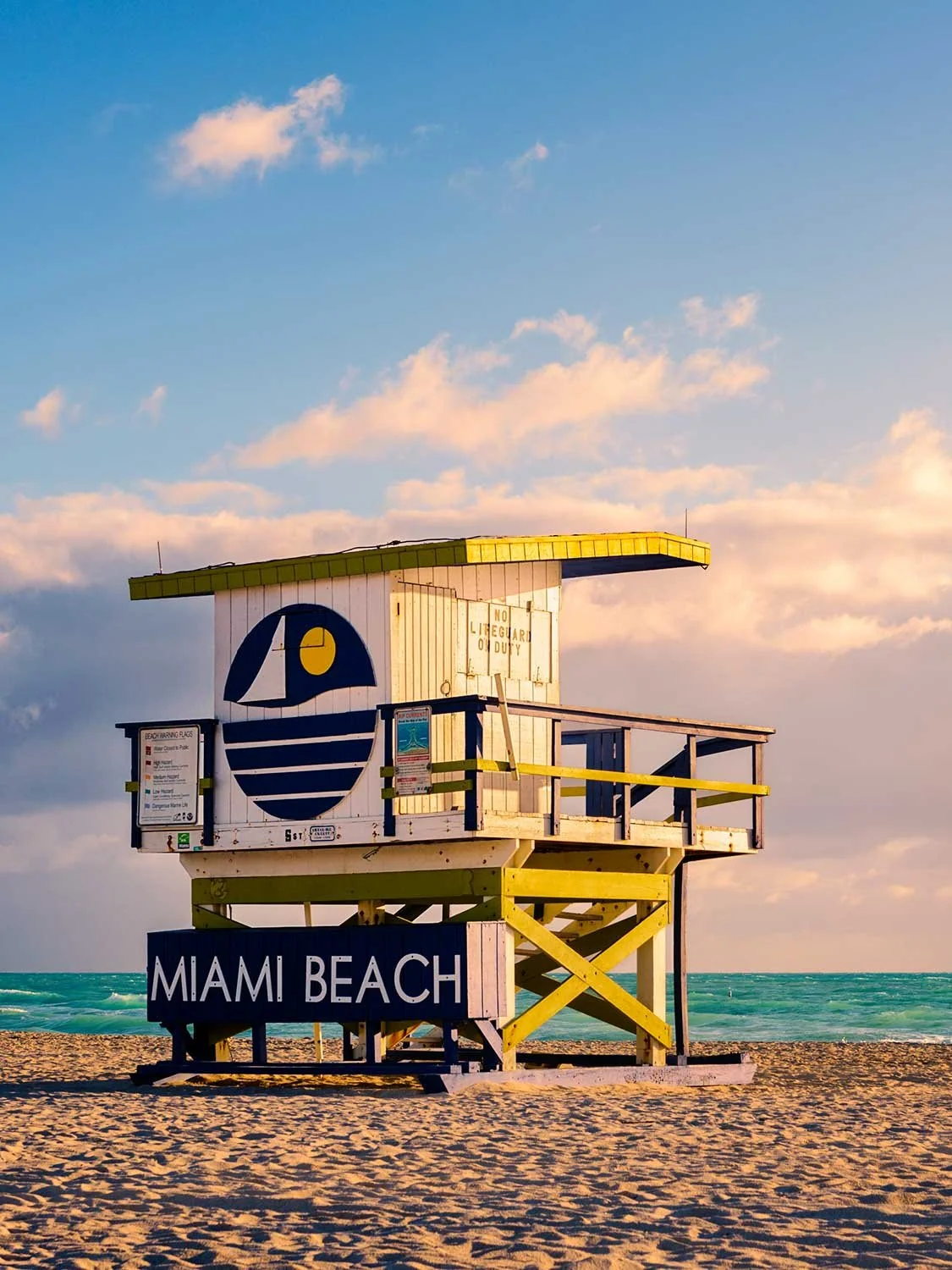
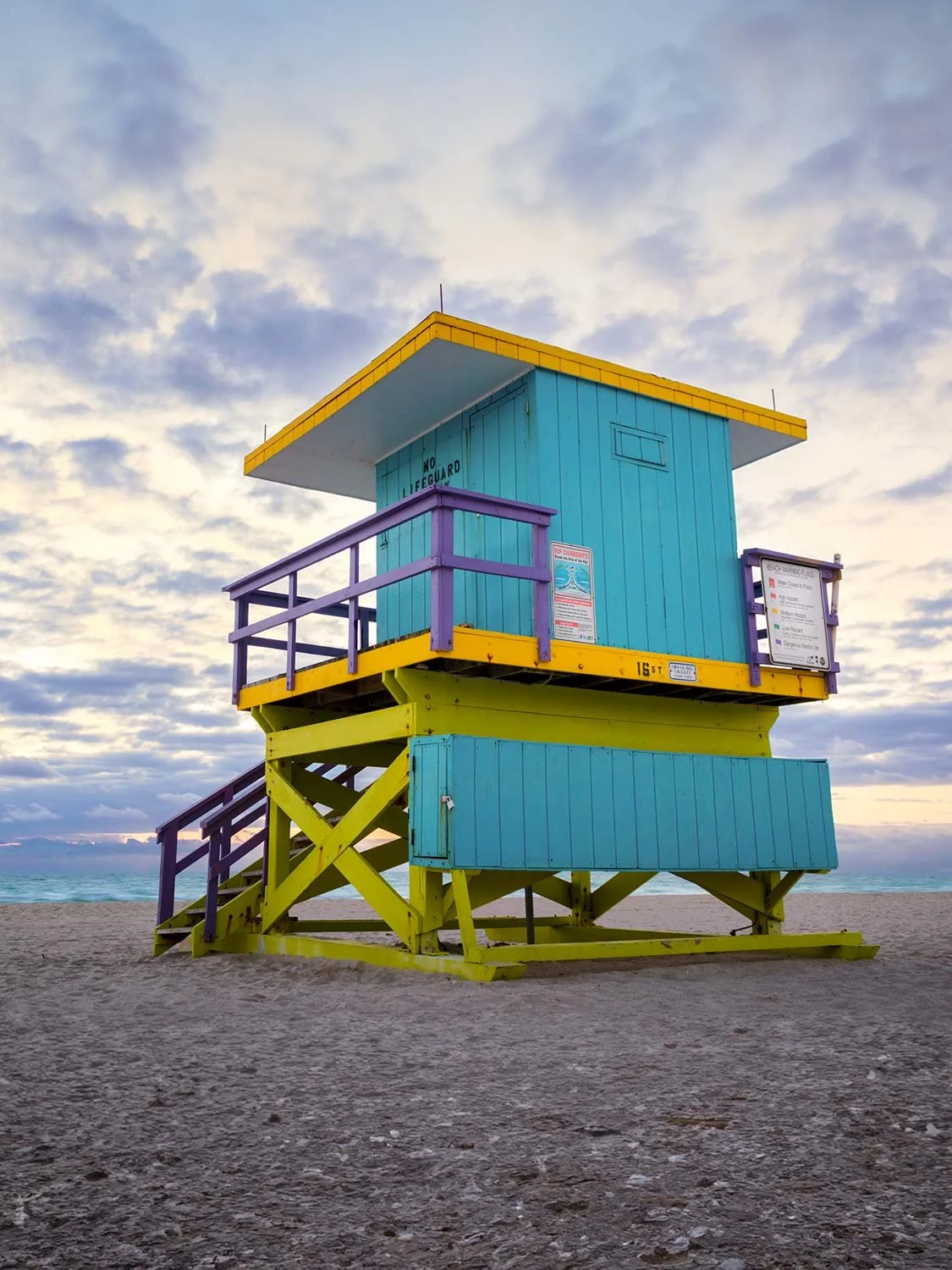
What sets the Miami Beach lifeguard towers apart is the deliberate design language that evolved from the 1960s and 1970s onward, bold colors, geometric shapes, and Art Deco-influenced forms that echo the historic hotel facades of Ocean Drive on the other side of Lummus Park. Each tower has its own color scheme. Each one is numbered and positioned at a specific street, creating a sequence of landmarks that runs the full length of the beach.
Together, they do something that individually they couldn't. They define the visual identity of South Beach as a place. When someone pictures Miami Beach, the lifeguard tower is almost always in the frame.
Each tower sits at a specific numbered street, from South Pointe at the southern tip to 86th Street at the northern end
The wooden towers were painted in unique color combinations and none were identical
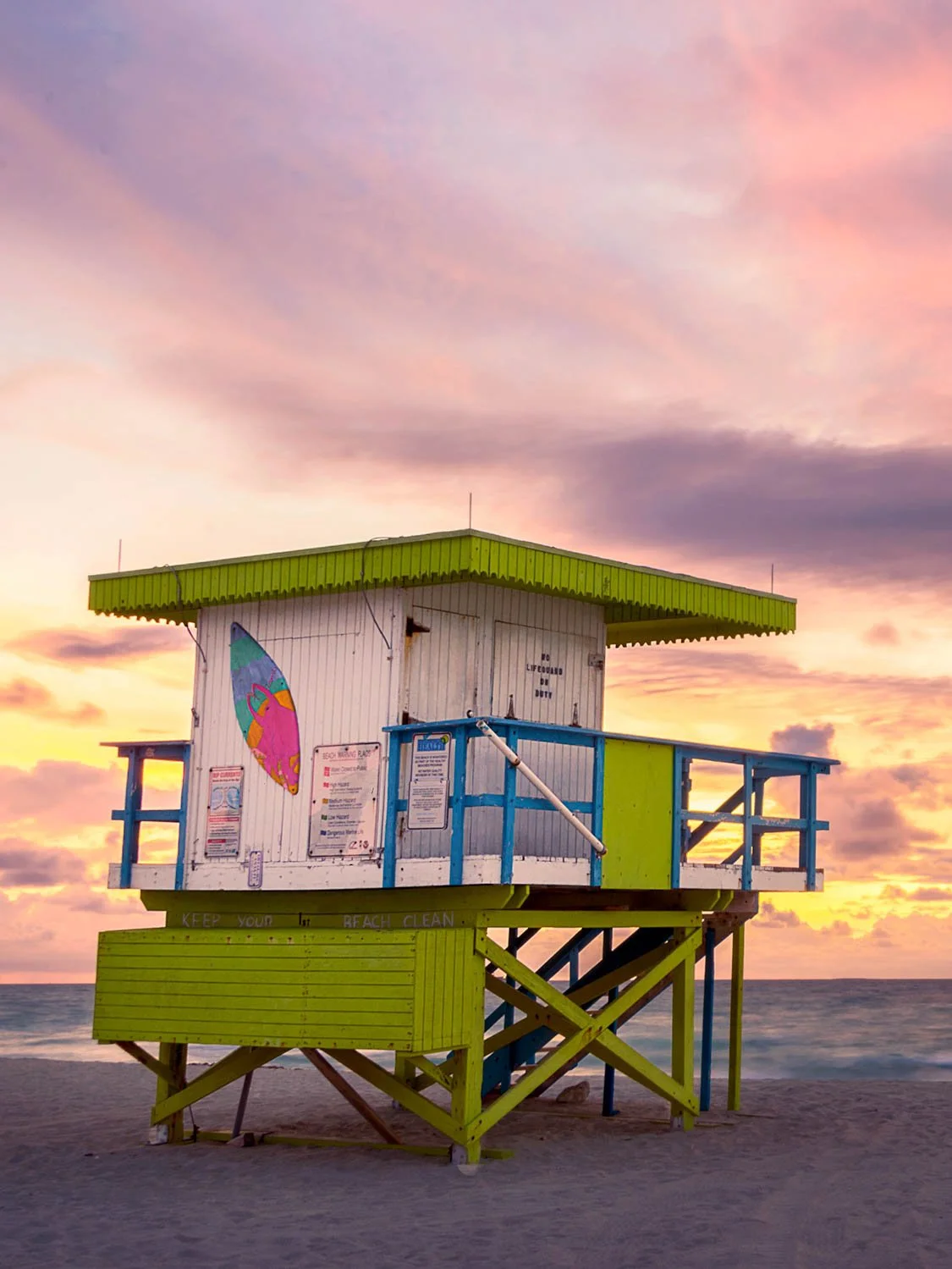
Colors were chosen to complement the Art Deco palette of the surrounding historic district
Many towers became landmarks in their own right, tied to specific stretches of beach that regulars know by tower rather than street number
The History: From Simple Structures to Cultural Icons
1930s–1950s: Function First
The original lifeguard towers on South Beach were built for one purpose: elevation. A raised platform gave lifeguards a clear sightline over swimmers, and storage space below housed rescue equipment. The earliest structures were simple wooden platforms that were utilitarian, undecorated, and entirely functional.
As South Beach developed into one of America's premier beach destinations through the postwar tourism boom, the towers began to evolve. The beach itself was becoming a stage, and the towers were part of the scenery.
1960s–1970s: Art Deco Meets Beach Culture
The transformation of the towers into design objects happened gradually, influenced by the Art Deco and MiMo (Miami Modern) architecture that defined the surrounding neighborhood. Designers began applying color, geometric ornament, and playful forms to what were essentially small wooden buildings on stilts.
By the 1970s, the towers had become visual anchors of the beach, instantly recognizable, widely photographed, and deeply woven into the cultural identity of Miami Beach. They appeared in postcards, films, and fashion shoots. They became shorthand for South Beach itself.
The Transition: New Towers, Preserved Character
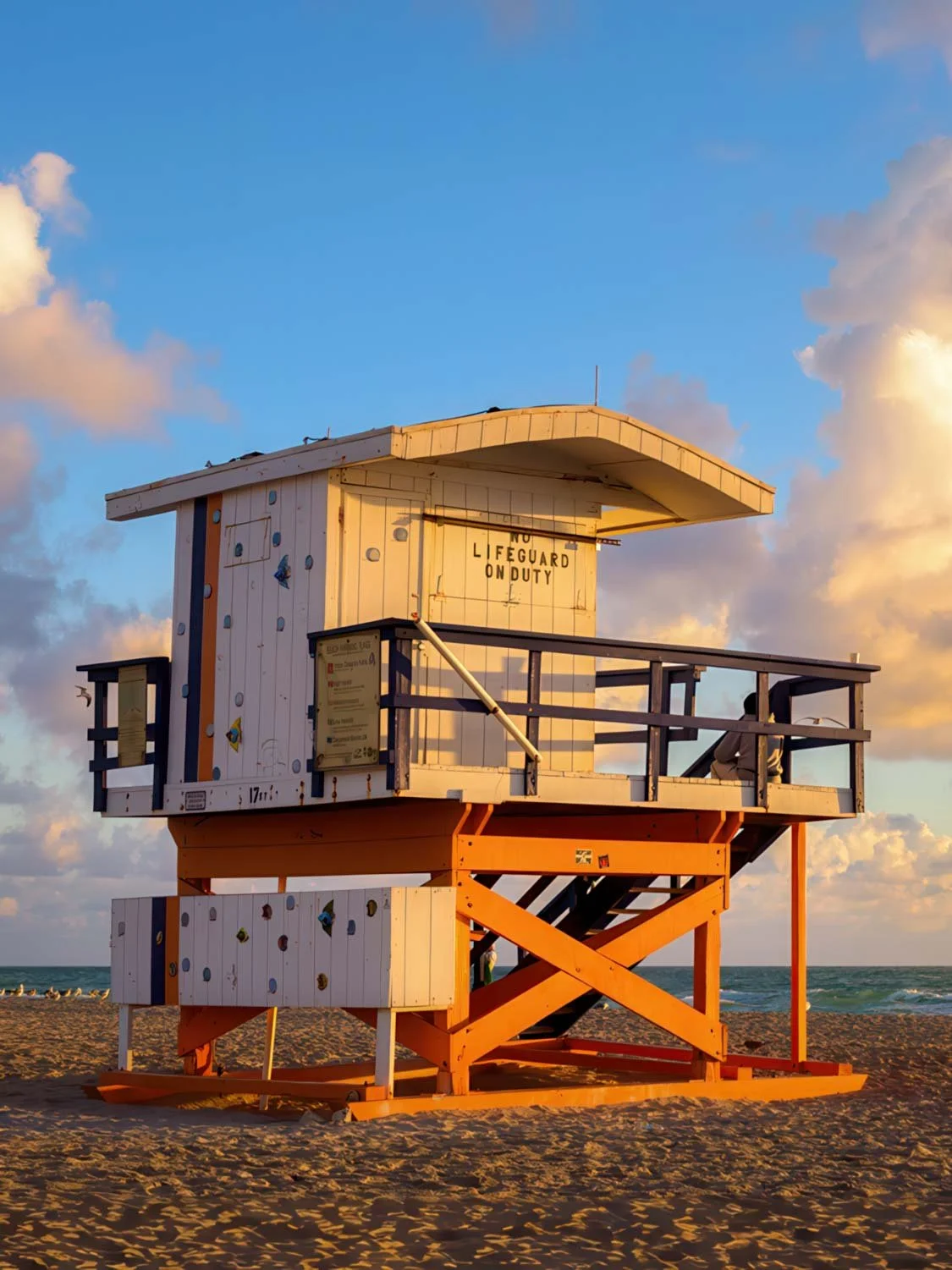
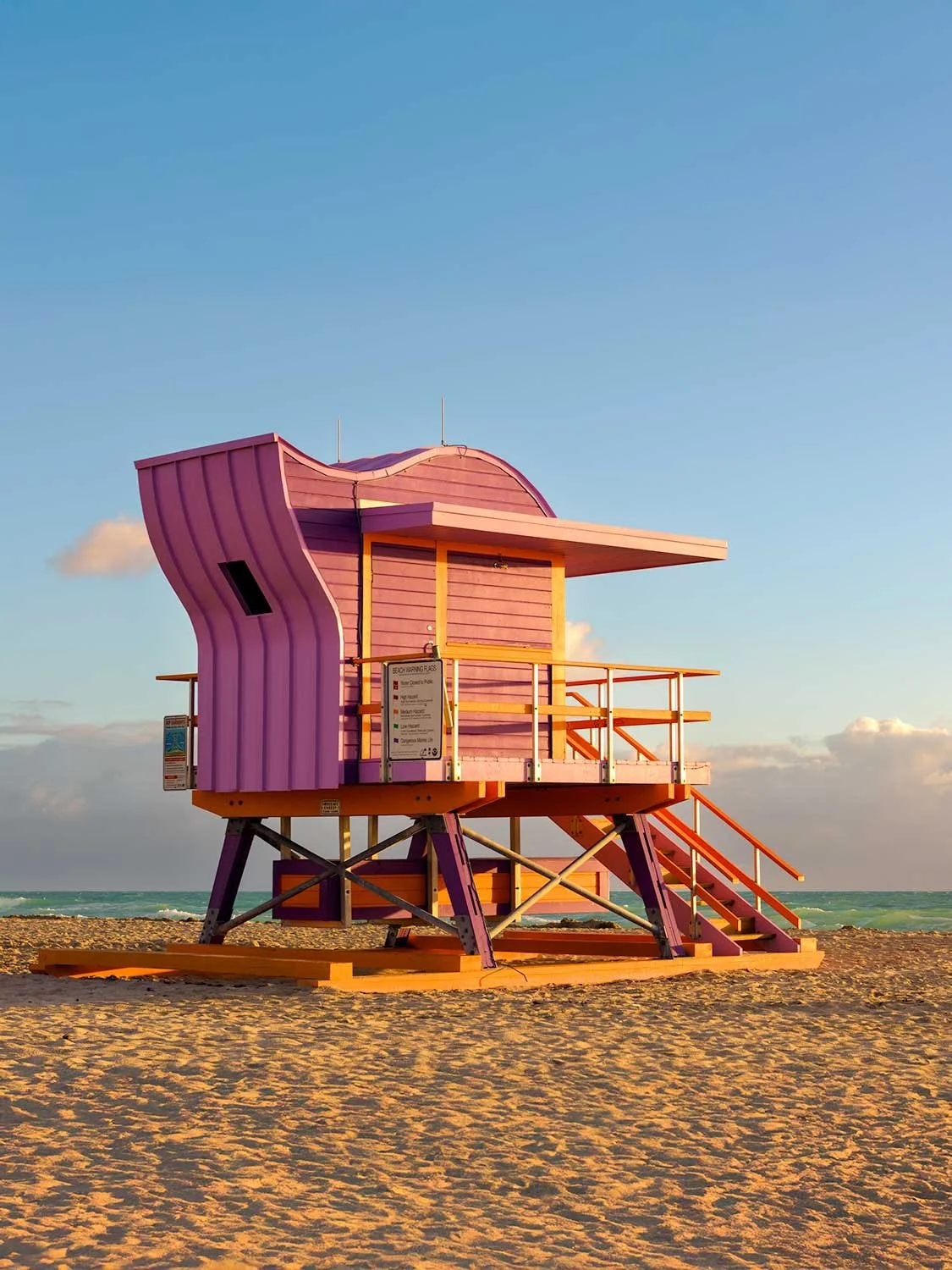
Many of the original wooden towers were replaced in the late 20th century with fiberglass and modern composite structures better suited to hurricane conditions and contemporary safety standards. The transition was gradual. Some wooden towers were restored rather than replaced, and several of the new structures were designed to honor the color and character of the originals.
Today, South Beach has a mix of the original wooden towers that have been maintained or restored, and newer structures that carry forward the tradition of bold color and distinct design. As a photographer, both generations are worth shooting. They tell different parts of the same story.
Photographing the Towers: What I've Learned
After ten years and every tower on the beach, here's what consistently produces the strongest images.
Sunrise is the best time
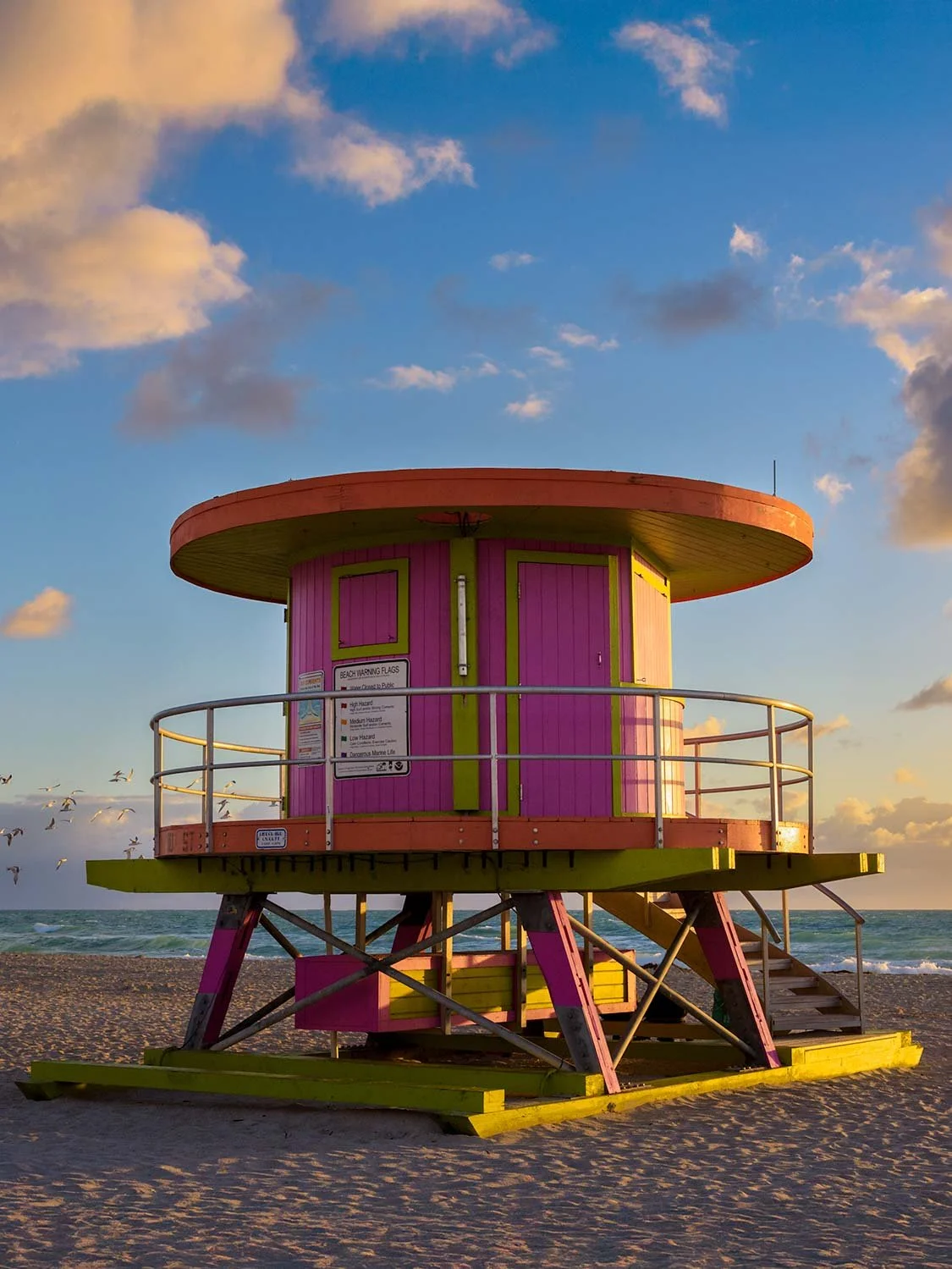
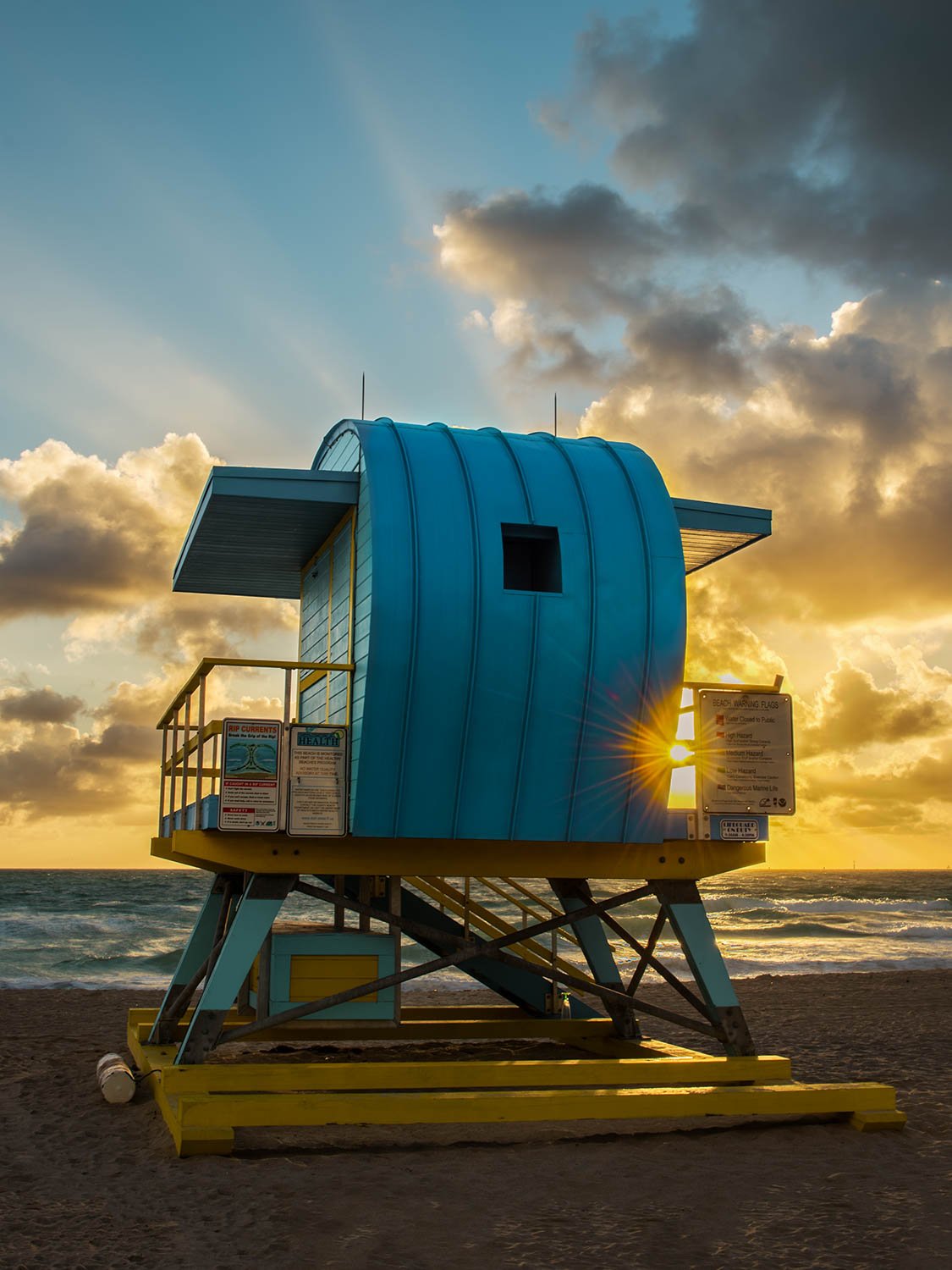
The towers face east, toward the Atlantic. At sunrise the light comes in directly from the ocean and illuminates the colors of the tower facades with a warmth and clarity that no other light condition matches. The beach is empty, the sand is clean, and you have the full shoreline to yourself.
Arrive 20 minutes before official sunrise to be in position. The sky transitions from deep blue to pink to gold in the 30 minutes around sunrise, and every phase produces a different image.
Shoot Low
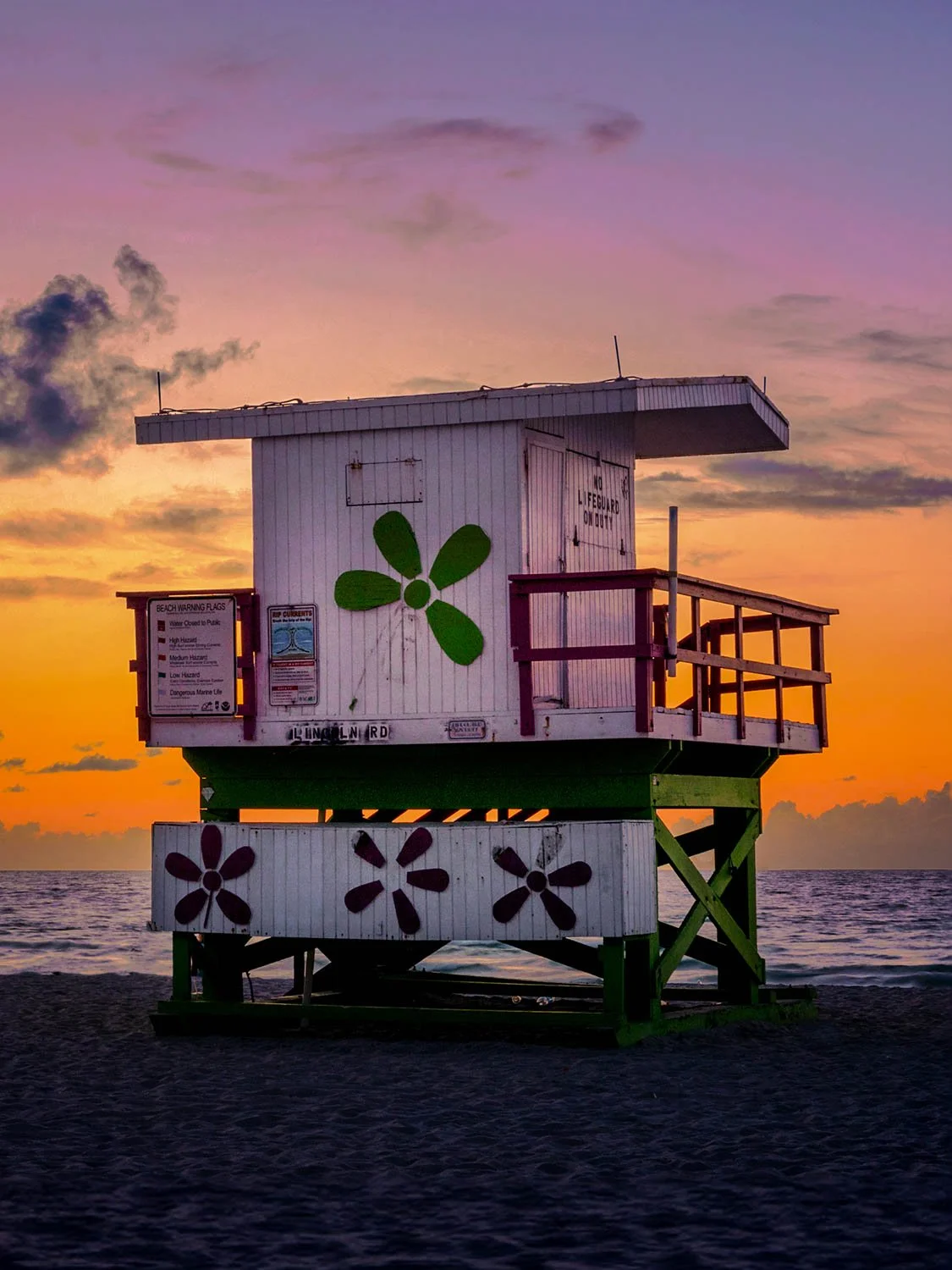
The towers sit on the sand, which means shooting from standing height puts you above the base and loses the sense of scale. Get low, knee height or lower and the tower rises against the sky in a way that makes it feel monumental rather than merely decorative. The wet sand or the beach surface at low angle also creates foreground interest and occasional reflections.
Use the sky
The towers are most compelling when the sky behind them has drama, sunrise color, storm clouds, deep blue with white cumulus. A flat gray sky flattens the color of the tower and kills the contrast. Check the weather before you go, and when the sky looks interesting, be at the beach.
Documenting Every Tower: Photography Project
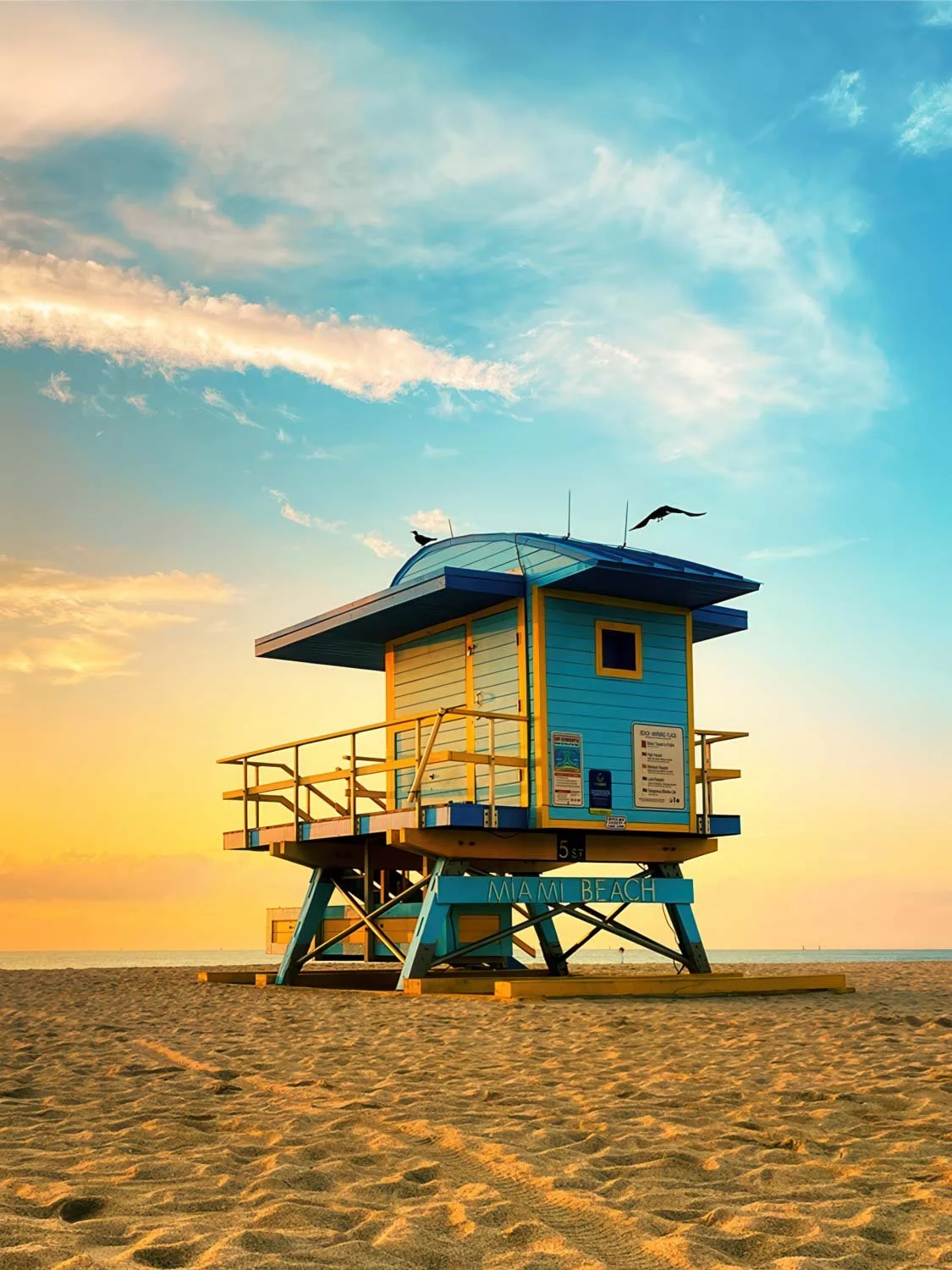
Documenting every lifeguard tower on South Beach was one of the most rewarding photography projects I've undertaken. What starts as a simple goal, photographing each one, quickly becomes something more complex as you realize how different each tower looks in different conditions, and how the same tower at sunrise versus golden hour can produce completely different images.
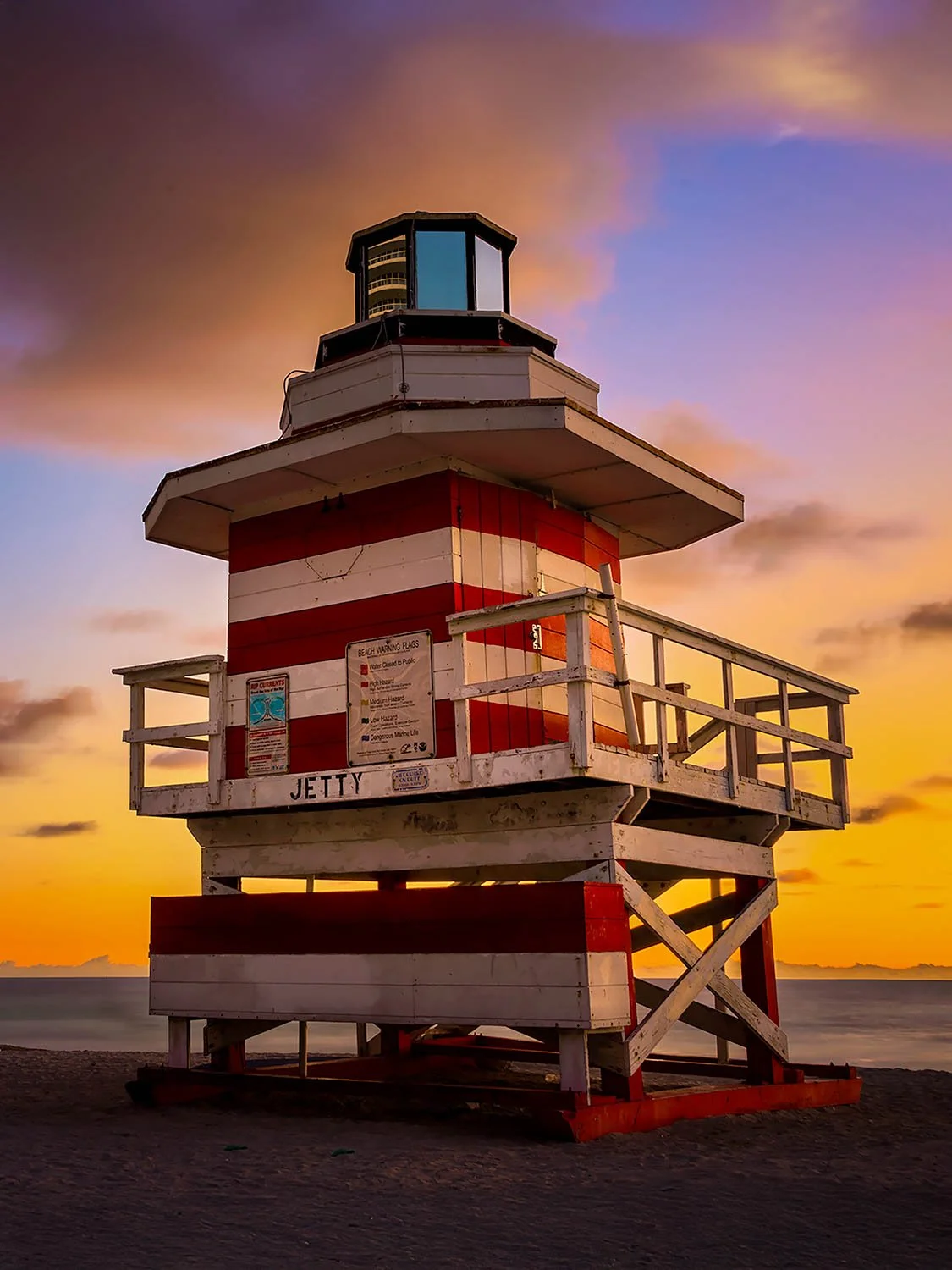
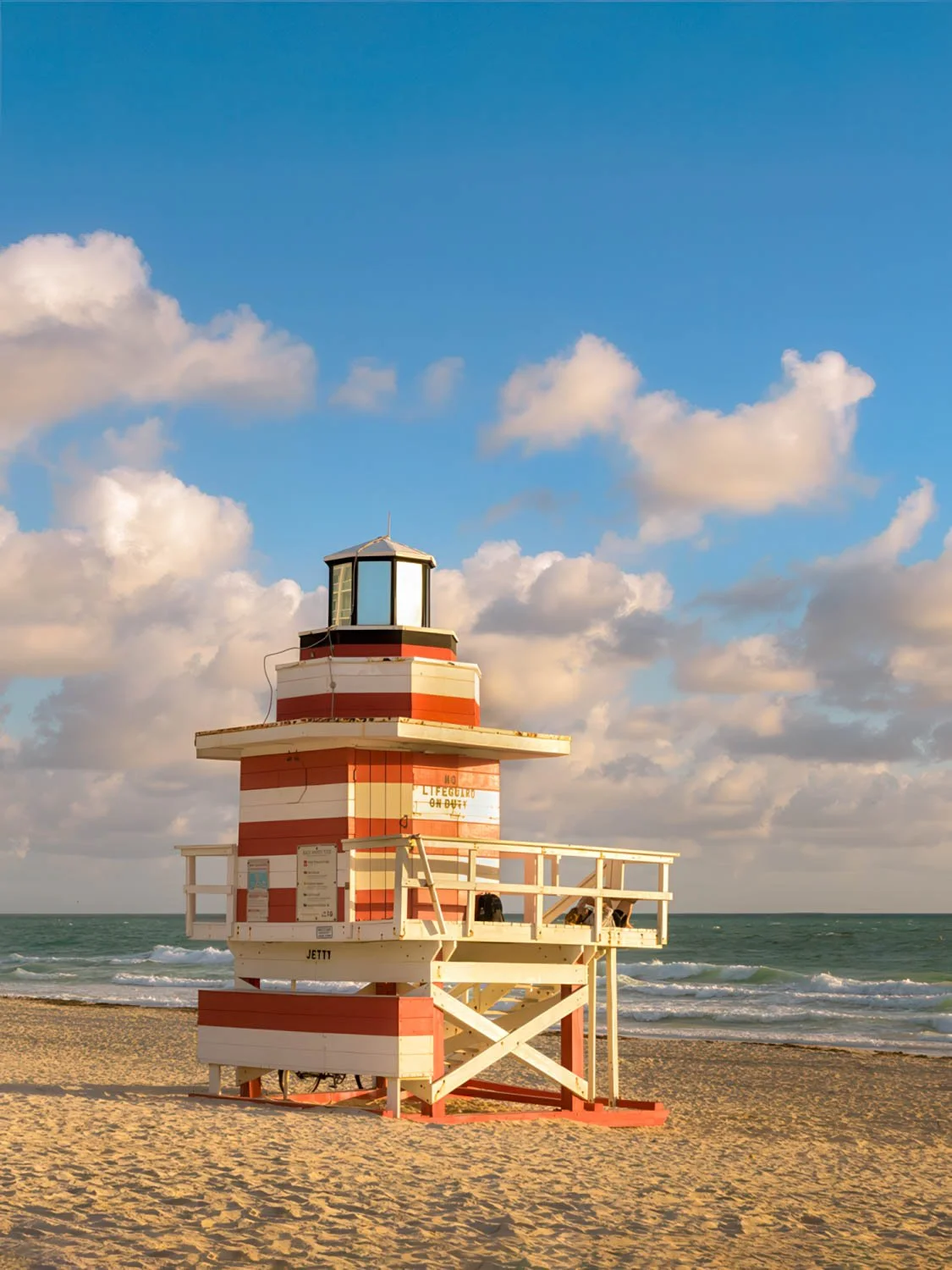
If you're a photographer visiting Miami Beach, I'd suggest picking three or four towers as your specific targets rather than trying to photograph the full sequence in one visit. The tower at the Jetty at South Pointe is worth a separate visit. It sits at the southern tip of the beach where the ocean meets the Government Cut shipping channel, and the views in both directions from that location are unlike anywhere else on the beach.
Frequently Asked Questions
How many lifeguard towers are on South Beach?
The towers run the length of the beach, from South Pointe at the southern tip to 86th Street at the northern end, each one numbered and tied to a specific cross street.
When is the best time to photograph the lifeguard towers?
Sunrise. The towers face east toward the Atlantic, and the early light hits the facades directly. Arrive about 20 minutes before official sunrise to catch the sky's full transition from blue to pink to gold.
Are the towers original, or have they been replaced?
Both. Some of the original wooden towers have been restored and maintained. Others were replaced with fiberglass and composite structures built for hurricane conditions, many designed to preserve the color and character of the originals.
Why do the towers look the way they do?
Their design grew out of the Art Deco and MiMo architecture of South Beach itself, developed through the 1960s and 70s. Bold color, geometric shapes, and playful form turned working lifeguard stations into landmarks in their own right.
Which tower is worth visiting if I only have time for one?
The tower at the Jetty, South Pointe. It sits where the ocean meets the Government Cut shipping channel, with views in both directions unlike anywhere else on the beach.
The Towers Today
Miami Beach Ocean Rescue staffs the South Beach lifeguard towers daily during beach hours. They're working structures that happen to be visually extraordinary.
That combination of function and beauty is exactly what makes them worth photographing. Every image you take of a South Beach lifeguard tower is a photograph of something that is actively doing its job, watching over one of the most visited beaches in the world while looking like nothing else in the world.
If you haven't spent a morning working along the South Beach shoreline with a camera, this is the invitation.
More in the South Beach gallery.