
How high-rises and corporate murals are replacing downtown’s walls—and stripping away the soul of the city.
How high-rises and newer murals are replacing downtown’s walls—and what gets lost along the way.
Wynwood gets the attention. It’s curated and ticketed, an open-air museum where the murals are part of the business. Downtown Miami is a different story.
Downtown’s street art has always been grittier and more temporary, tied to the rhythm of the city. It’s also disappearing fast..
Life in a Parking Lot
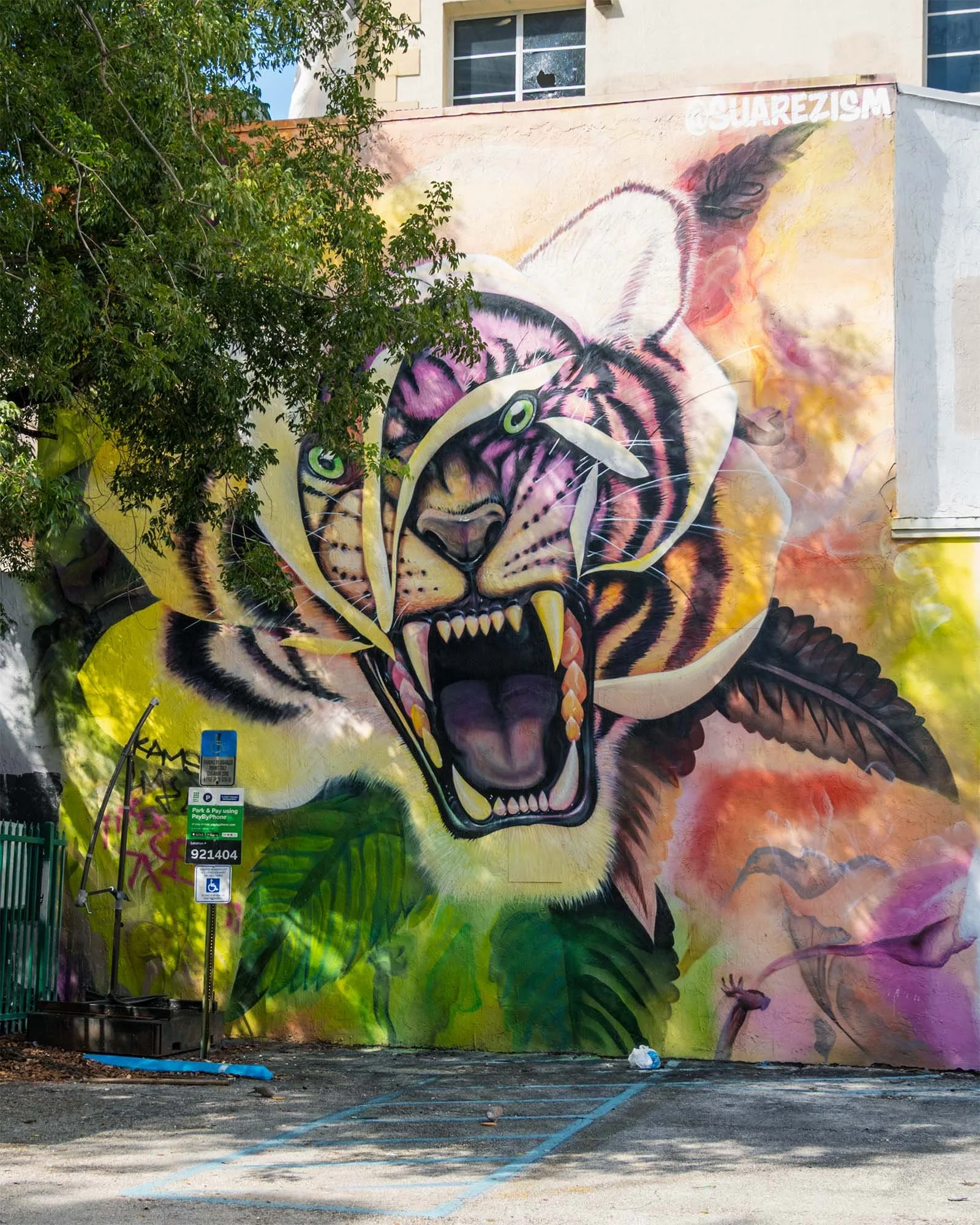
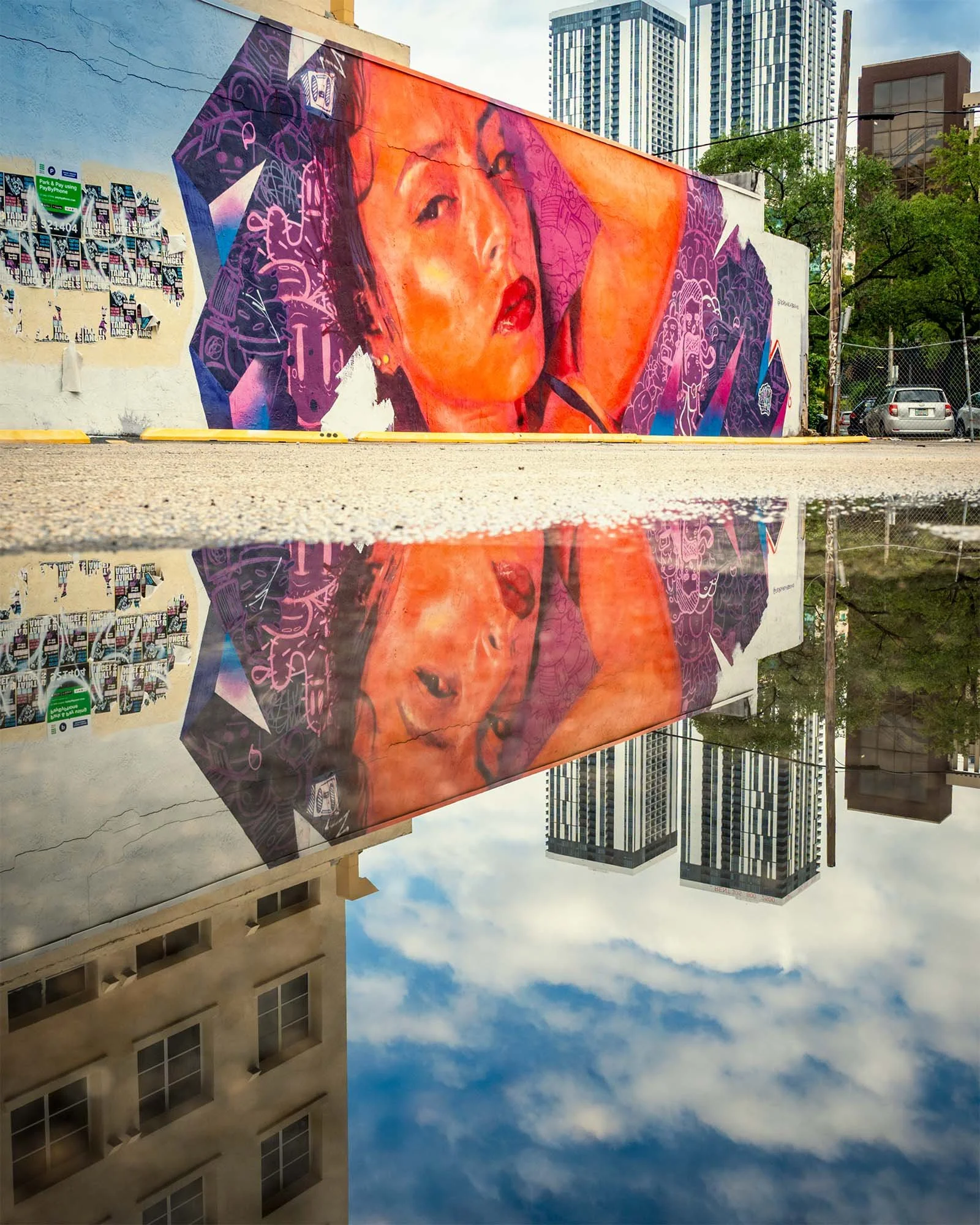
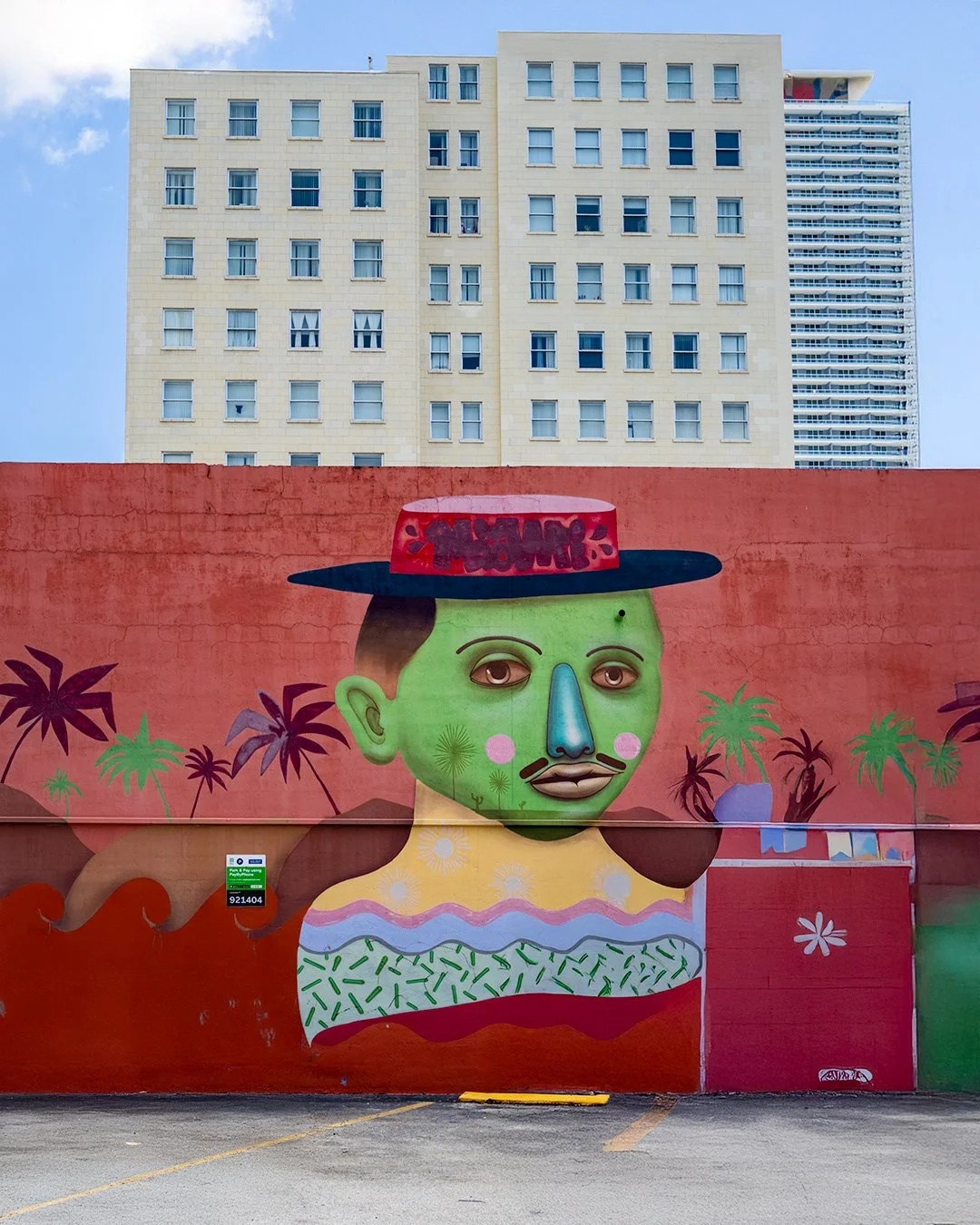
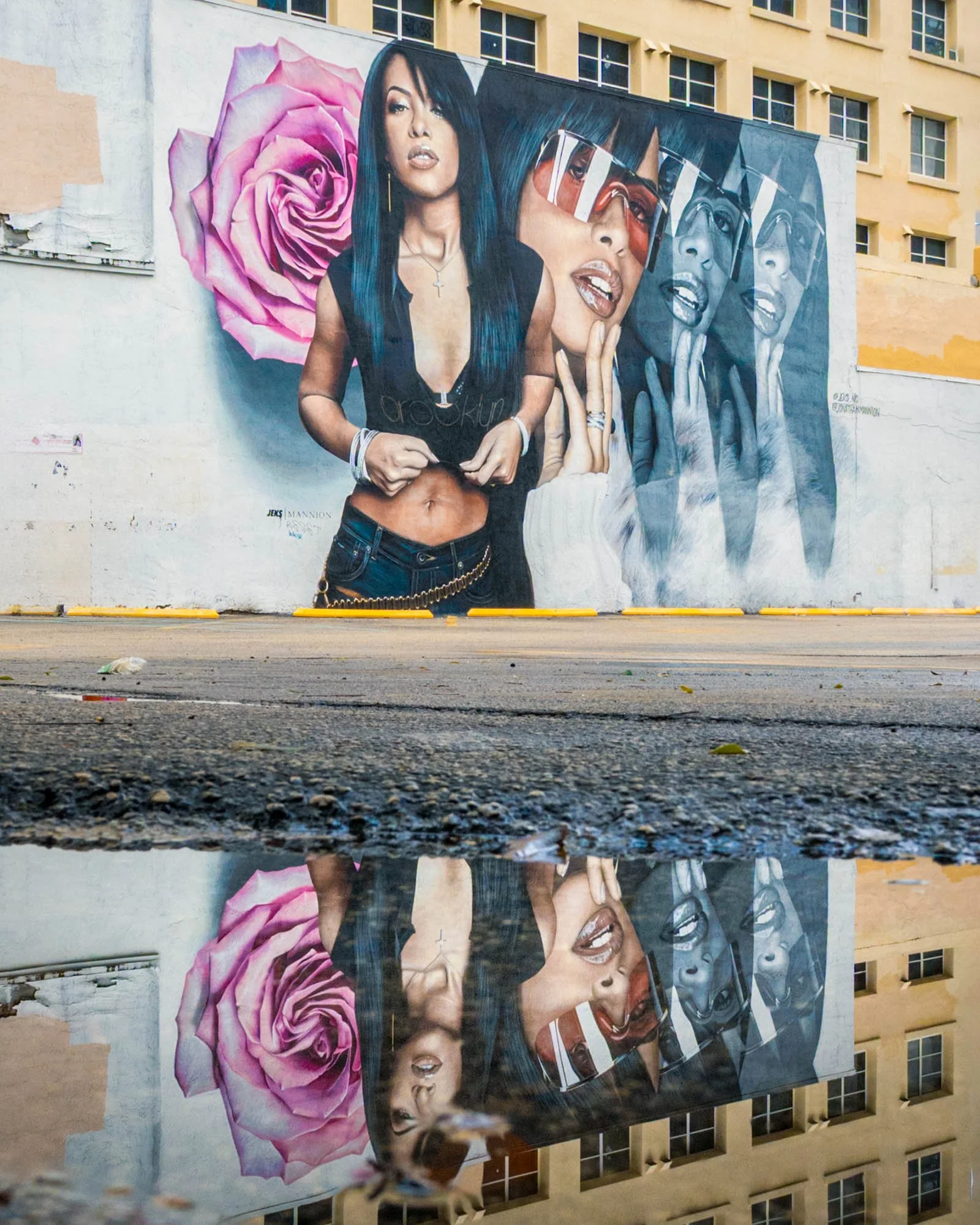
Downtown street art doesn’t live in a museum guide. It lives in neglected corners and open-air parking lots.
Right now, one downtown parking lot holds a whole cluster of it: the tiger, the green-faced figure in the boater hat, the Aaliyah tribute, and the orange and purple portrait I caught in a puddle.
That’s what makes downtown street art so fragile. These pieces are standing on borrowed time. When a developer buys the lot to break ground on a high-rise, every wall in it goes at once.
The Newer Murals
As the old buildings come down, glass and steel towers go up, and a different kind of mural is showing up with them.
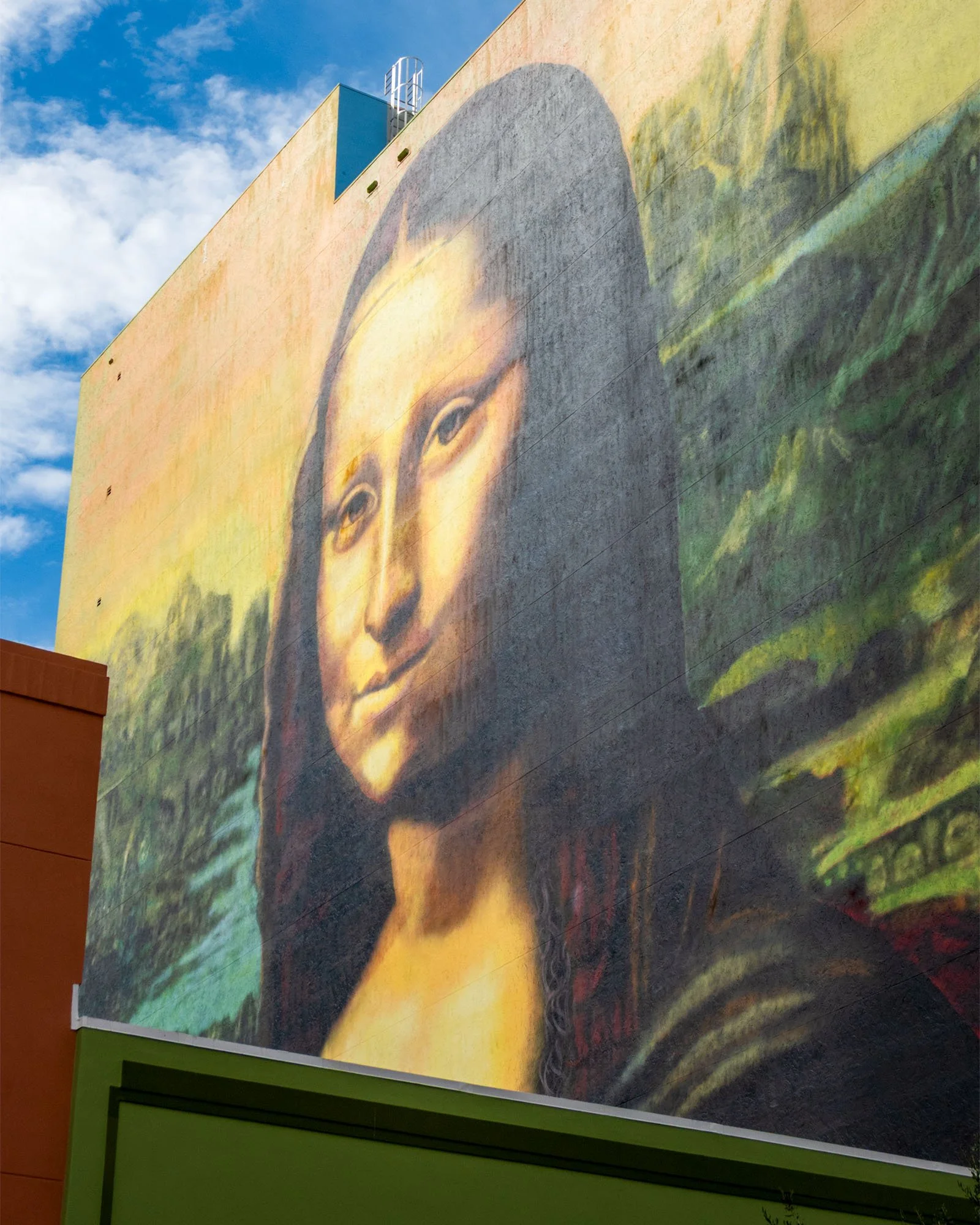
Look at downtown’s newer walls, and you’ll see massive, polished works like a gridded-out recreation of Vermeer’s The Milkmaid taking shape behind scaffolding, or the Girl with a Pearl Earring on SE 2nd Street. A few blocks away, the Mona Lisa looks down from the top of a building.
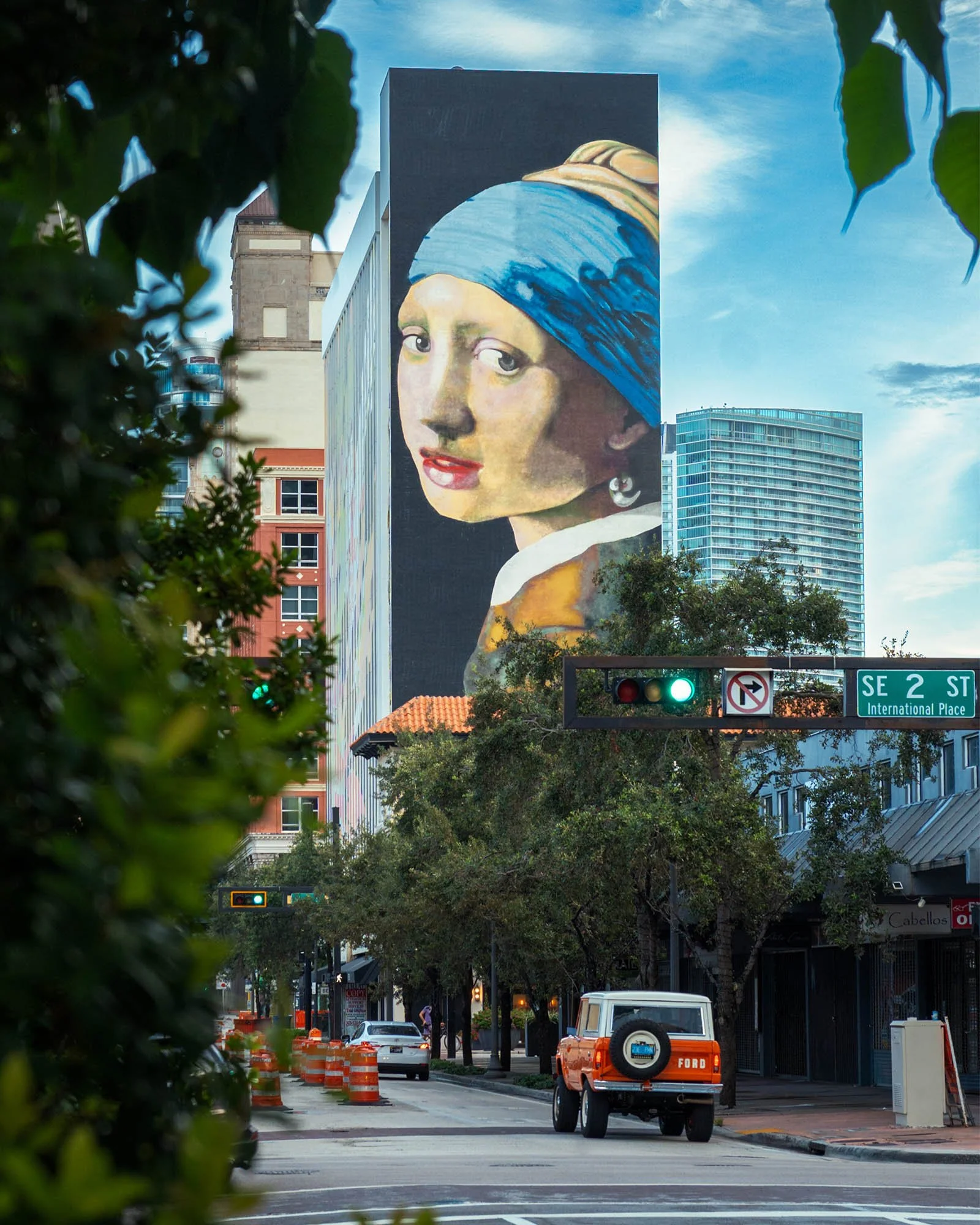
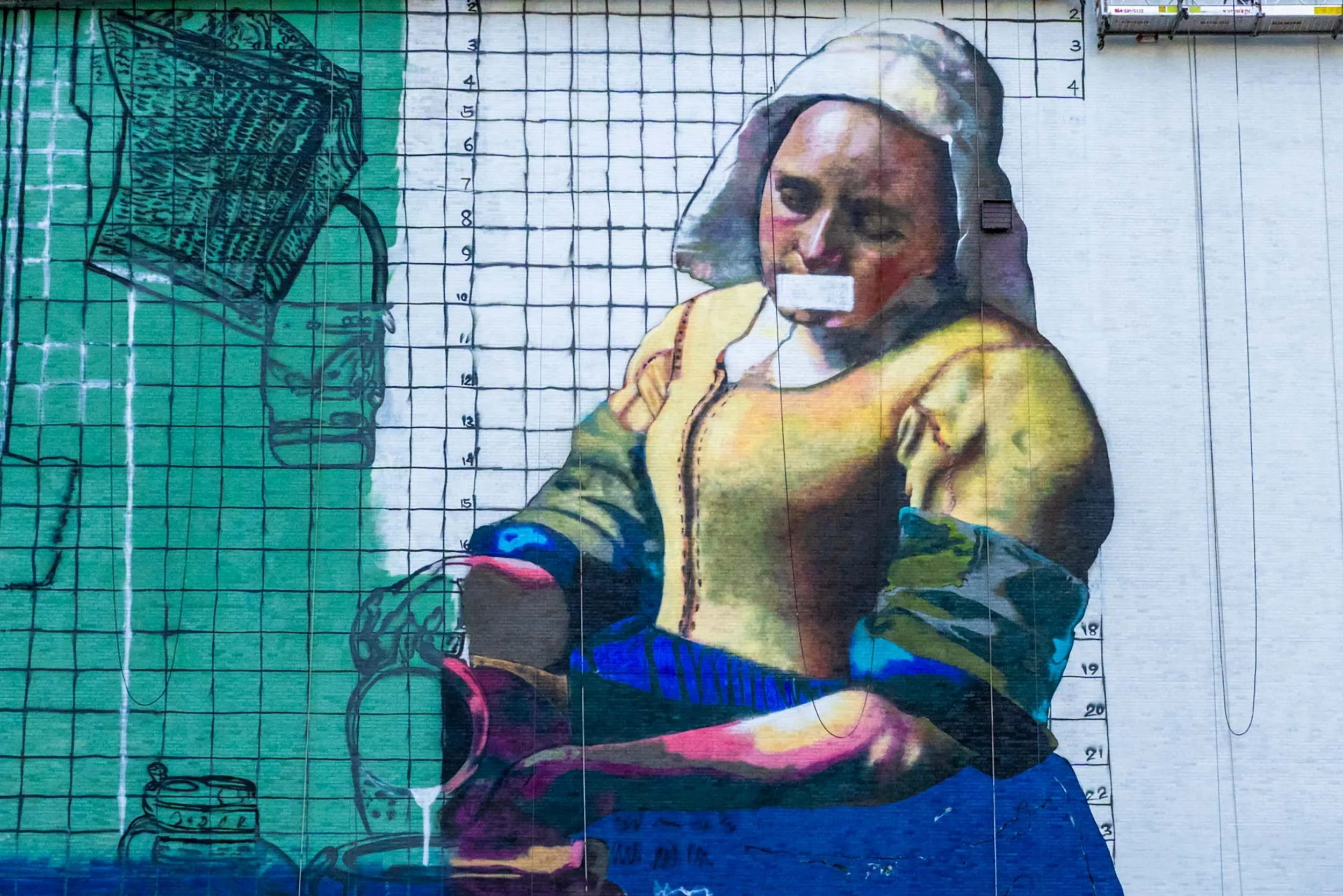
These are a long way from a tag on a roll-down shutter. With the grid lines and mechanical lifts, they feel planned and approved, closer to the building than to the street. I think of them as corporate muralism.
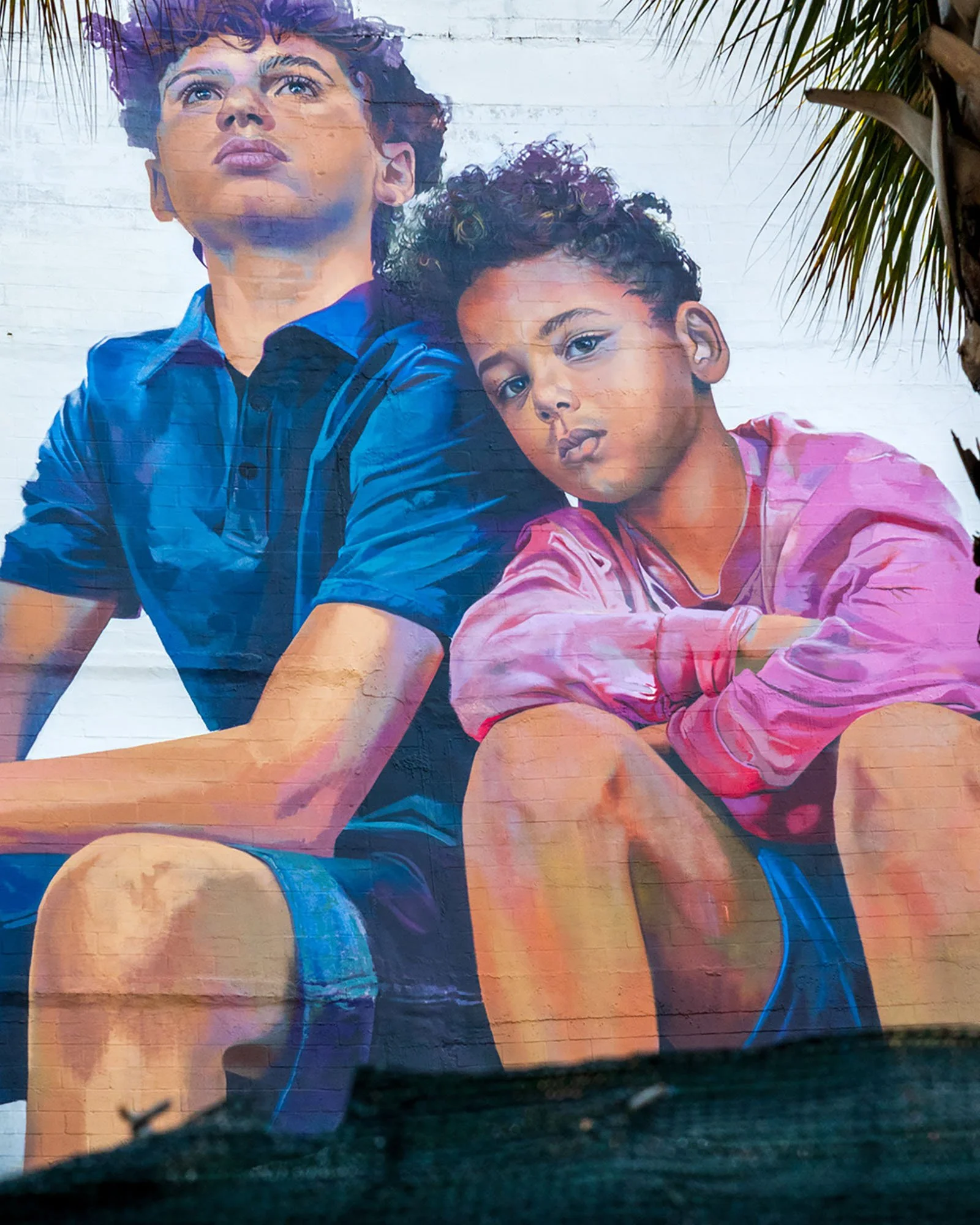
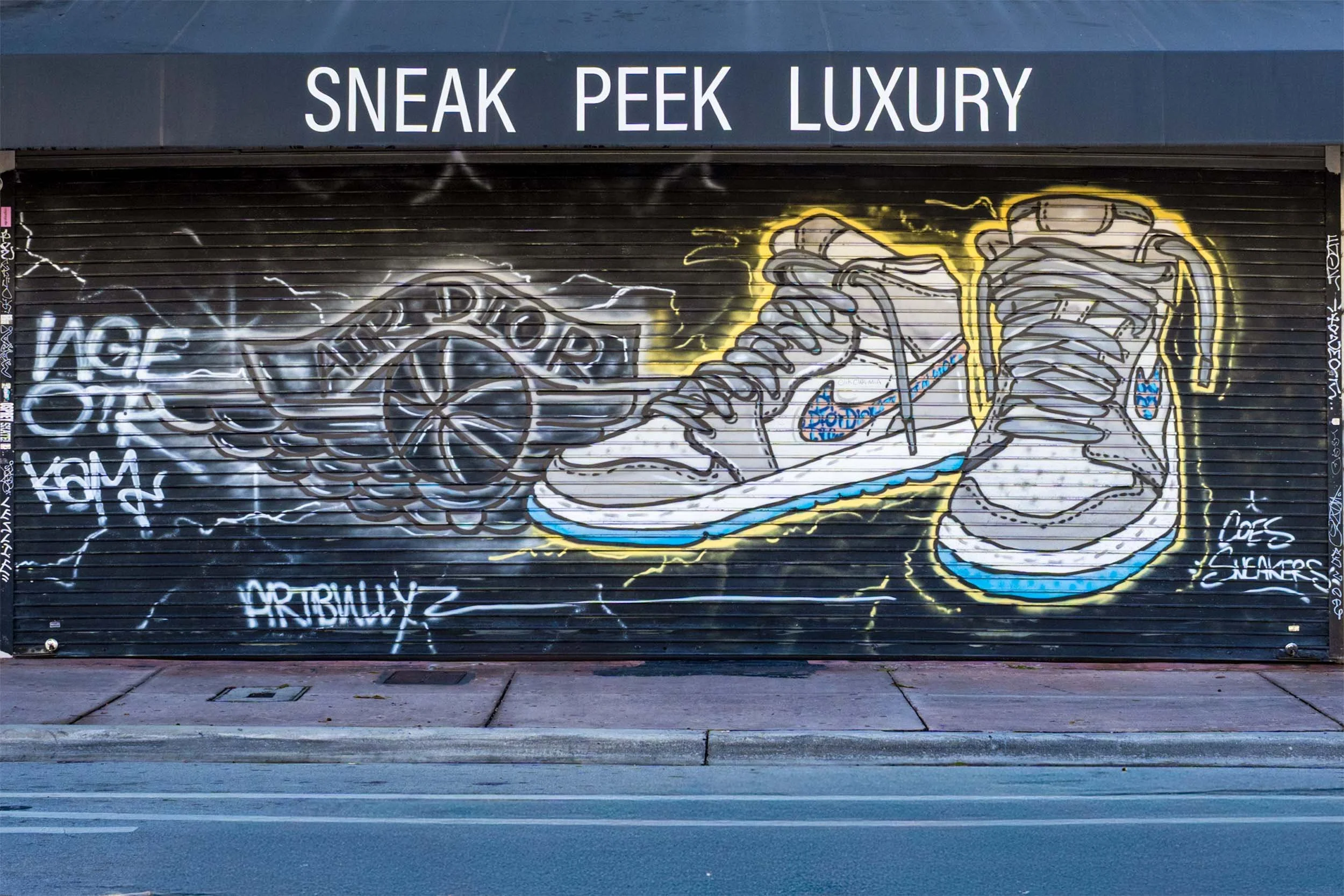
Meanwhile, grassroots portraits like the two young boys are still holding on, and storefronts in transition, like Sneak Peek Luxury, have spray-painted sneakers locked behind their security shutters.
Already Gone Downtown
Writing about downtown street art means writing about walls that aren’t there anymore.
The Pitbull mural is already gone. It was painted over, and the lot is now condos.
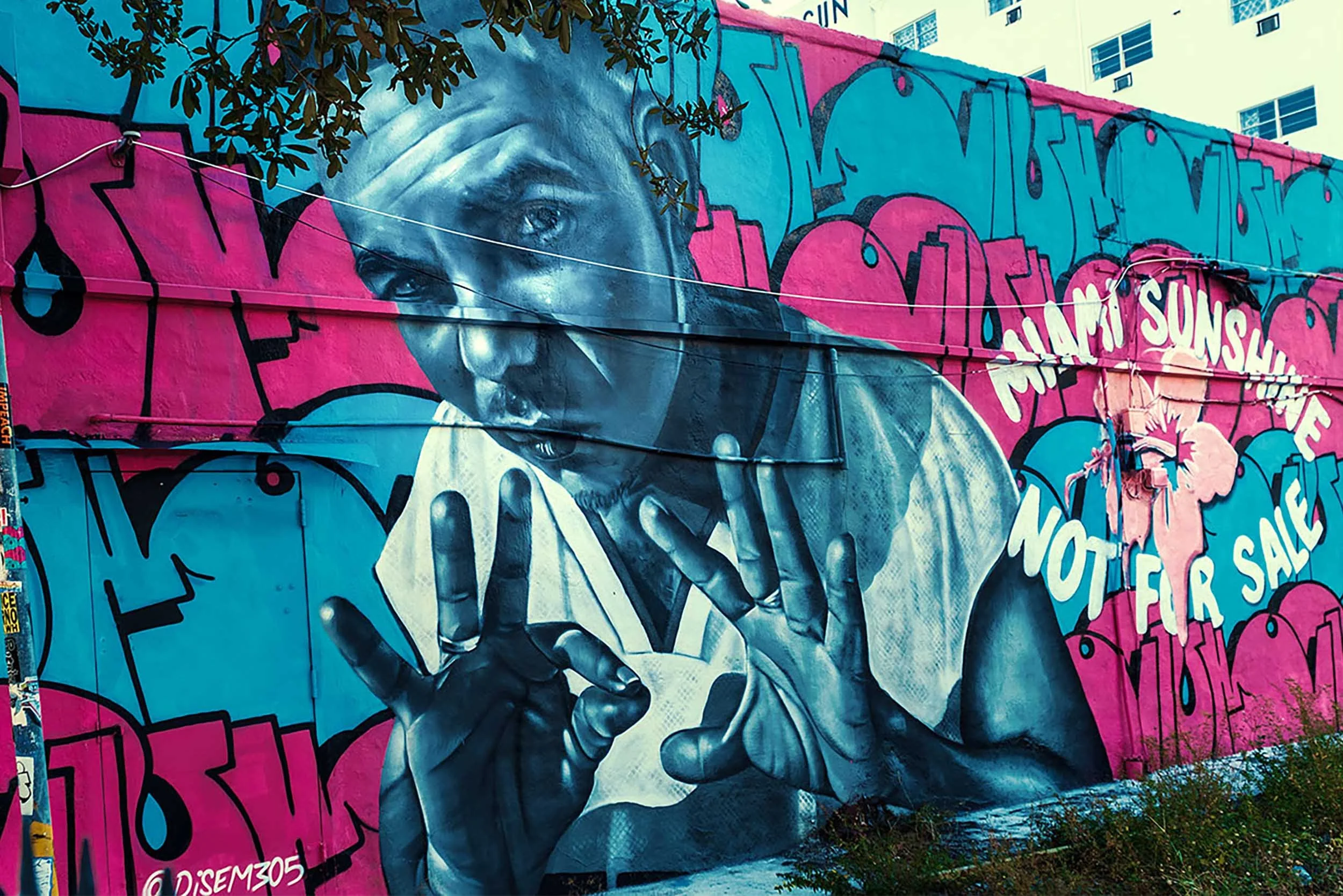
Even long-standing survivors are running out of time. Forget Me Not has held its spot for years without ever being tagged. Now the empty lot beneath it has been cleared, and a fresh green fence has gone up.
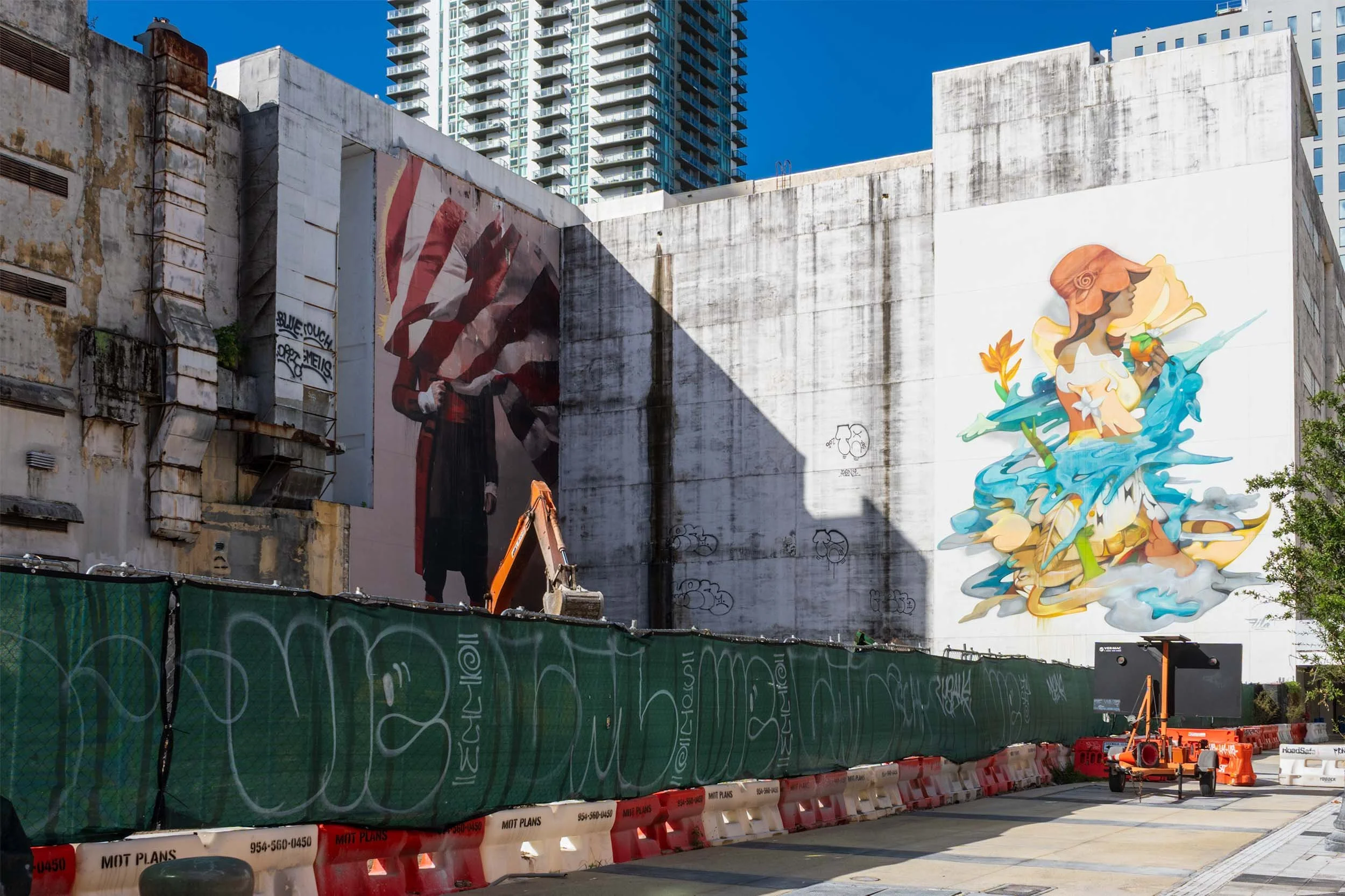
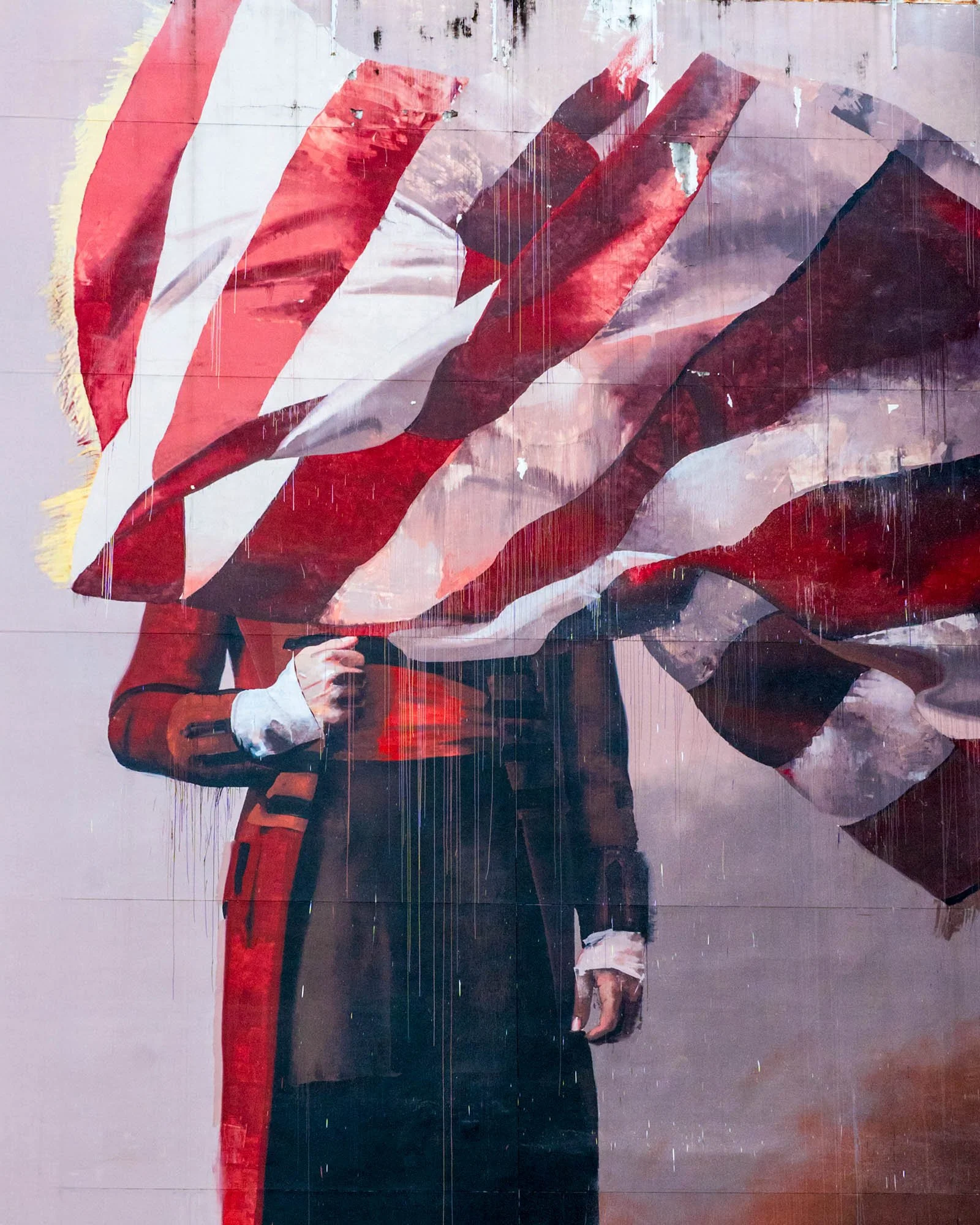
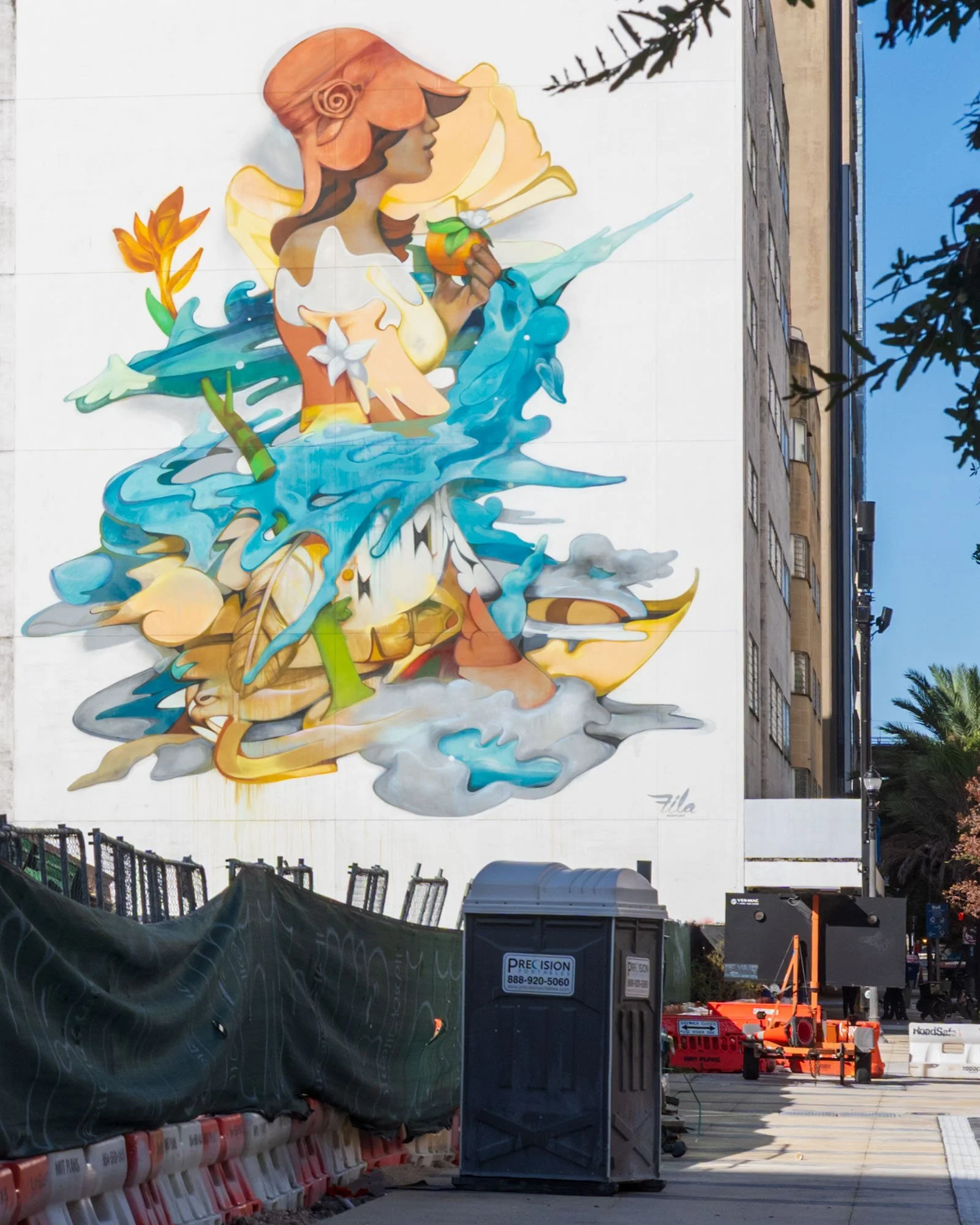
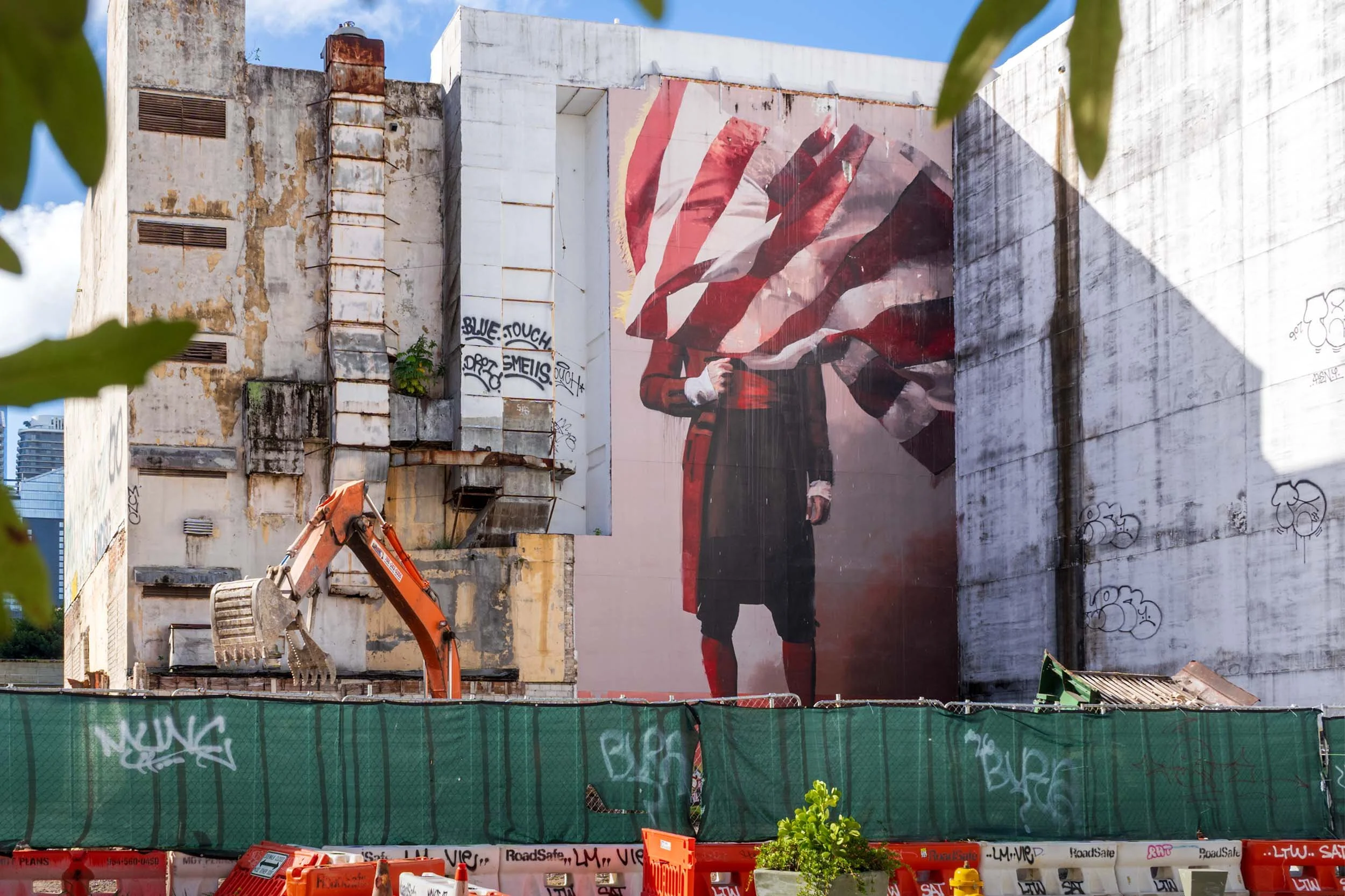
The same thing is happening on a larger scale at the old Flagler Station, 48 East Flagler Street. The 72,000-square-foot site was declared unsafe and evacuated after structural reports, and developer Moishe Mana’s plans meant the old buildings had to come down. The site is now cleared and full of rubble, waiting on redevelopment or temporary plans for sports parks and padel courts. A few murals were left standing, including the figure wrapped in the American flag and Fila’s woman holding an orange, looking out over the construction barriers.
For now, they’re spared, standing a few feet from heavy machinery. Further down the street, the Burdines building faces conceptual redevelopment plans for 50-to-55-story towers that would box out the views and wipe away the low-rise character of old Miami.
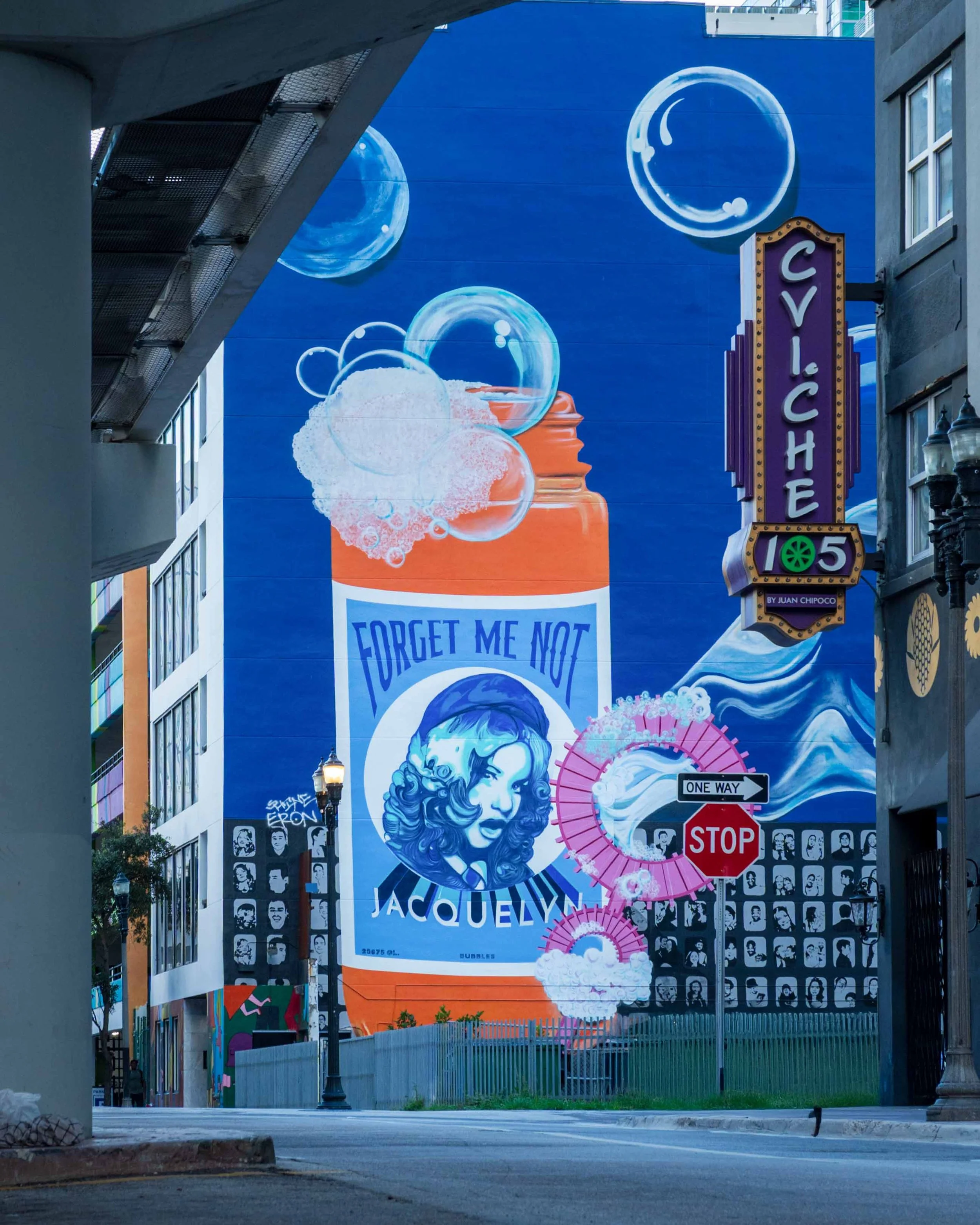
There is no historical preservation board for graffiti or wheatpastes. A wall that’s a landmark today can be a glass lobby tomorrow. One wall downtown says it plainly: Miami Sunshine Not For Sale.
Before the Next Fence Goes Up
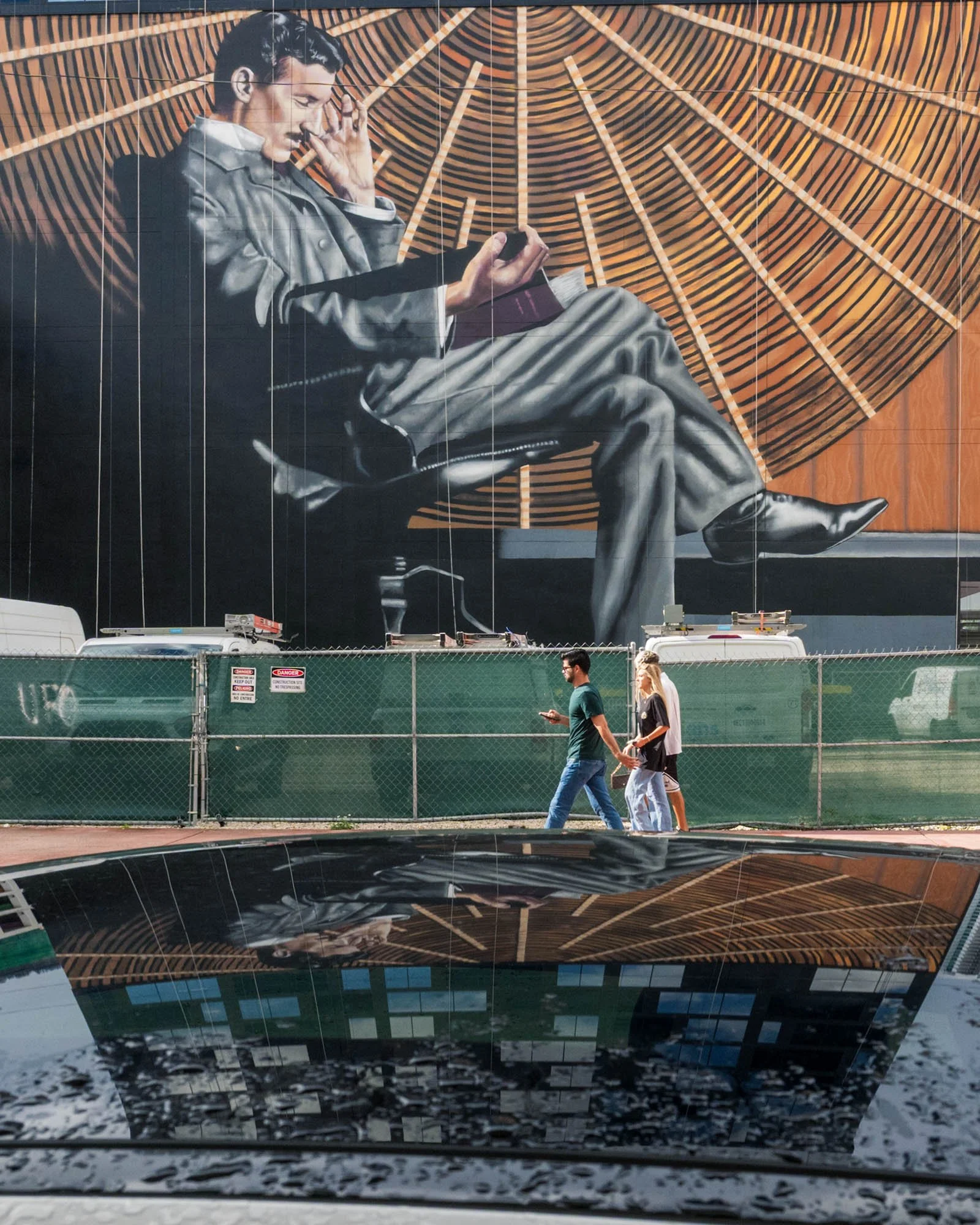
Downtown is turning into glass towers and commissioned walls. The city’s abatement crews scrub the tags, and the parking lot galleries go the minute a developer closes on the lot. The Tesla mural already has a construction fence in front of it. The flag figure on East Flagler has an excavator working beneath it.
None of this is protected. Once a wall is painted over or knocked down, a photograph is the only record left.
If there’s a mural downtown you walk past every day, go shoot it this week.