
What’s in the Foreground
How foreground elements add depth, texture, and story to your photographs
Photographers have a tendency to look straight at their subject and the foreground, the space between the camera and the main subject can be an afterthought, something to step around or crop out.
That's a mistake. The foreground is one of the most powerful tools you have. Used deliberately, it transforms a flat two-dimensional image into something with depth, layers, and a sense of place that the subject alone can never produce.
Here are three ways I use foreground elements in my photography, with examples from the street, the beach, and the waterfront here in Miami.
1. Reflections - The Foreground That Doubles the Scene
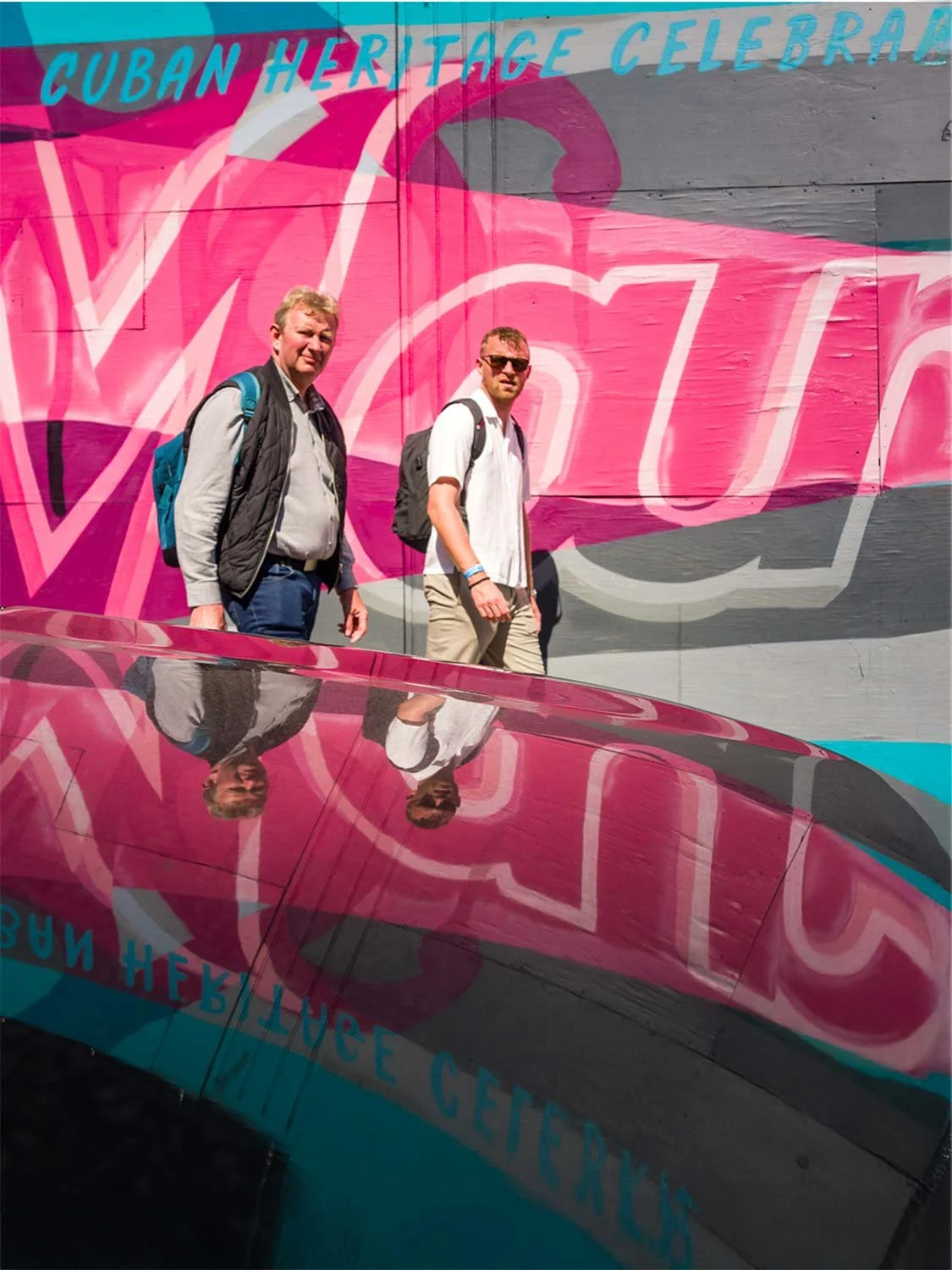
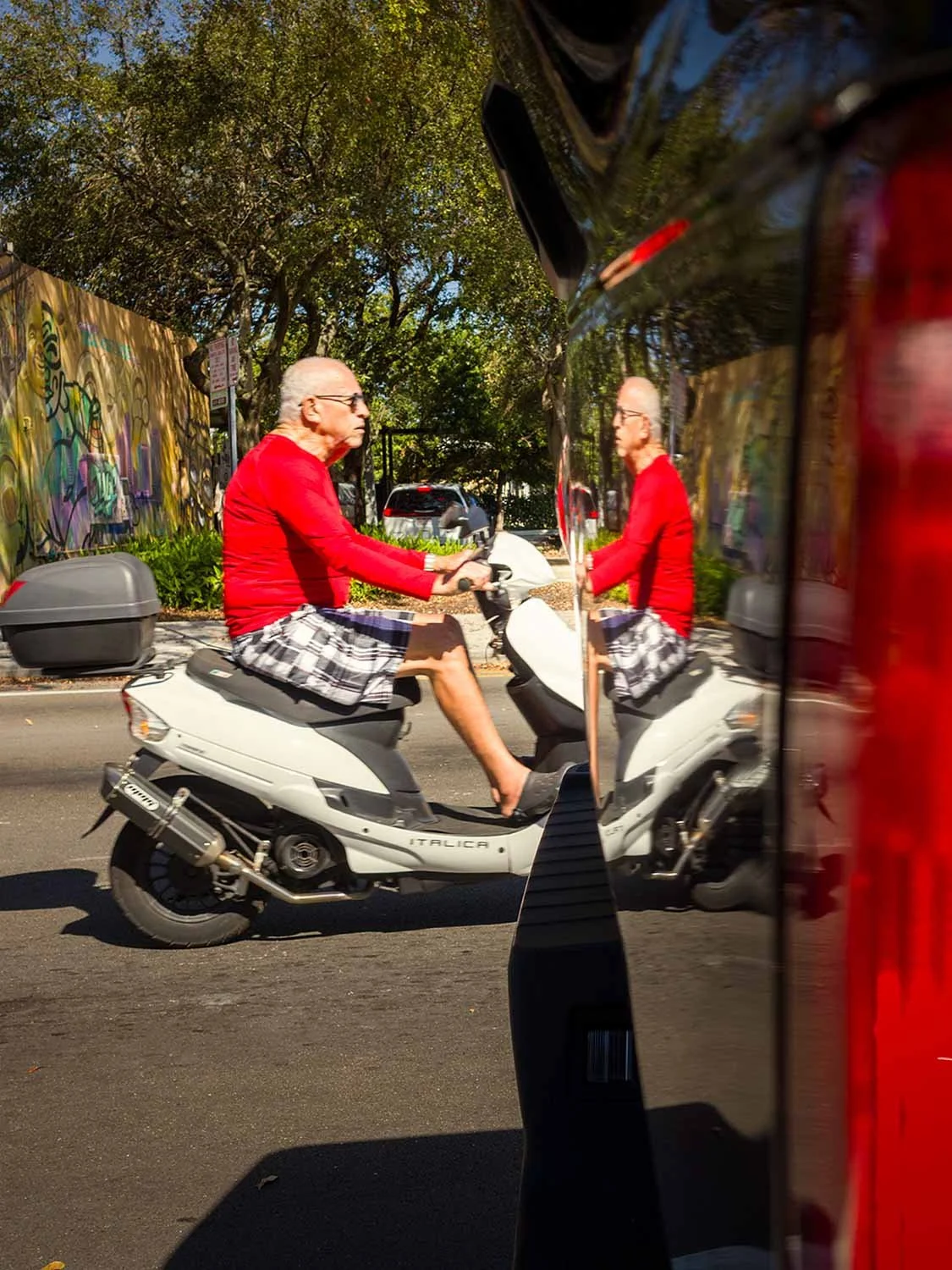
A reflection in the foreground doesn't just add depth. It gives you a second photograph living inside the first. The real scene above, its mirror image below, and the tension between them is what holds the viewer's eye.
In Miami, this happens constantly puddles after rain: , car rooftops, shop windows, the wet sand at South Beach. The key is getting low enough that the reflection reads clearly rather than appearing as a small detail at the bottom of the frame.
What reflections do well:
Add a symmetry that feels almost architectural
Brings the sky into the lower half of the frame
Creates a second layer of story — the real scene and its inverted version simultaneously
→ Try it: After rain, don't put your camera away. Walk the streets and look down. The best reflection opportunities last 20 to 30 minutes before the water drains.


2. Texture and Pattern - Shooting Through Something
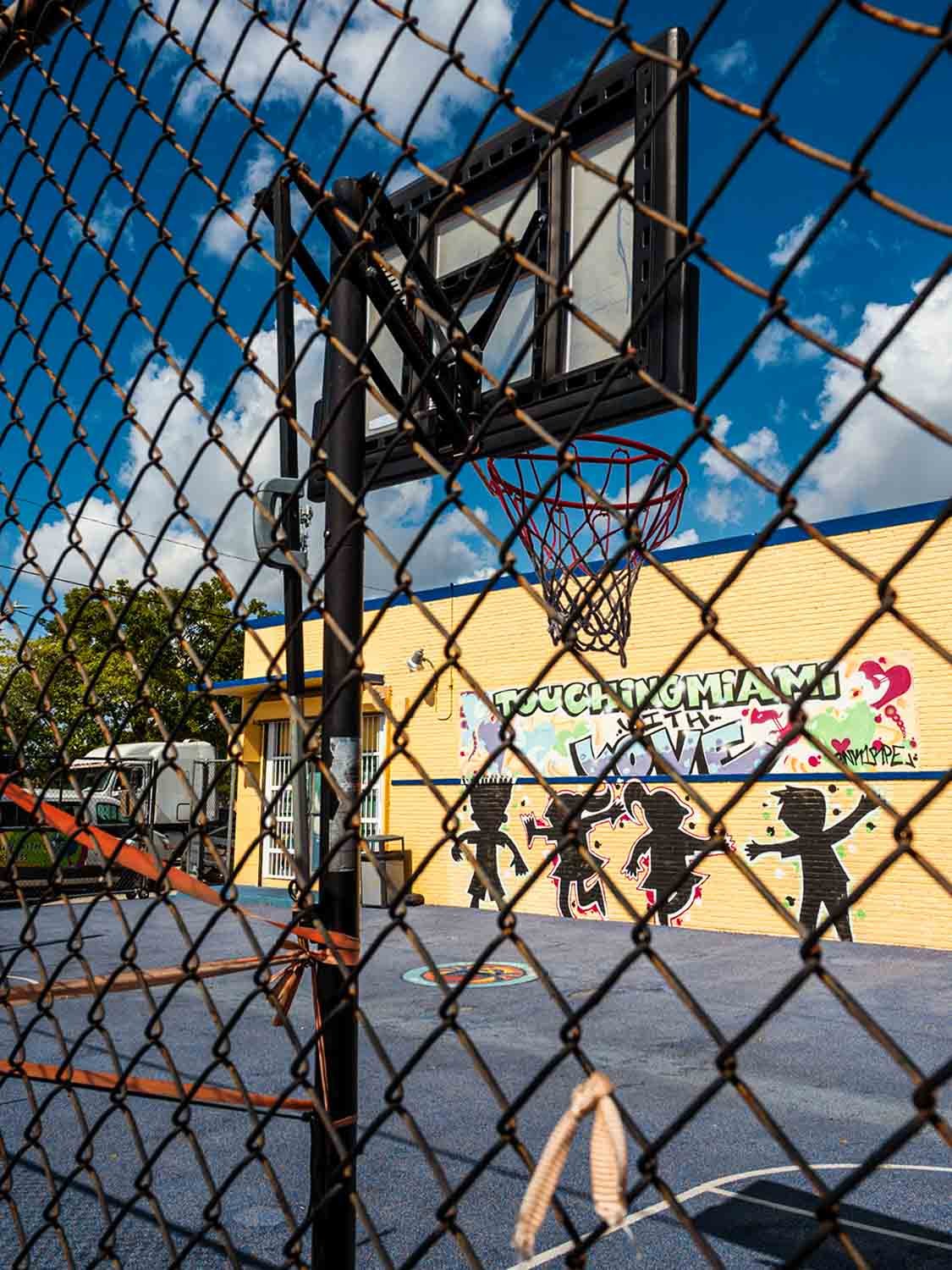
A chain link fence, a metal barrier, a railing, a window are obstacles most photographers walk around. Shoot through them instead.
A textured foreground element does three things at once:
It creates an immediate sense of depth, near, middle and far
It adds context, placing the subject inside a real environment
It gives the viewer the feeling of discovering the scene rather than being handed it
The basketball court shot through the chain link fence is a good example of this. Shot from the other side of the fence, the image would be a simple documentary photograph of a court and a mural. Shooting through the fence puts you in a specific relationship with the scene, outside looking in and that relationship is part of the story.
→ Try it: The next time something is blocking your shot, don't move around it. Move closer to it and shoot through it.

3. Natural and Human Framing — Context That Earns Its Place
Some foreground elements don't create reflection or texture or motion. They simply place the subject in a context that makes it more meaningful.
The woman at the beach at golden hour is the clearest example. She's in the immediate foreground, back to the camera, looking at the scene ahead. The wooden structure frames the left and top. Two distant figures near the waterline complete the middle ground. The ocean and golden sky fill the background. Every layer earns its place and each one adds something the others don't.
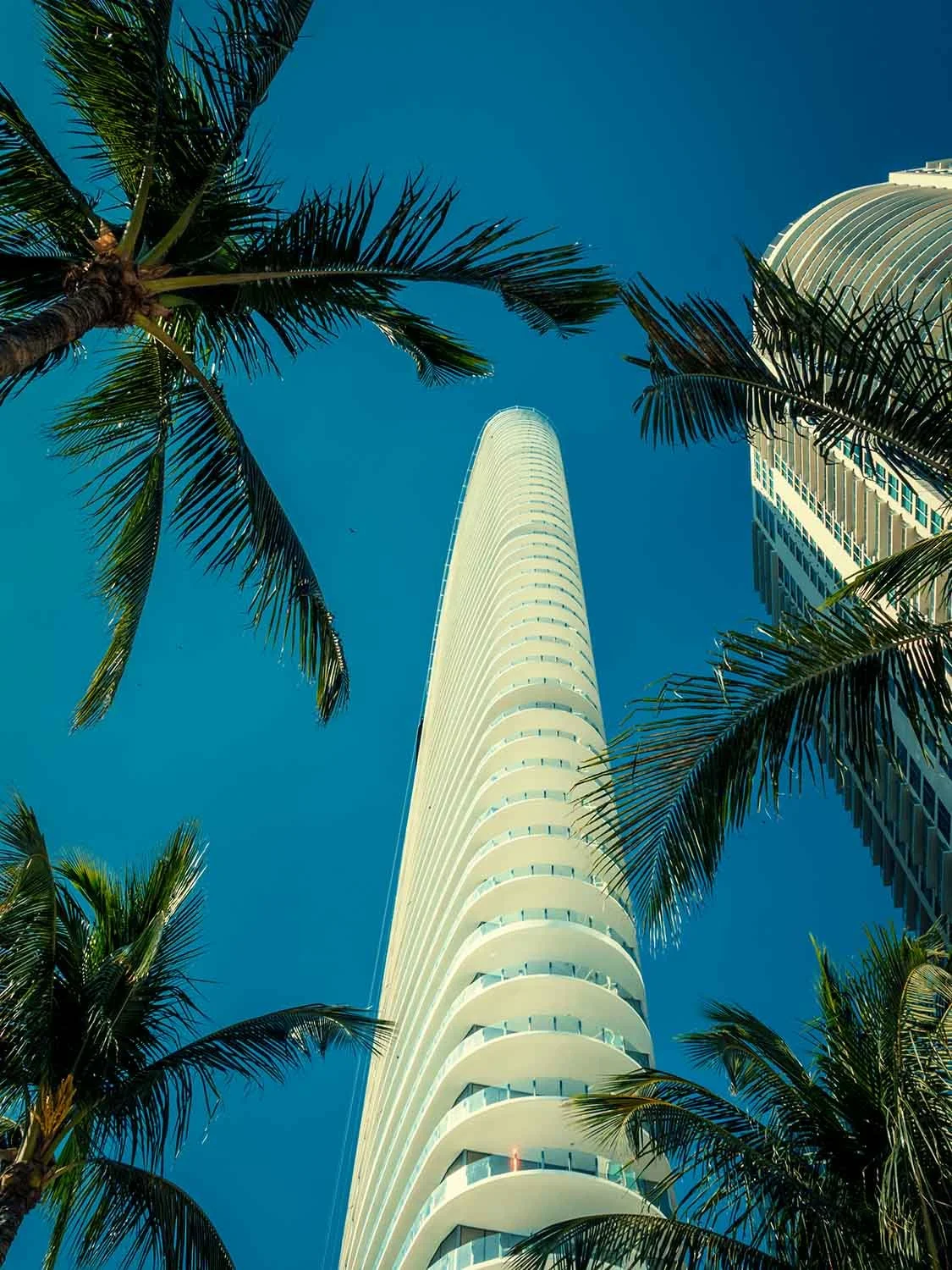
The palm fronds around the Brickell tower work differently but with the same logic — the tropical foreground anchors a vertical city shot in something distinctly Miami. Without the palms, it's a tower against sky.
→ Try it: Before you shoot, ask: what can I put in the foreground that earns its place? Not just something to fill the space — something that adds a layer of story or context the subject alone doesn't have.

The Simple Rule
A foreground element should always do at least one of four things: add depth, add context, add texture, or add story. If it doesn't do any of those, it's just clutter.
Start by looking at the space between you and your subject before you raise the camera. That space is full of potential foreground. Most photographers step past it without seeing it. Once you start looking for it, you'll find it everywhere.
This is part of a small series on composition. See also Reflection Photography in South Beach, Finding Pockets of Light, and Frame within a Frame.
More Miami photography in the Miami gallery.