
The Little Art Deco District: Ocean Terrace Before the Tower Goes Up
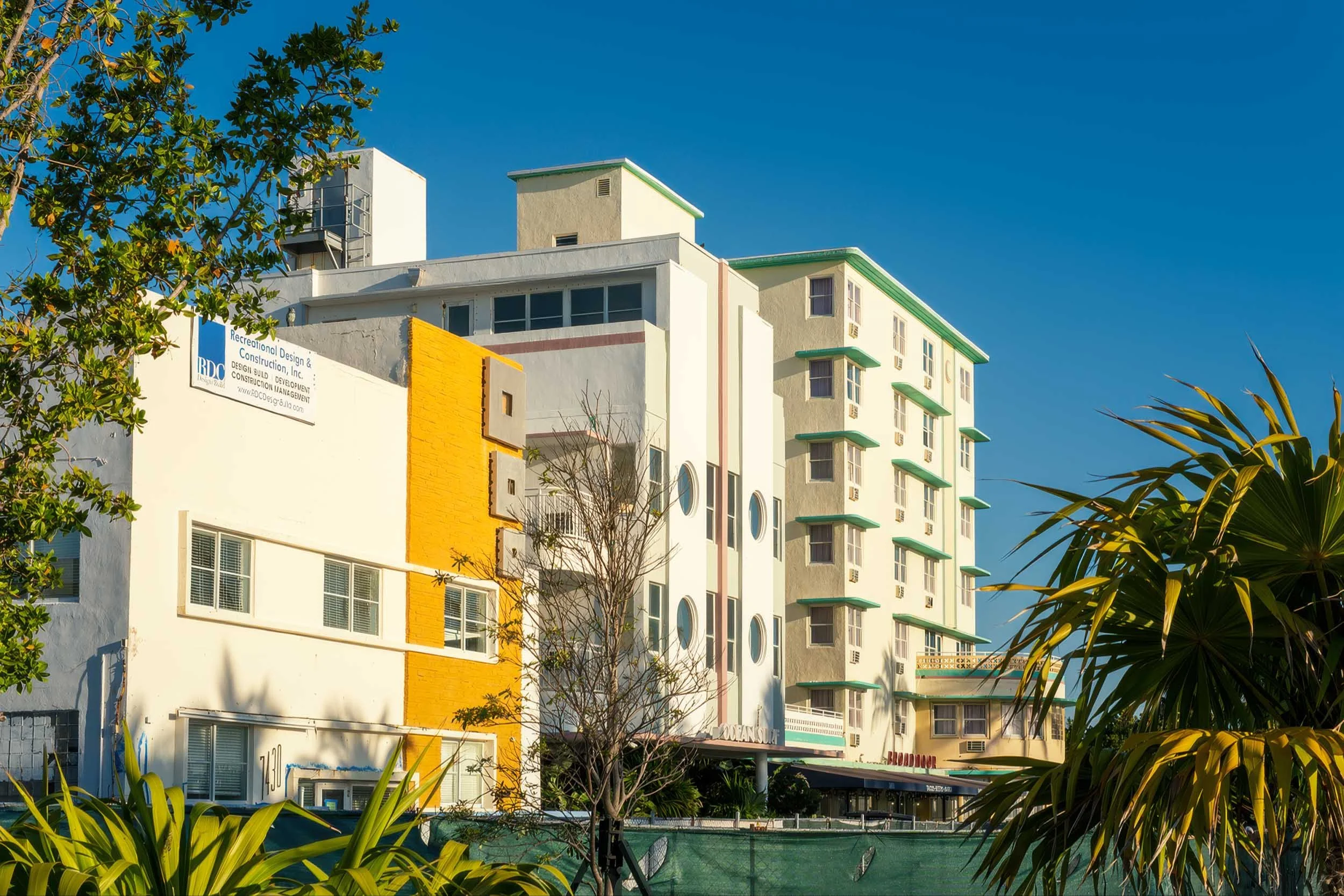
Ocean Terrace, between 74th and 75th in North Beach, used to be one continuous block of oceanfront hotels. Six buildings. Four architects. The strip runs from Art Deco straight into Miami Modern in about two hundred yards. Right now the block is a live construction site, but the facades are still fully intact.
Six Buildings, Four Architects
South Beach gets the attention for its 1930s Art Deco footprint, dense and compact, built on small lots close to the street. North Beach came later and built differently. The postwar boom gave architects here more room to work with, and the result was a looser, resort-style version of the same modernist language: asymmetry, ribbon windows, buildings designed to be seen from a moving car as much as from the sidewalk.
The block had six properties, moving north from 74th Street:
7400 Ocean Terrace, Ocean Terrace Hotel and Apartments. Designed by Gilbert M. Fein in 1961, the latest and most straightforwardly MiMo of the six, with breeze block screening and stack-bonded slump brick.
7410 Ocean Terrace, Ocean Terrace Hotel. A transitional postwar building with industrial casement windows and raw masonry, later run for a stretch as a Days Inn.
7420 Ocean Terrace, Ocean Horizon. Designed by Donald G. Smith in 1947, using wide projecting rooflines to cut Florida sun off the glass. That move became standard practice for the region.
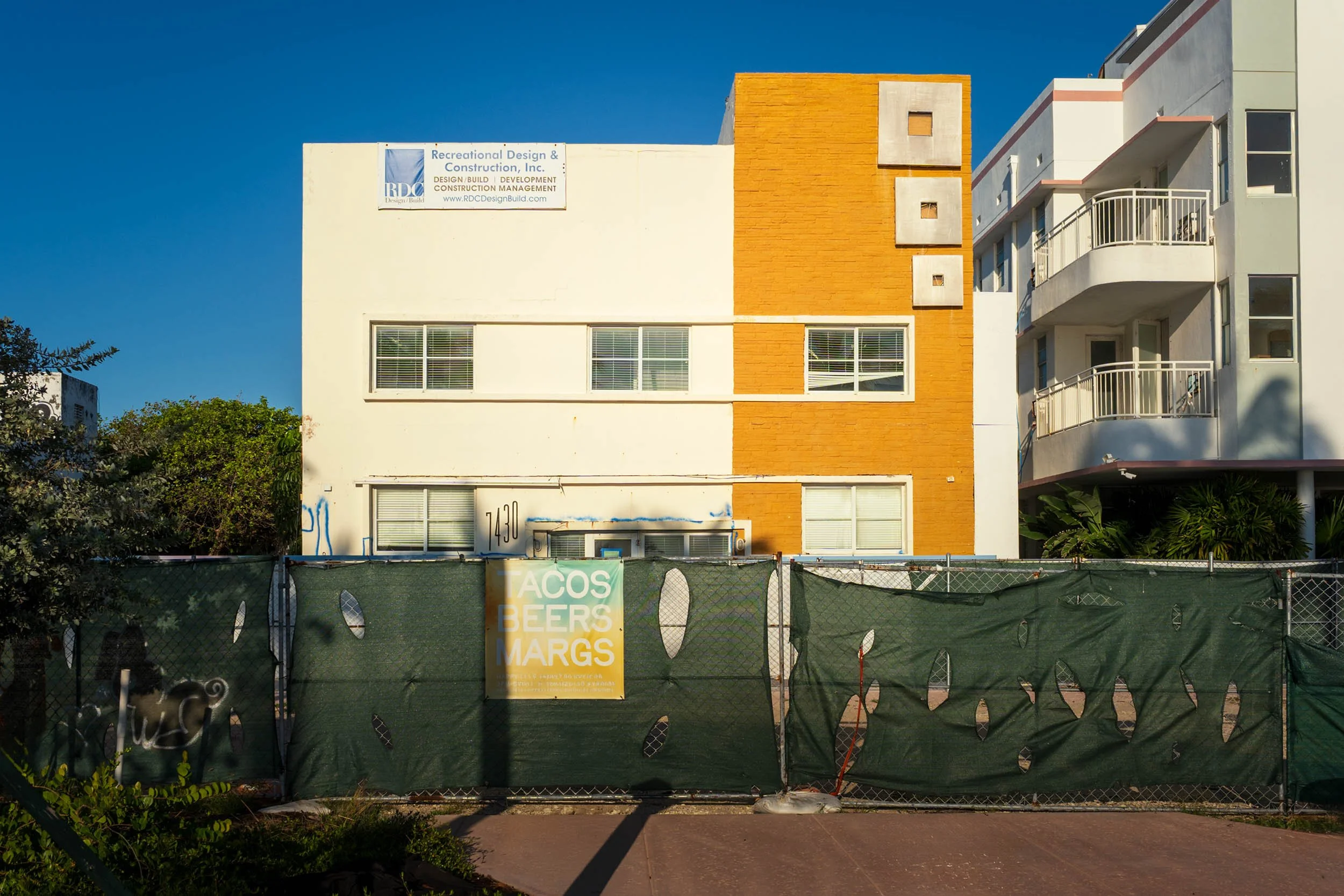
7430 Ocean Terrace, Ocean Way Hotel. Later operated as the Hawaii Hotel, built with a split white-plaster and yellow-brick facade.
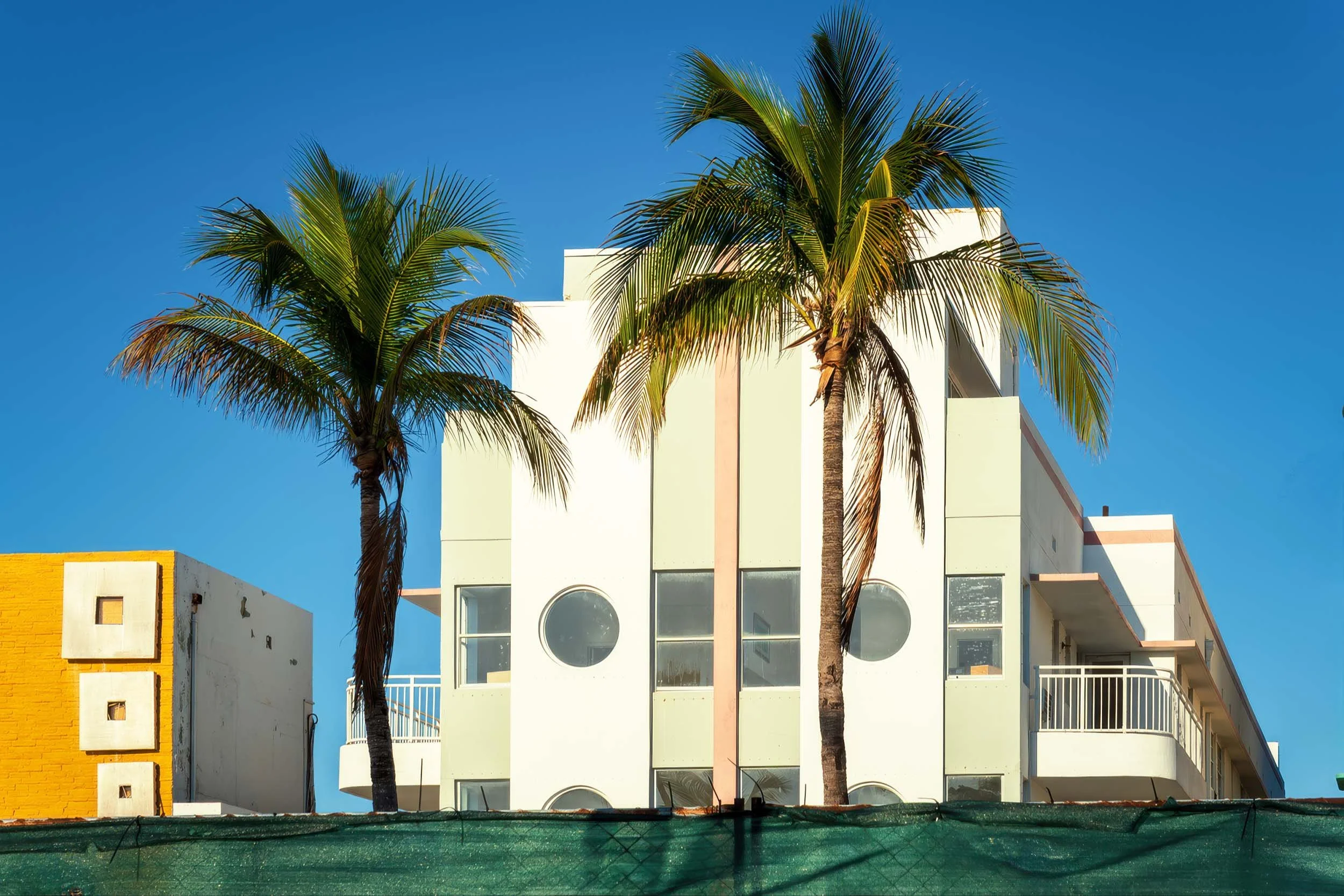
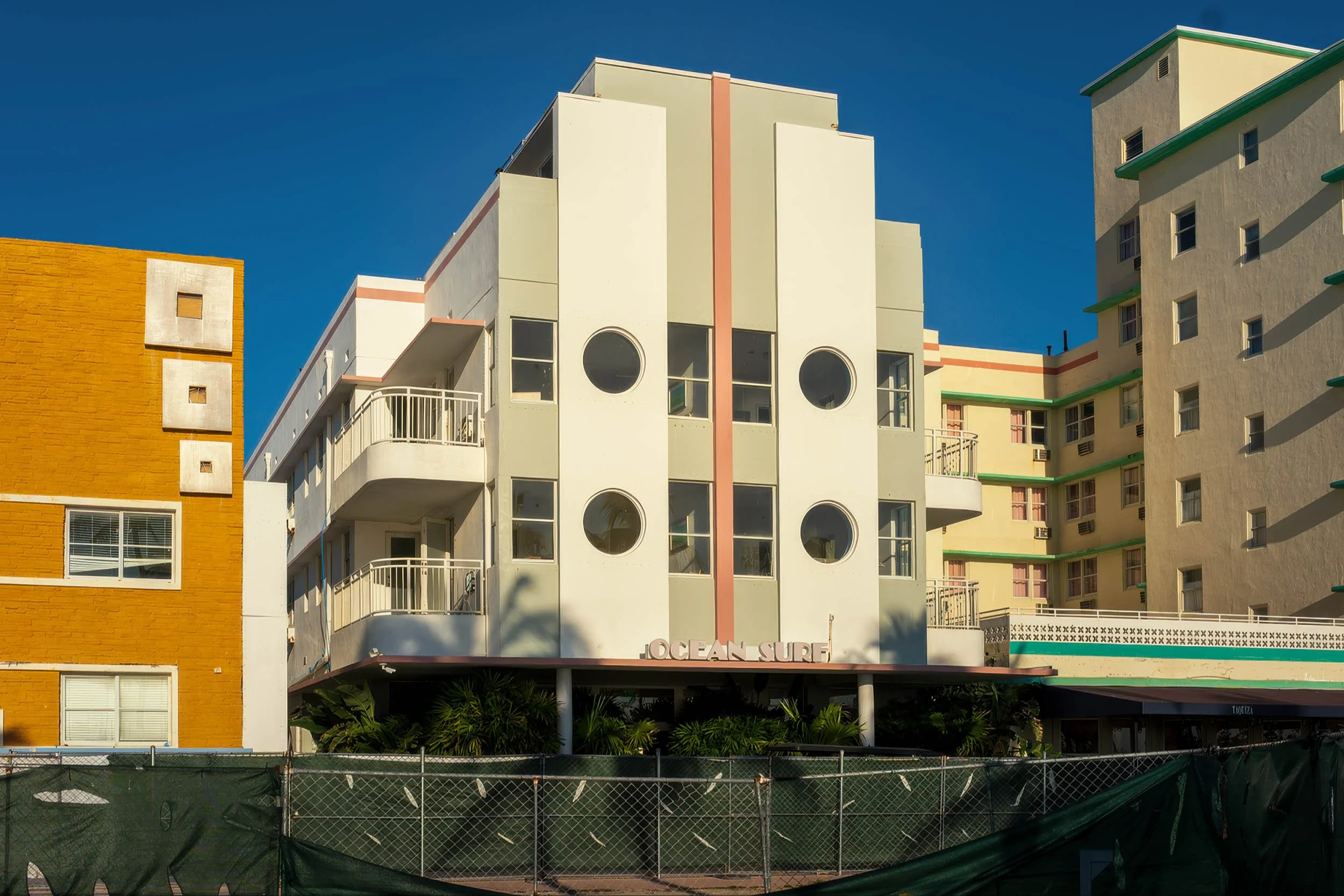
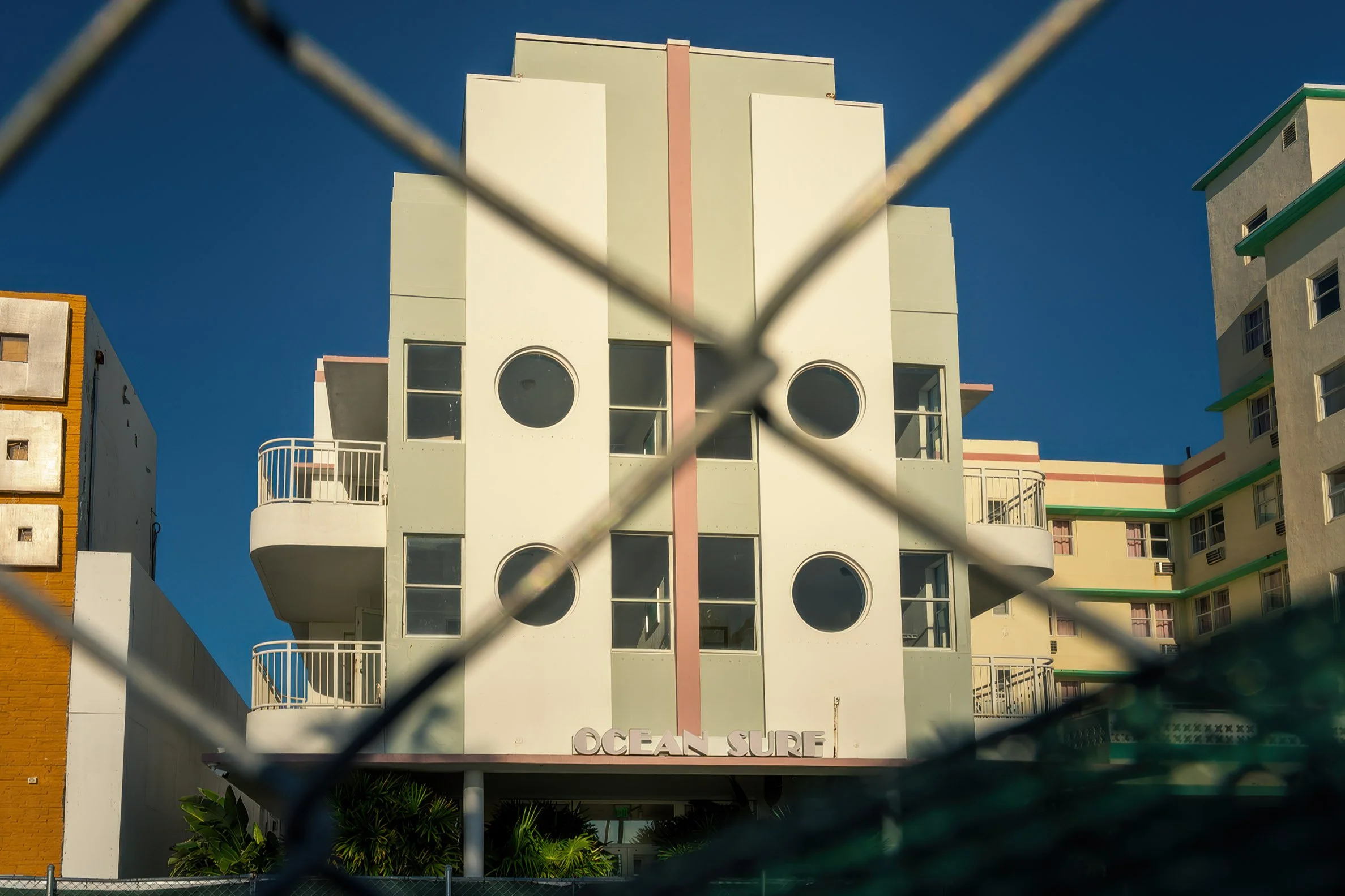
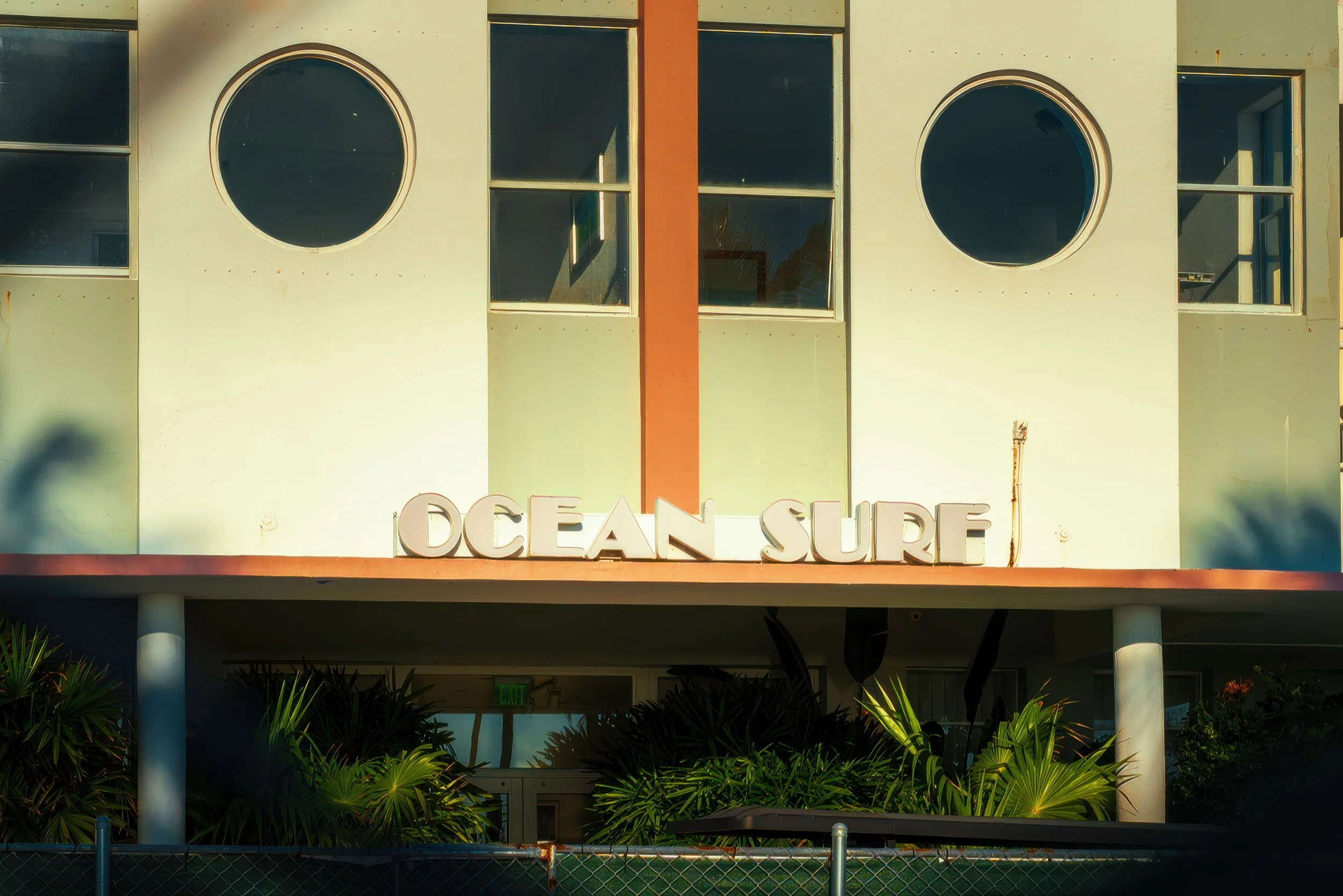
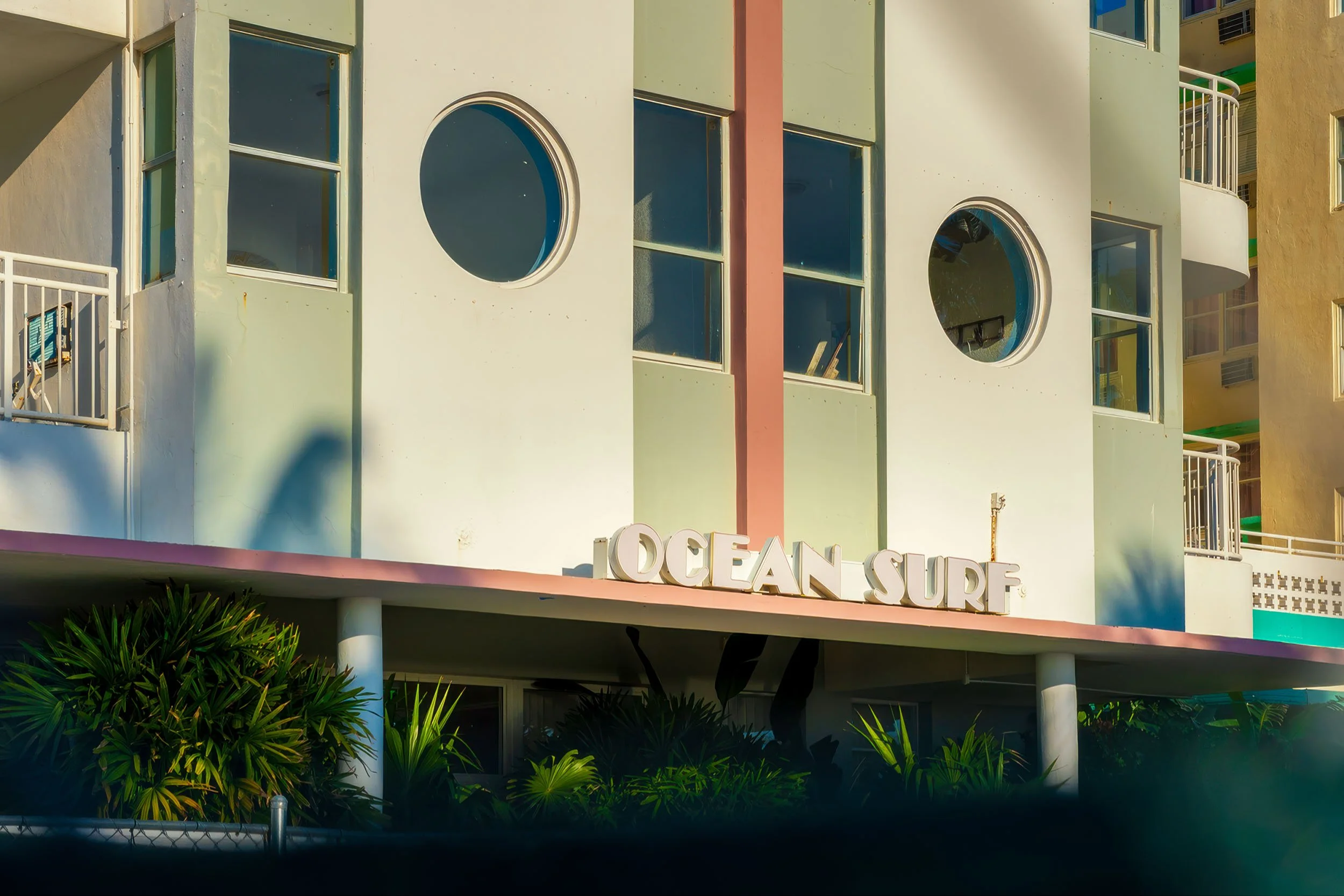
7436 Ocean Terrace, Ocean Surf Hotel. Built in 1940 by Anton Skislewicz, and the most overtly nautical building on the block. Porthole windows, curved corner glazing, horizontal bands meant to read like a ship docked on the beach.
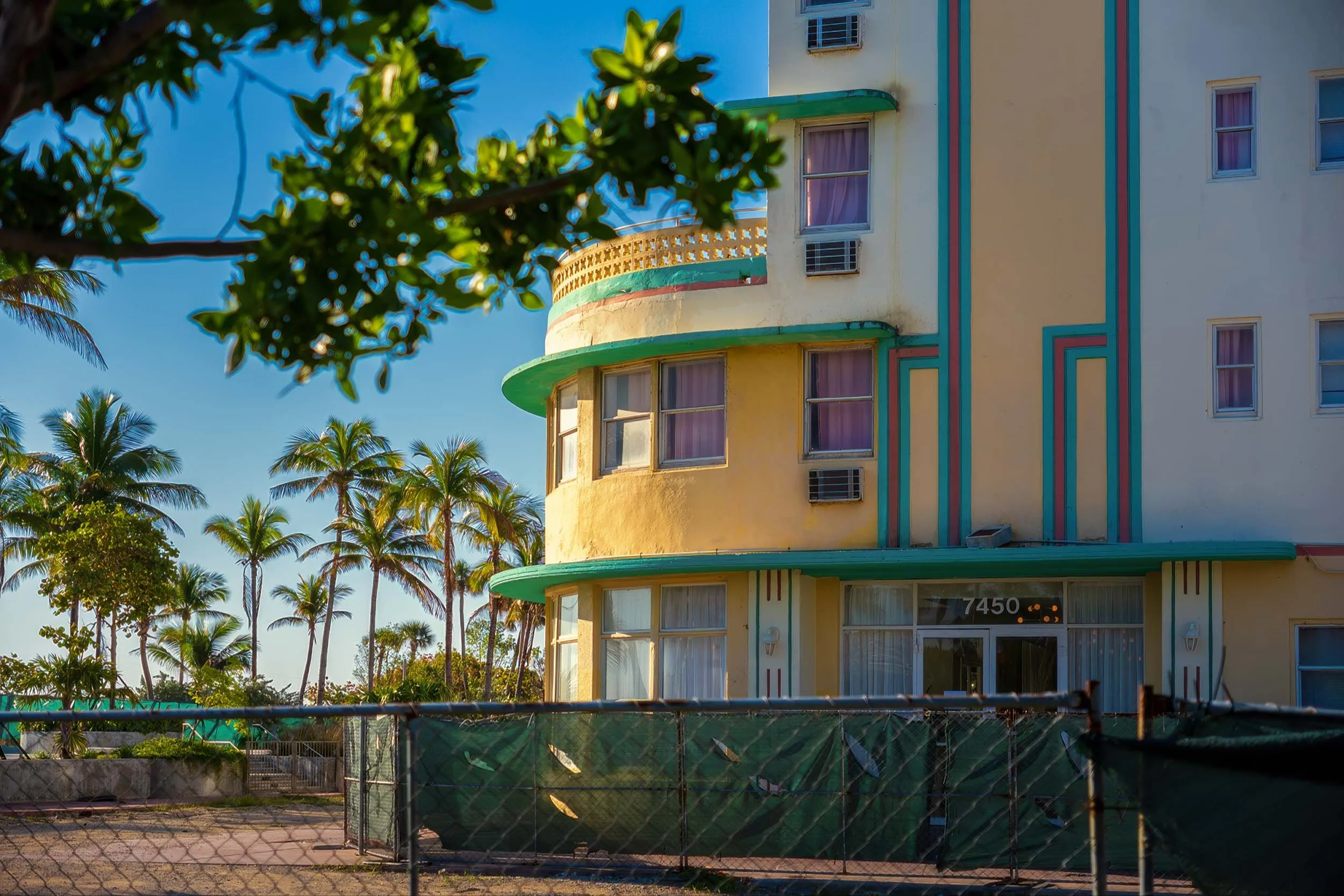
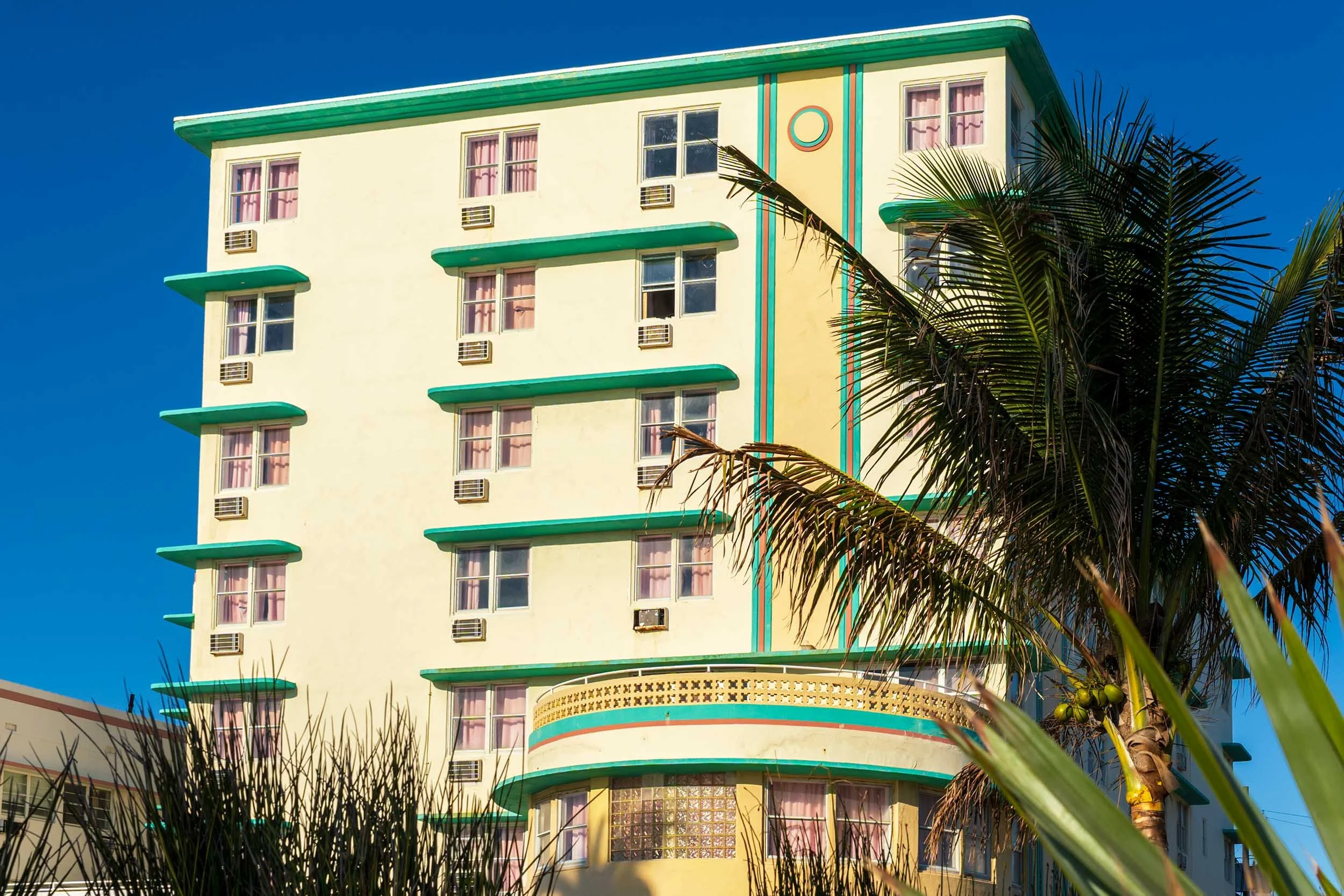
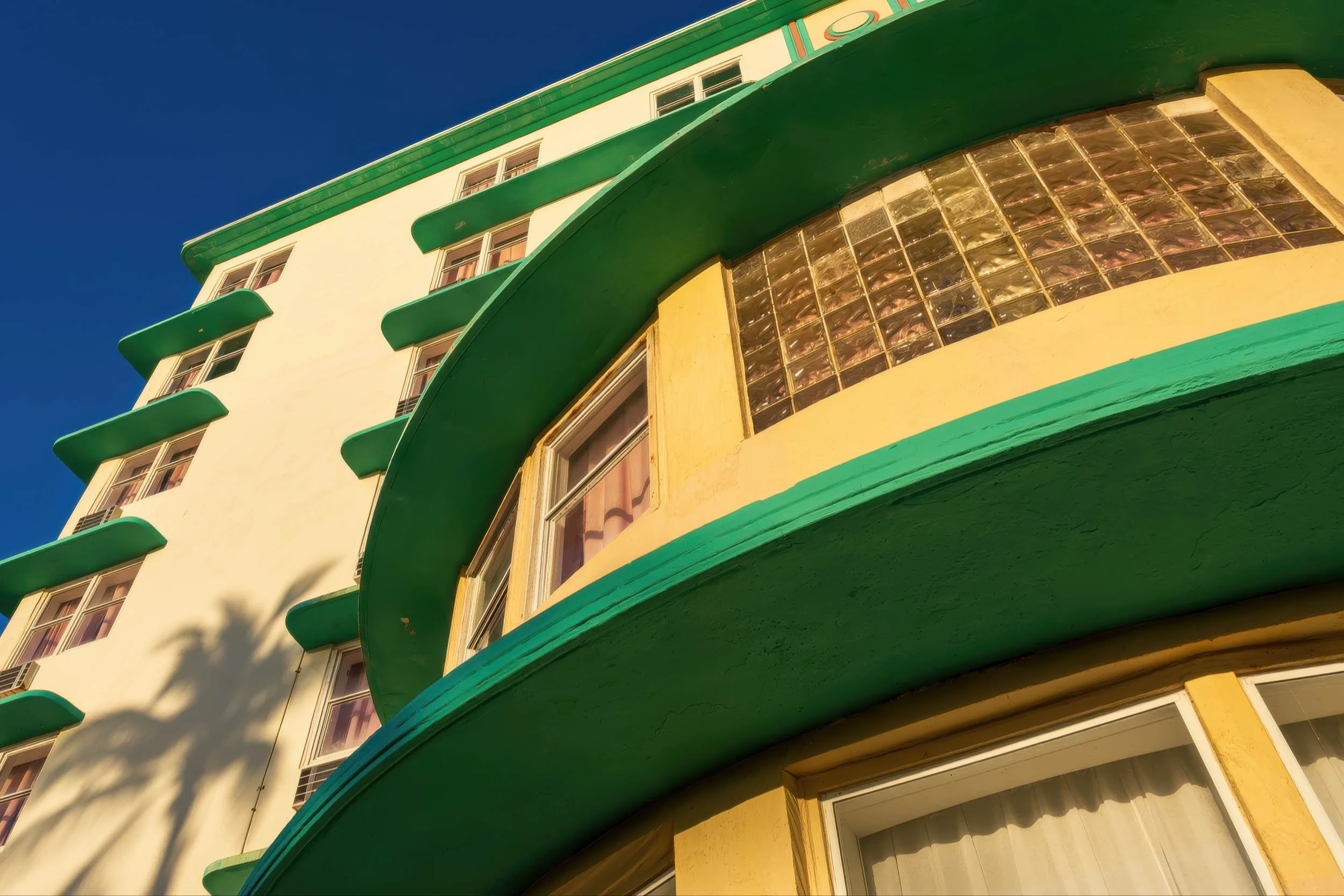
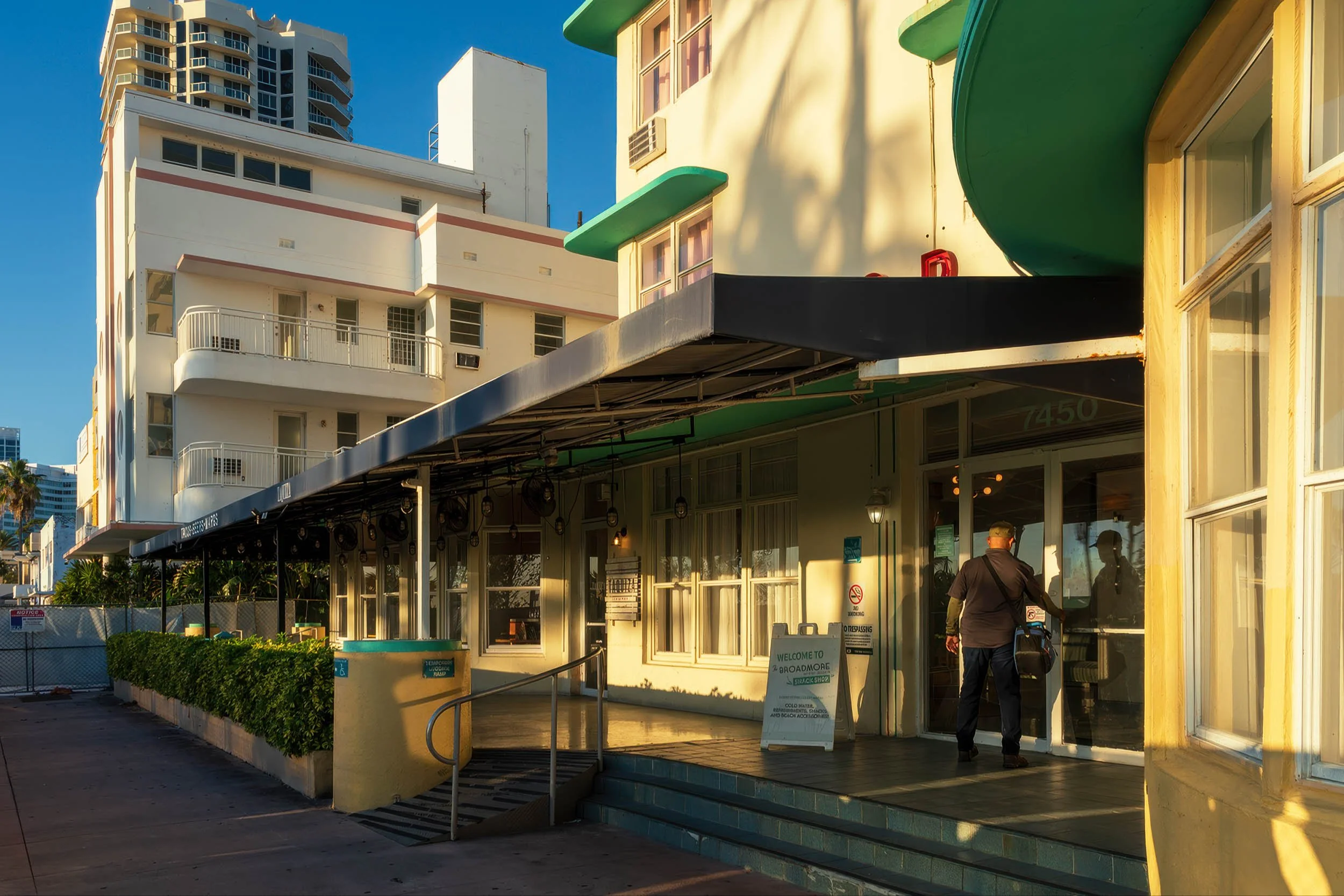
7450 Ocean Terrace, The Broadmoor. Designed in 1948, originally the Broadmoor by the Sea. Streamlined horizontals, wide storefront glass, an asymmetrical footprint anchoring the 75th Street corner.
Behind the Fence
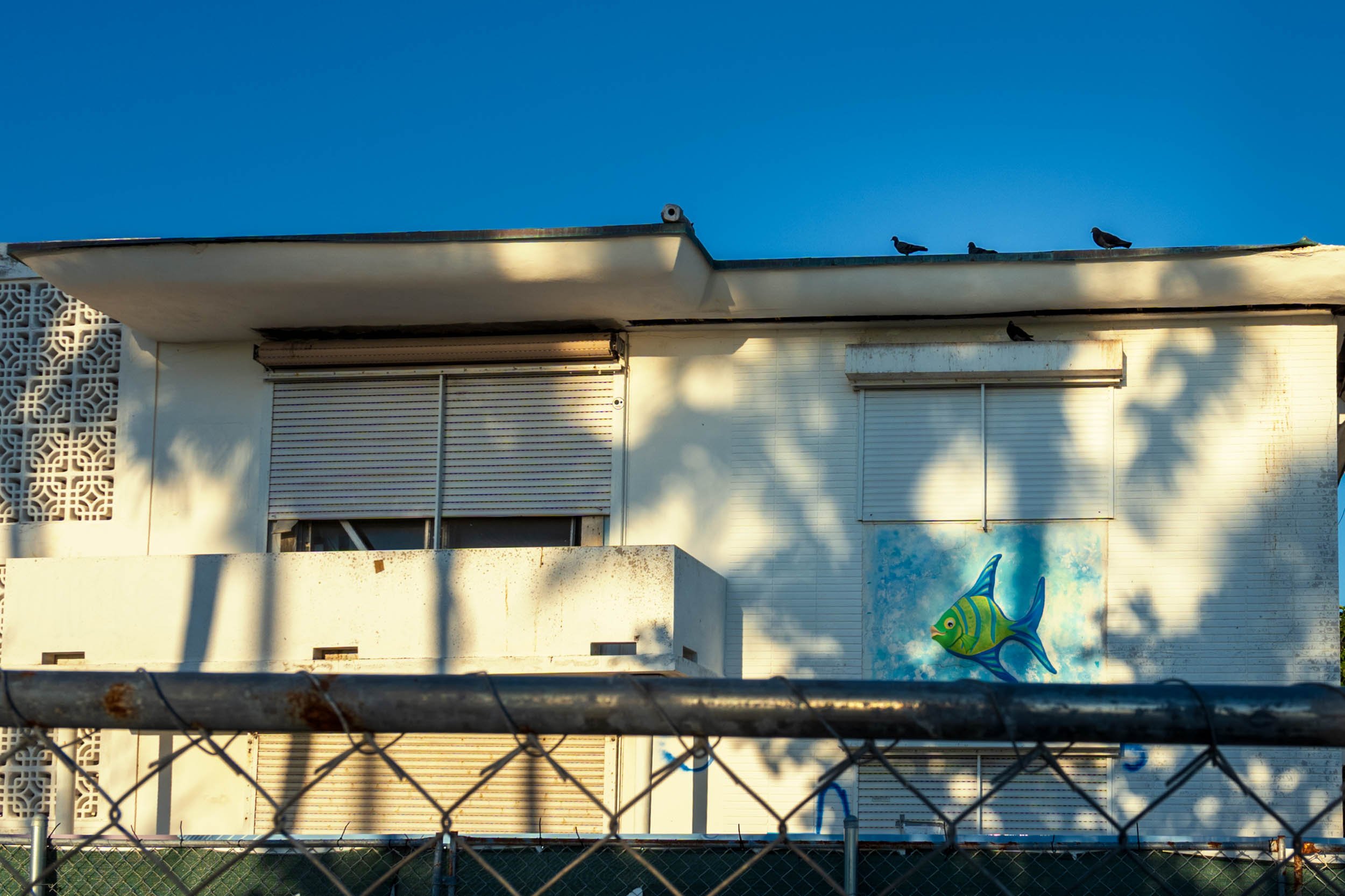
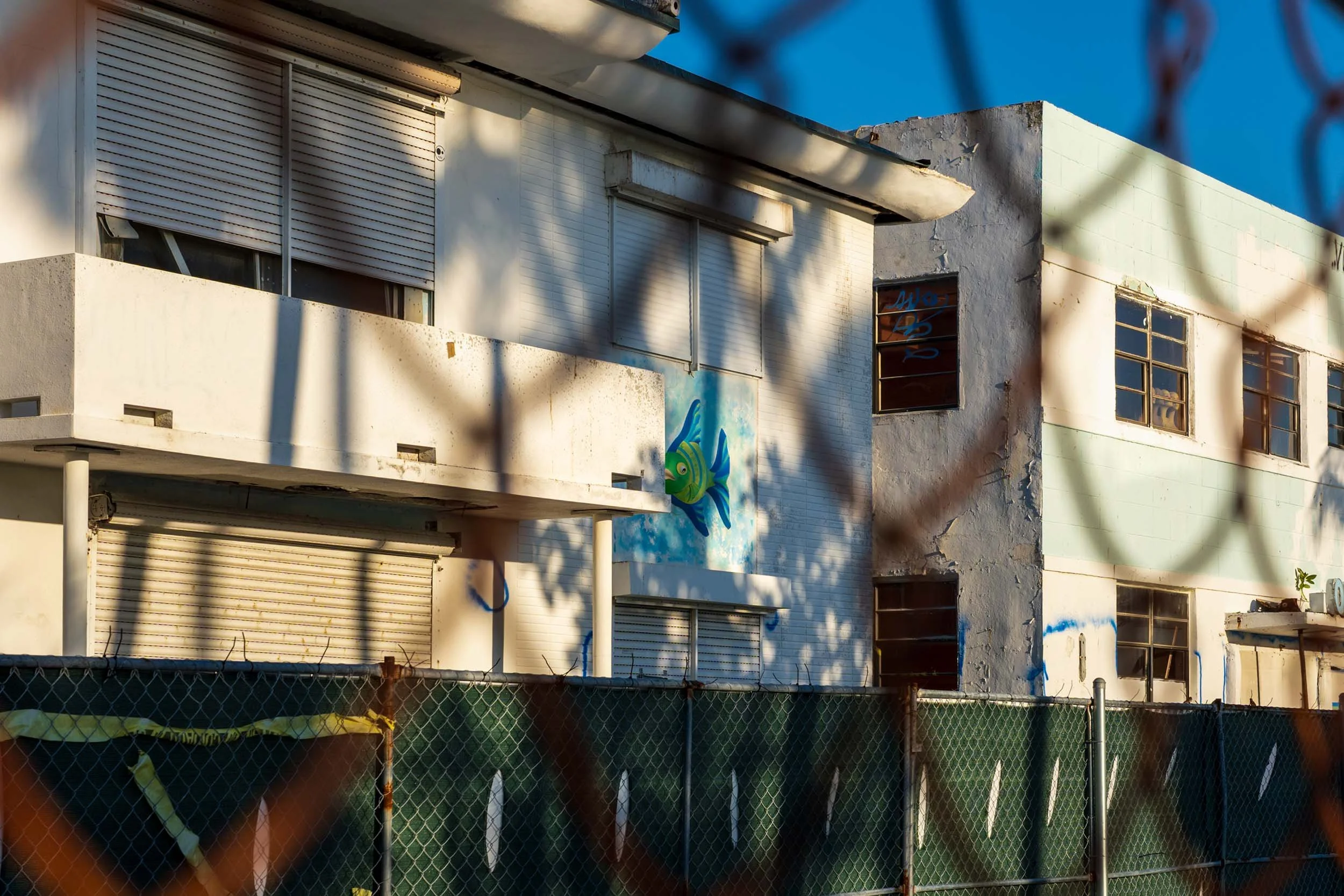
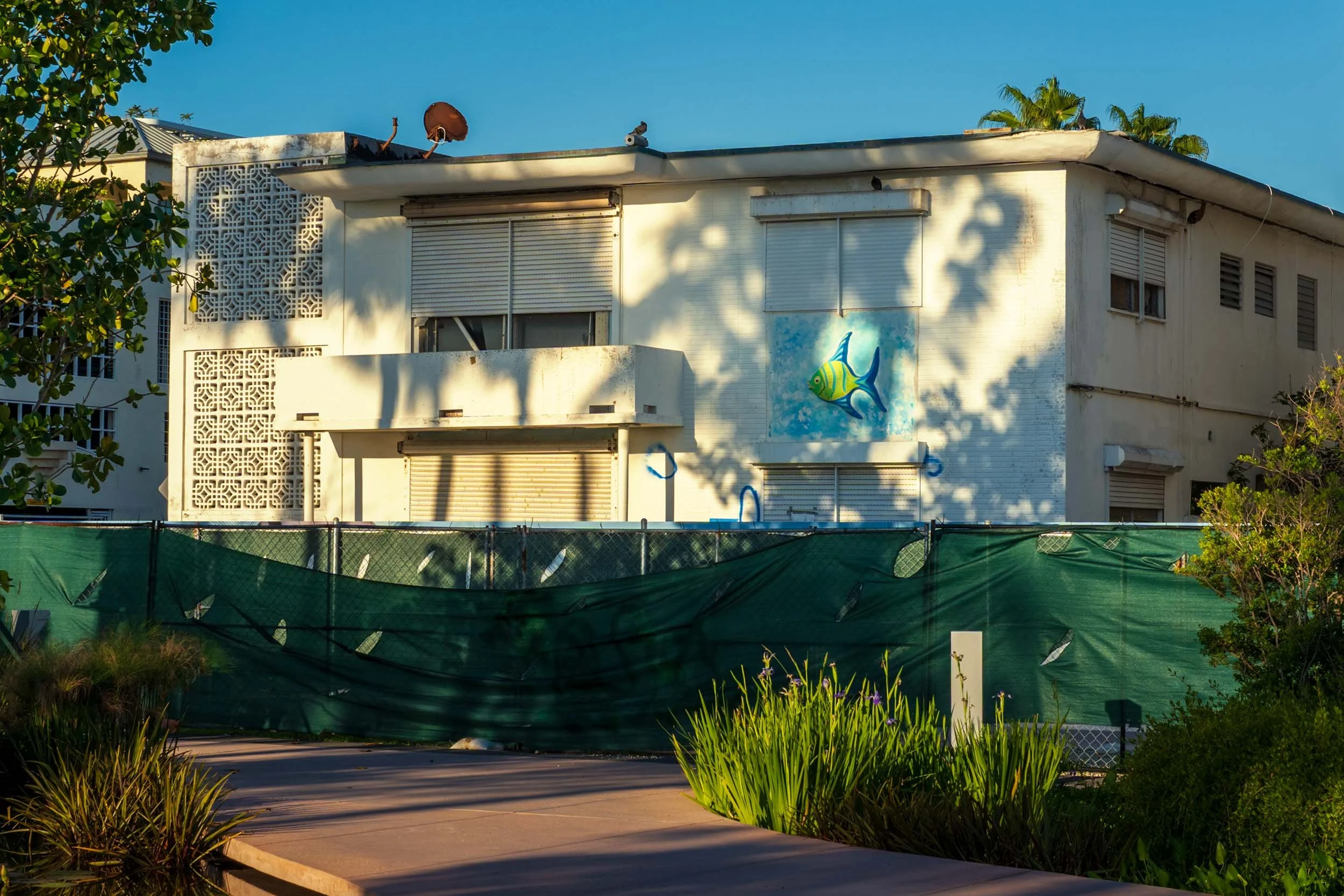
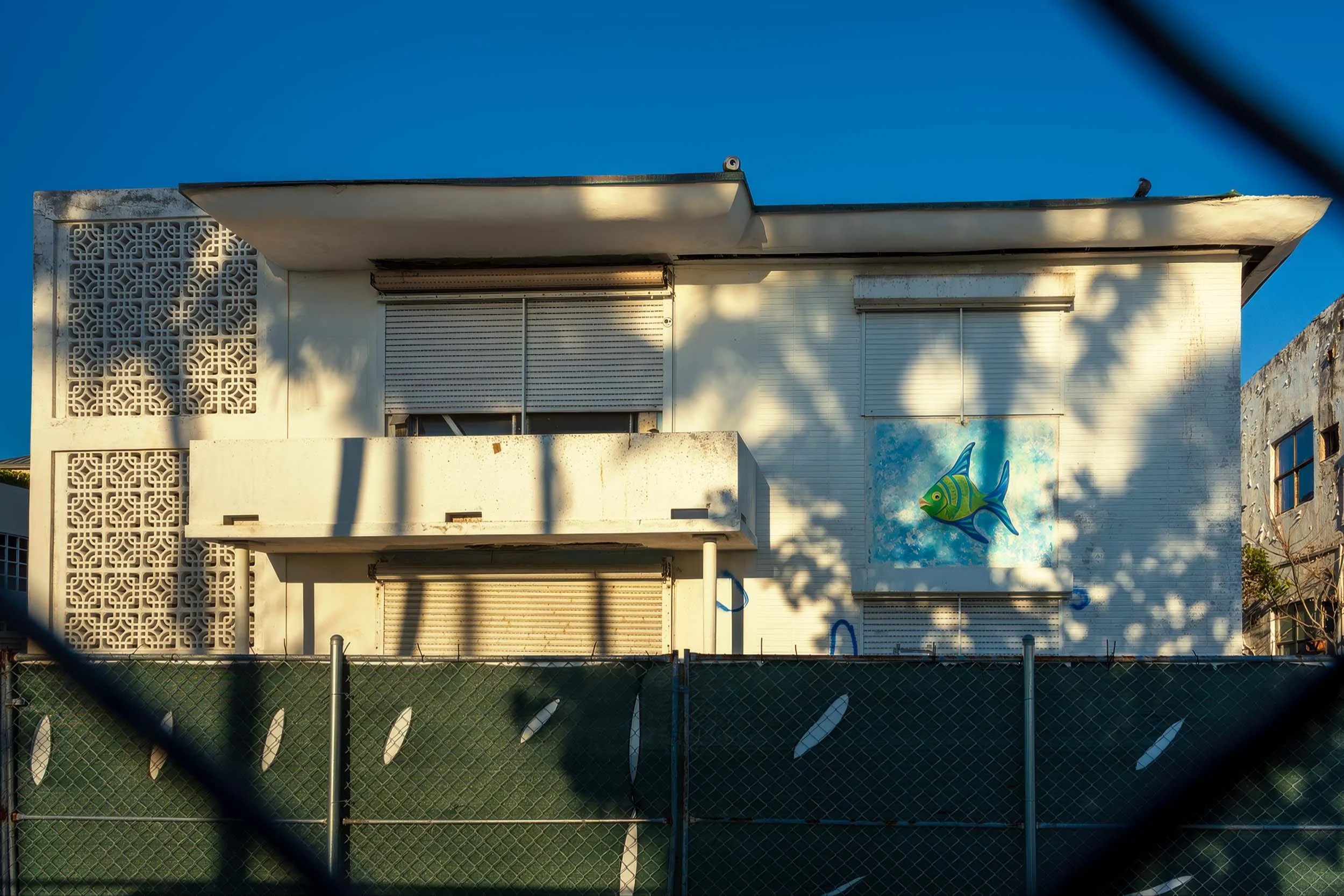
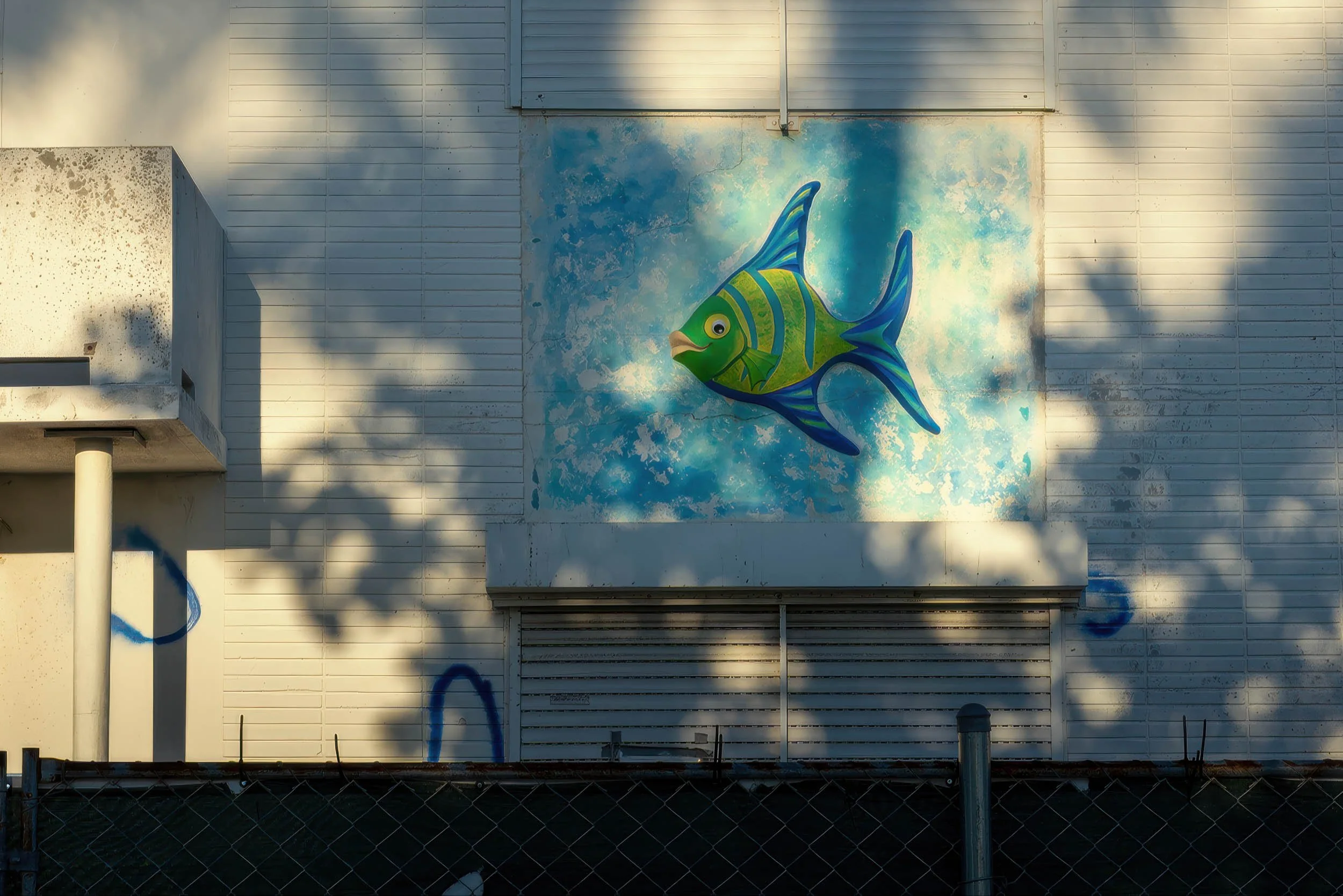
I walked the block south to north, starting at 74th Street and the Ocean Terrace Hotel and Apartments at 7400 Ocean Terrace. Fein's 1961 design leaned into breeze block screening over the stairwell, all interlocking geometric cutouts, paired with plain roll-down security shutters that have probably been down for years. Somebody added a mural at some point, a cartoon fish in blue and green scales against a painted wave pattern.
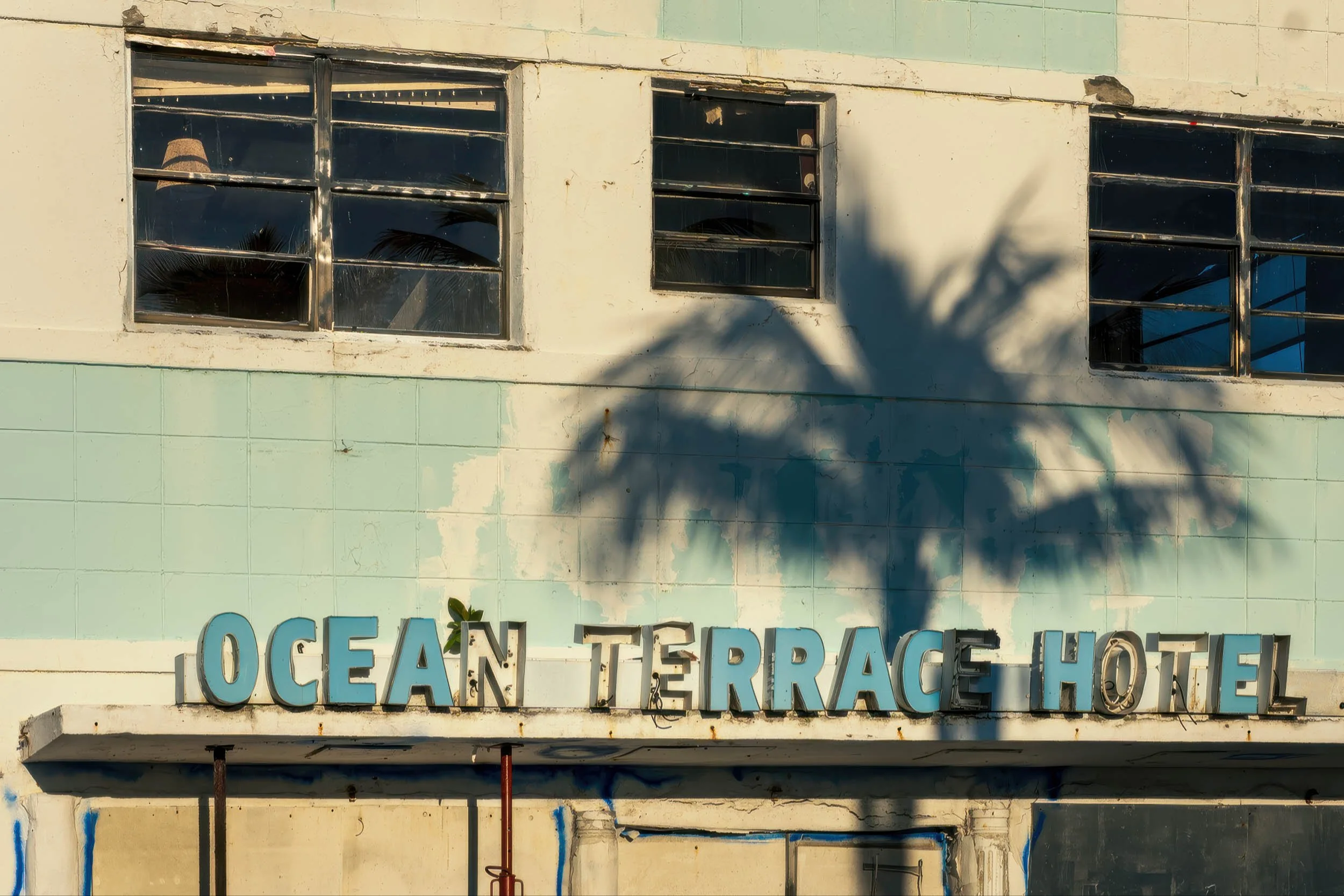
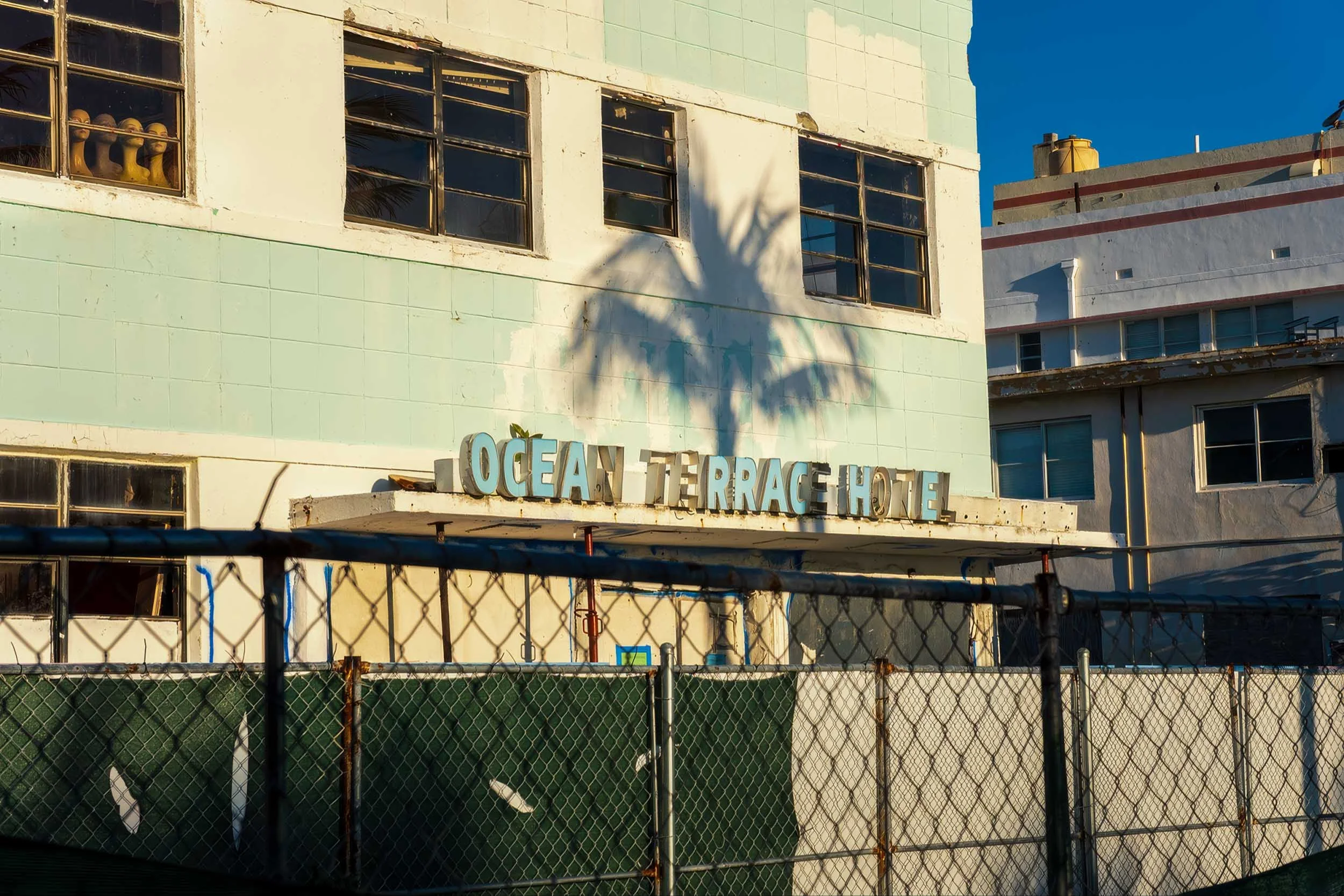
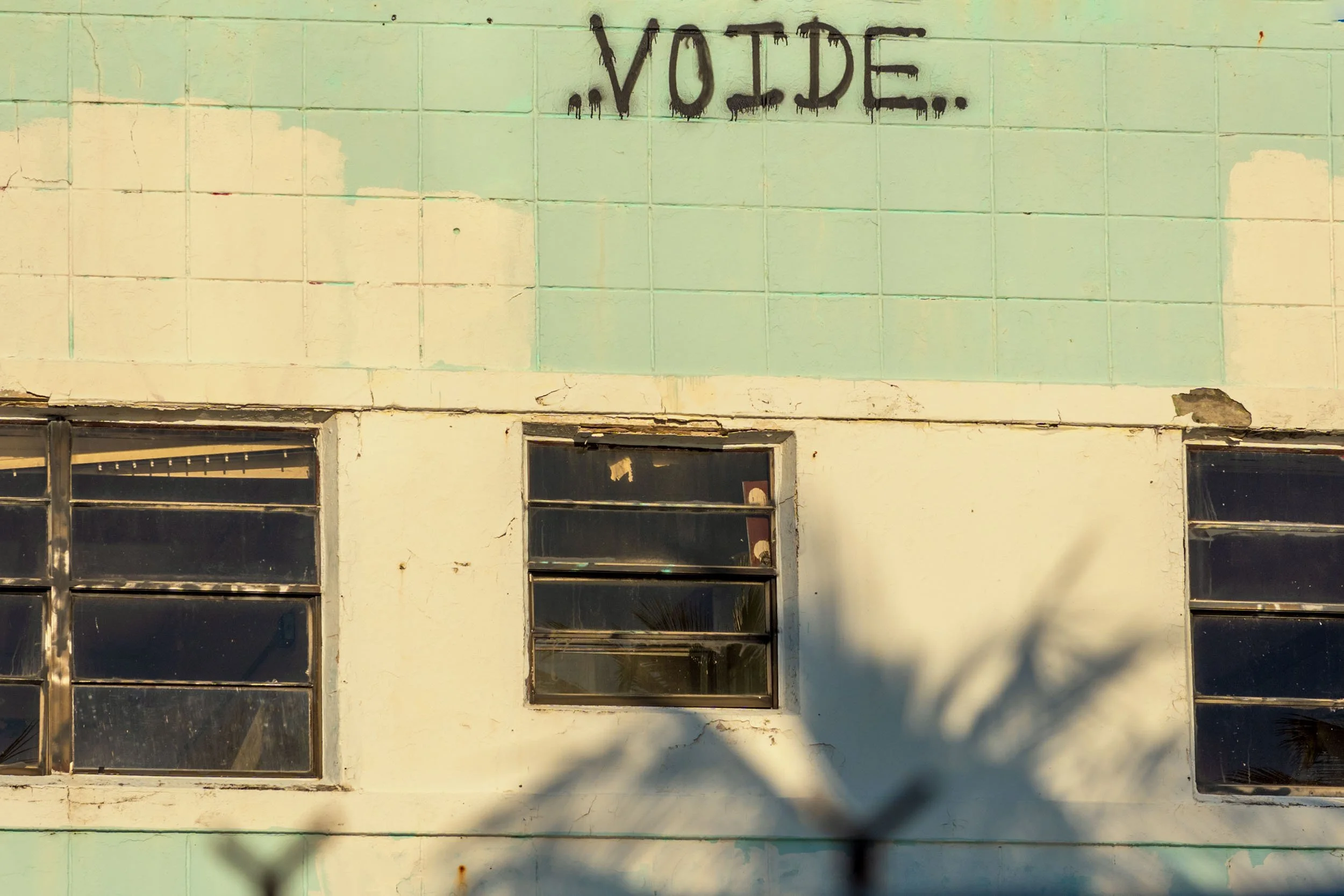
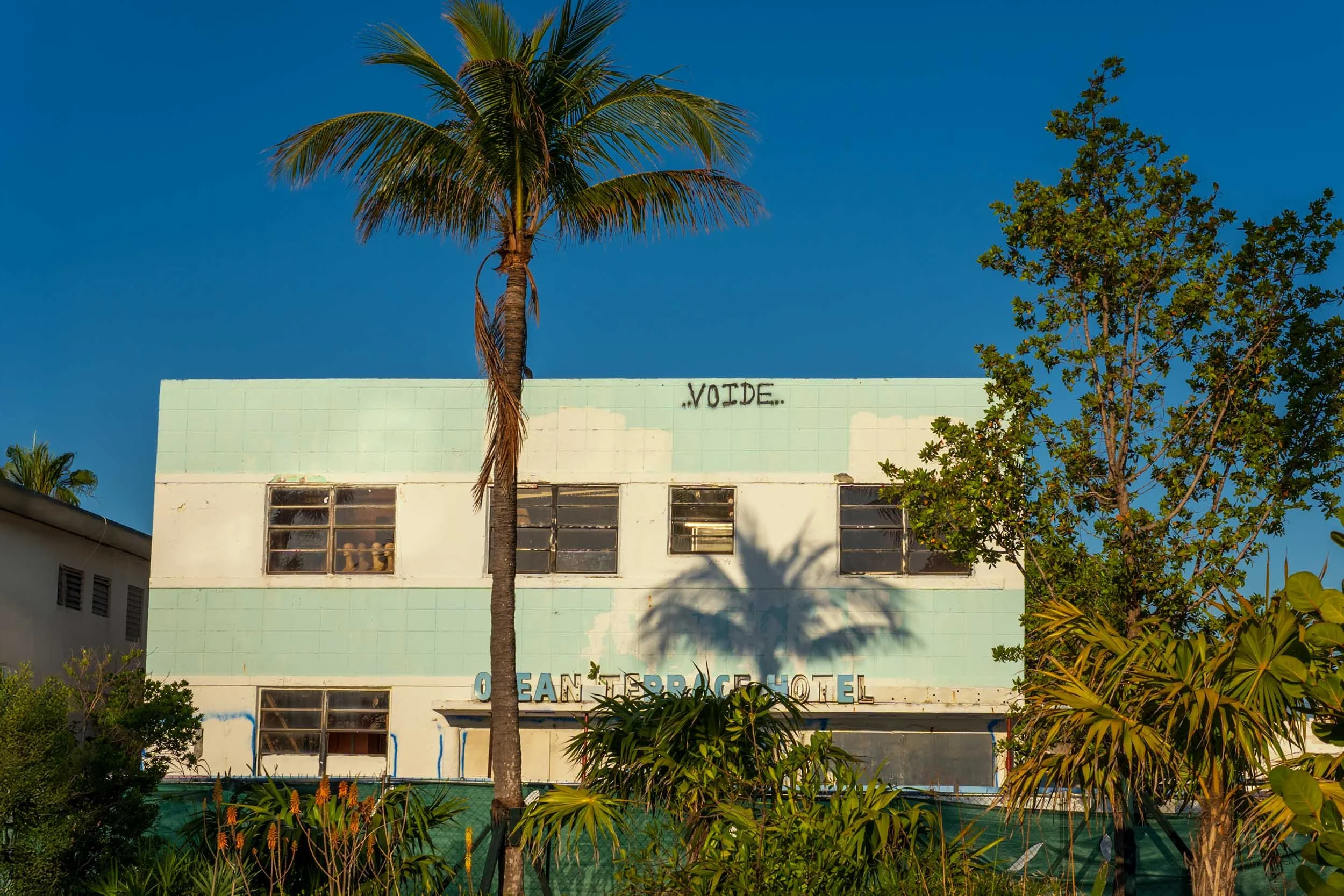
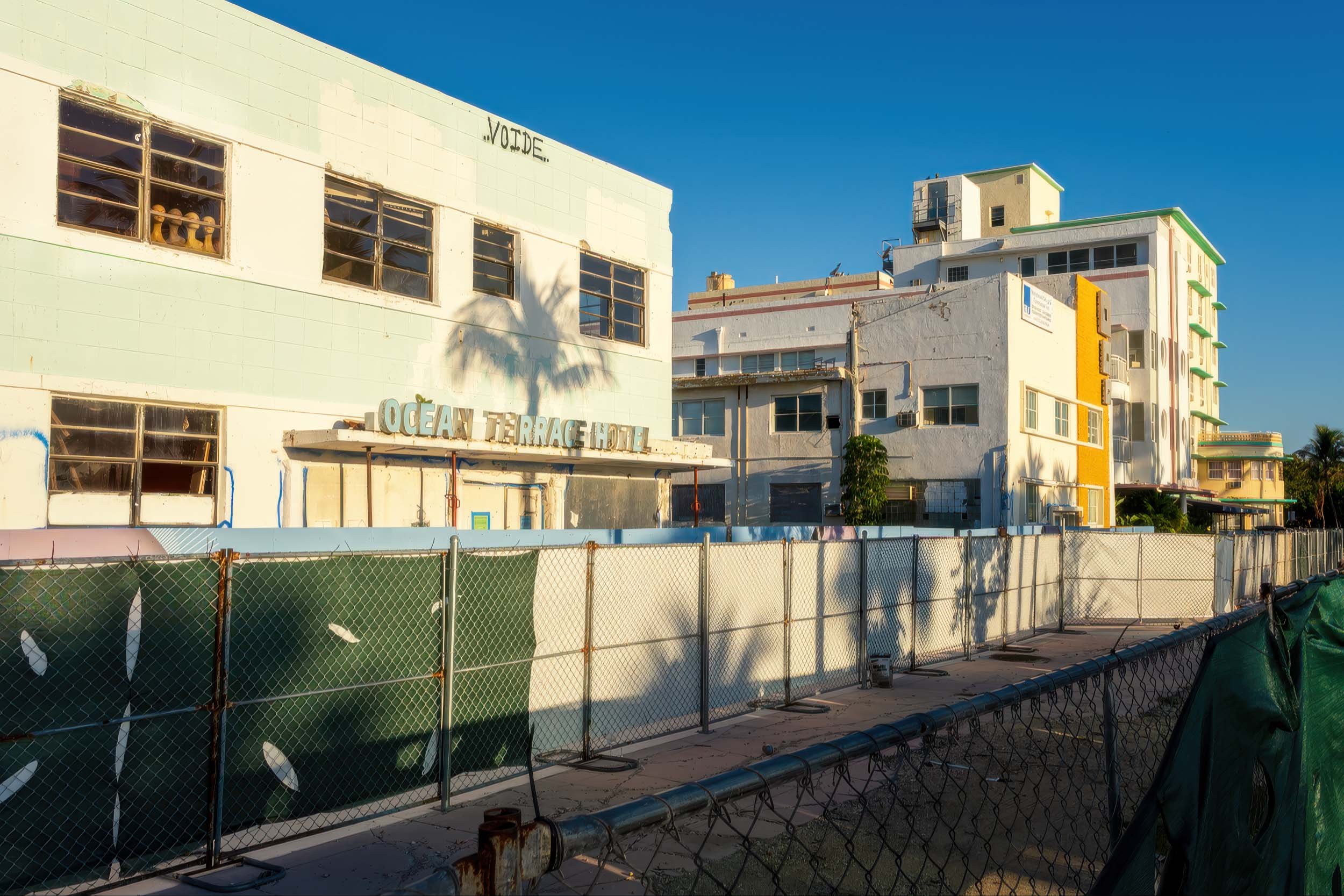
Next door, 7410 still has its OCEAN TERRACE HOTEL sign mounted over the entrance canopy, the letters done in pale blue channel lettering, half of them missing their neon tubing. Somebody's tagged VOIDE across the upper wall. The building operated for a stretch as a Days Inn before that too, one more layer under the paint.
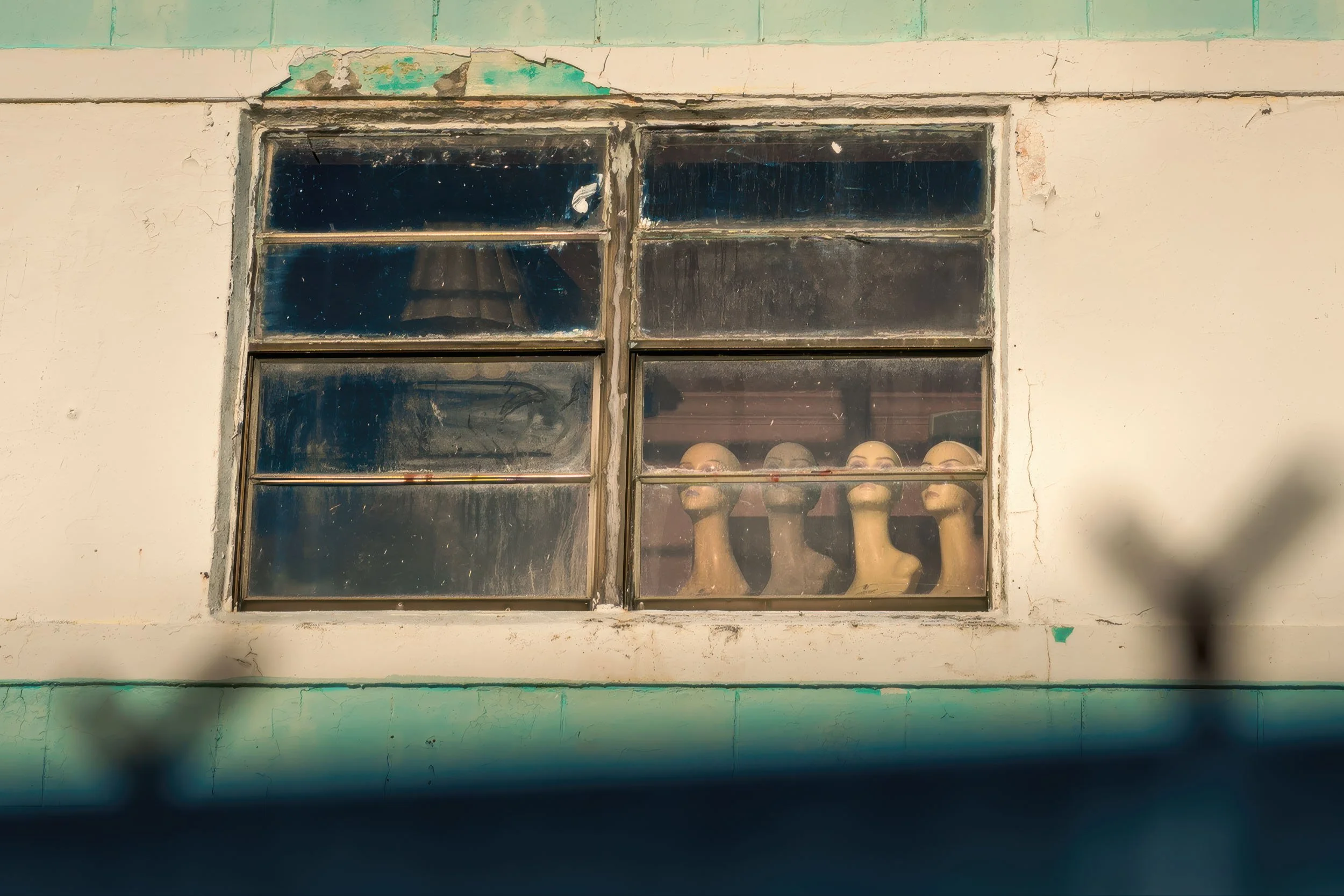
The odder detail is in the second-floor window: four mannequin heads lined up on a shelf, bald and featureless, left behind by whoever last used the space and now just standing sentry over an empty street-level lobby.
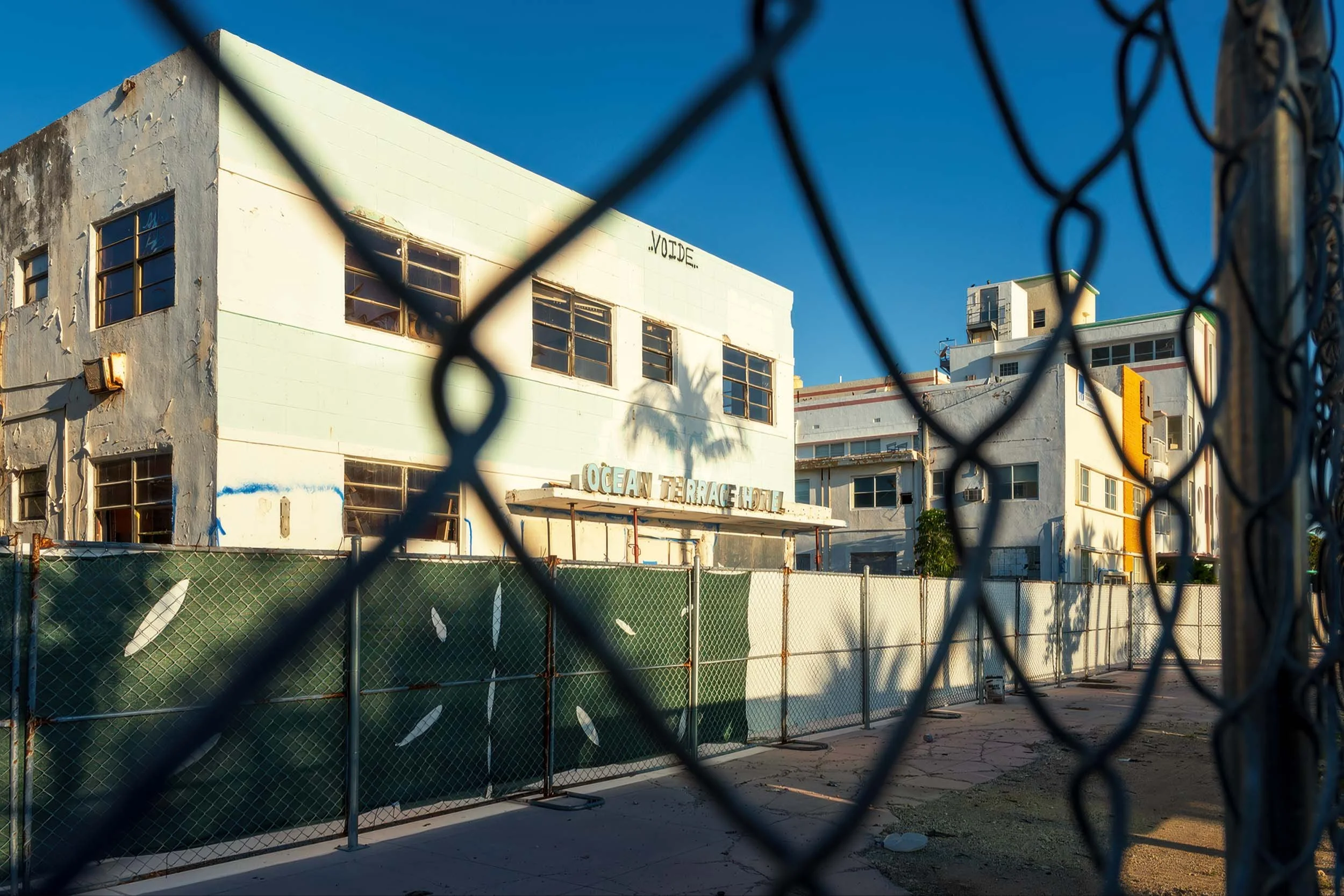
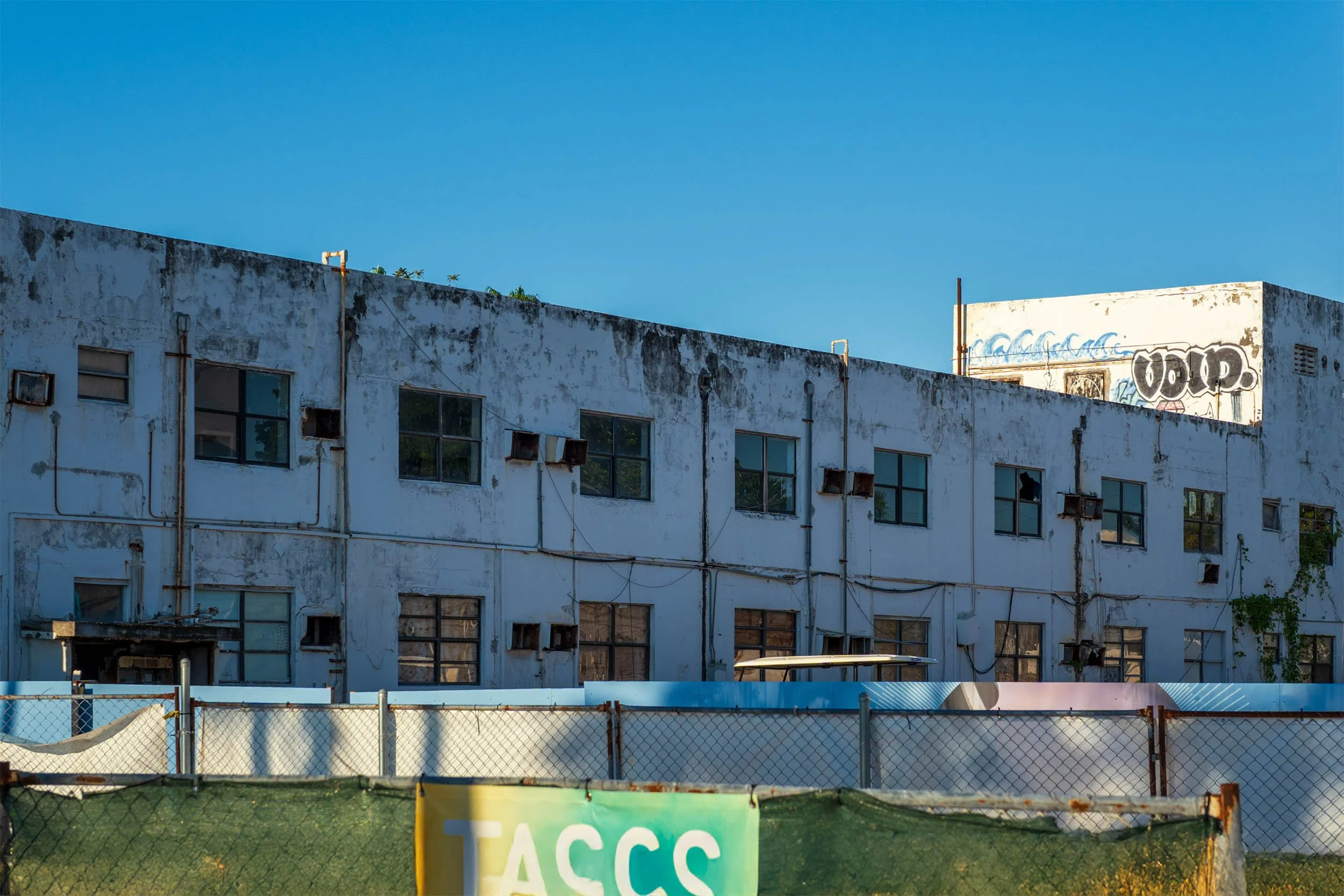
7420 is the gap. The Ocean Horizon came down early to clear the entryway for the incoming tower, so there's no standing facade left to shoot here, just the empty footprint behind the fence line.
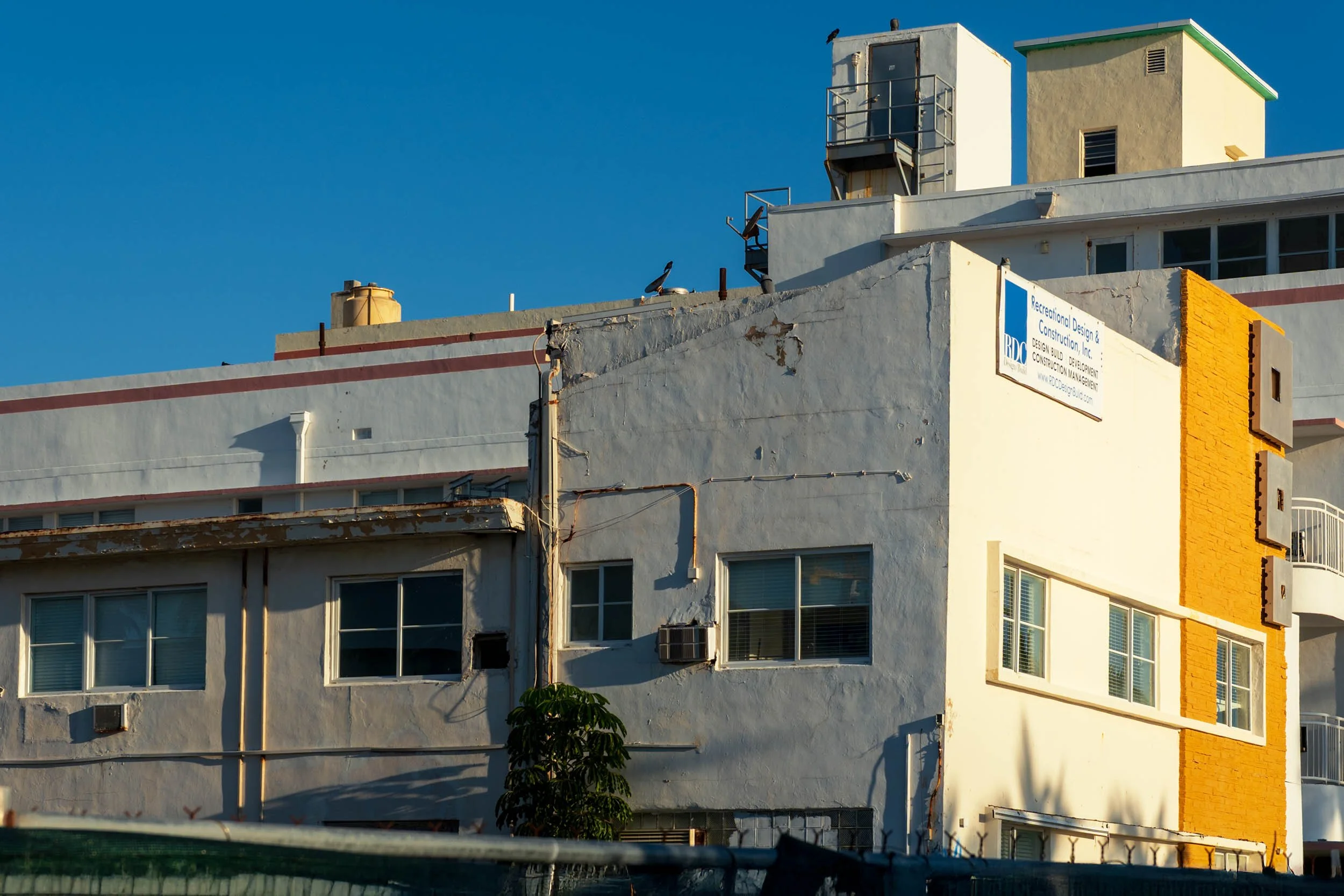
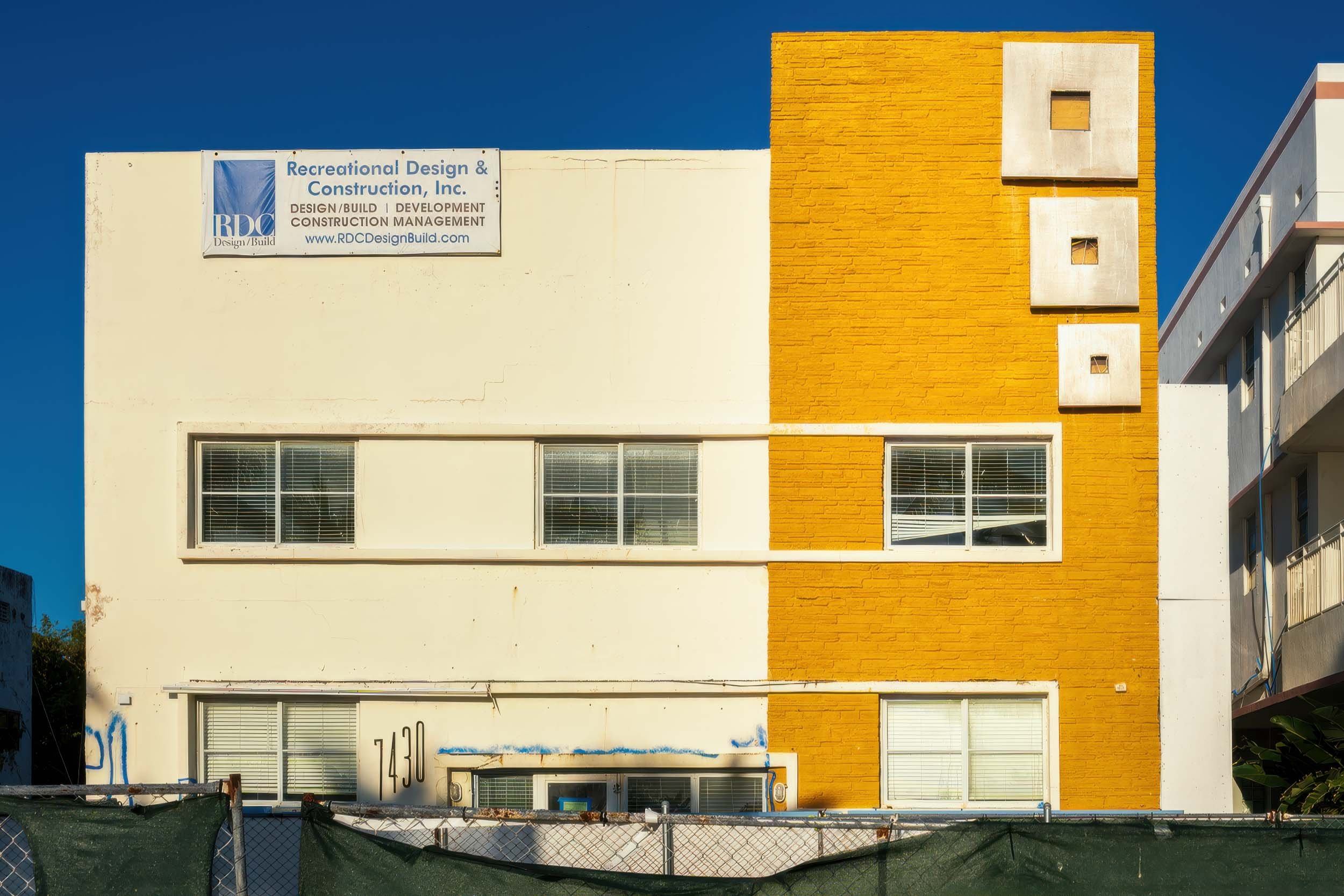
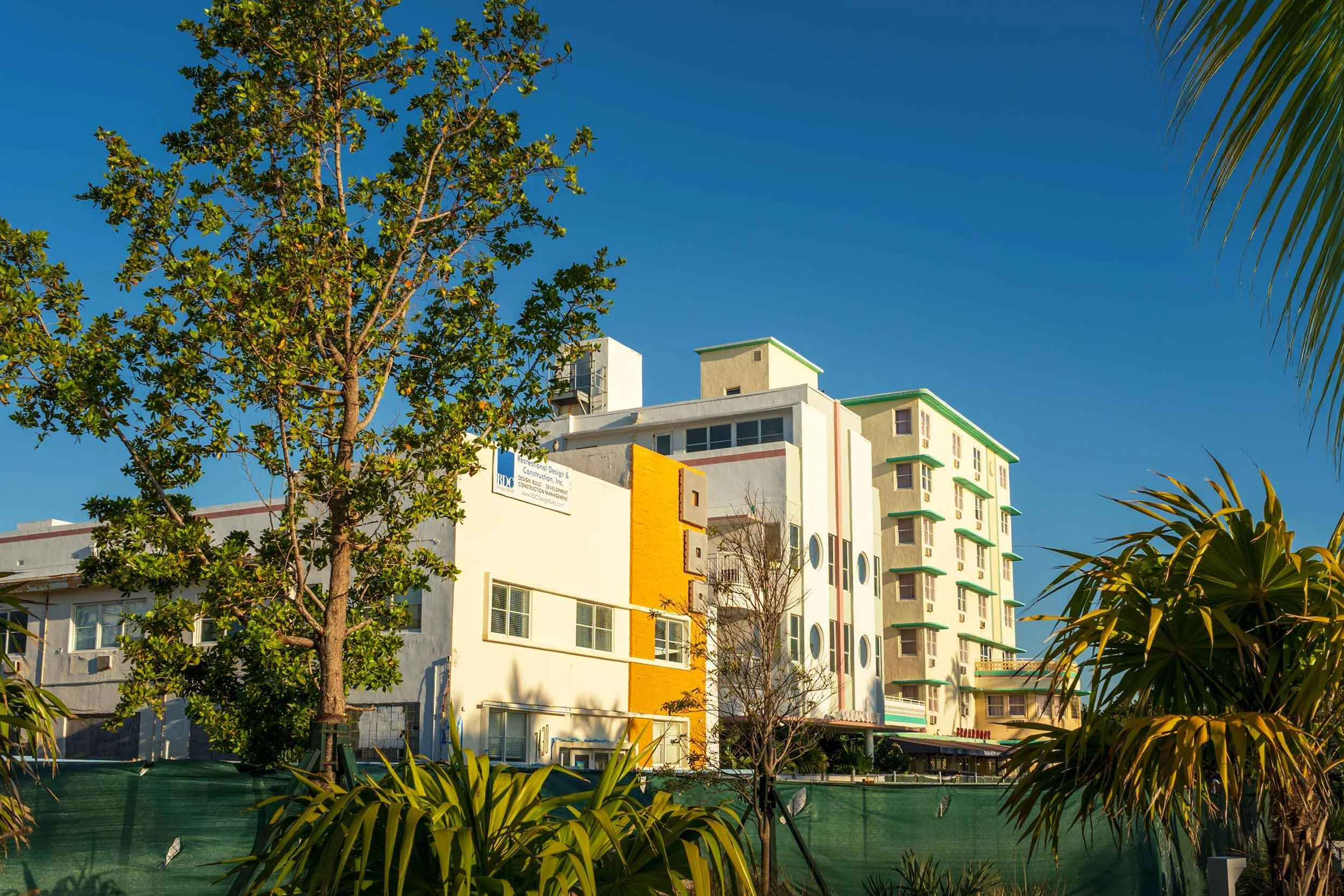
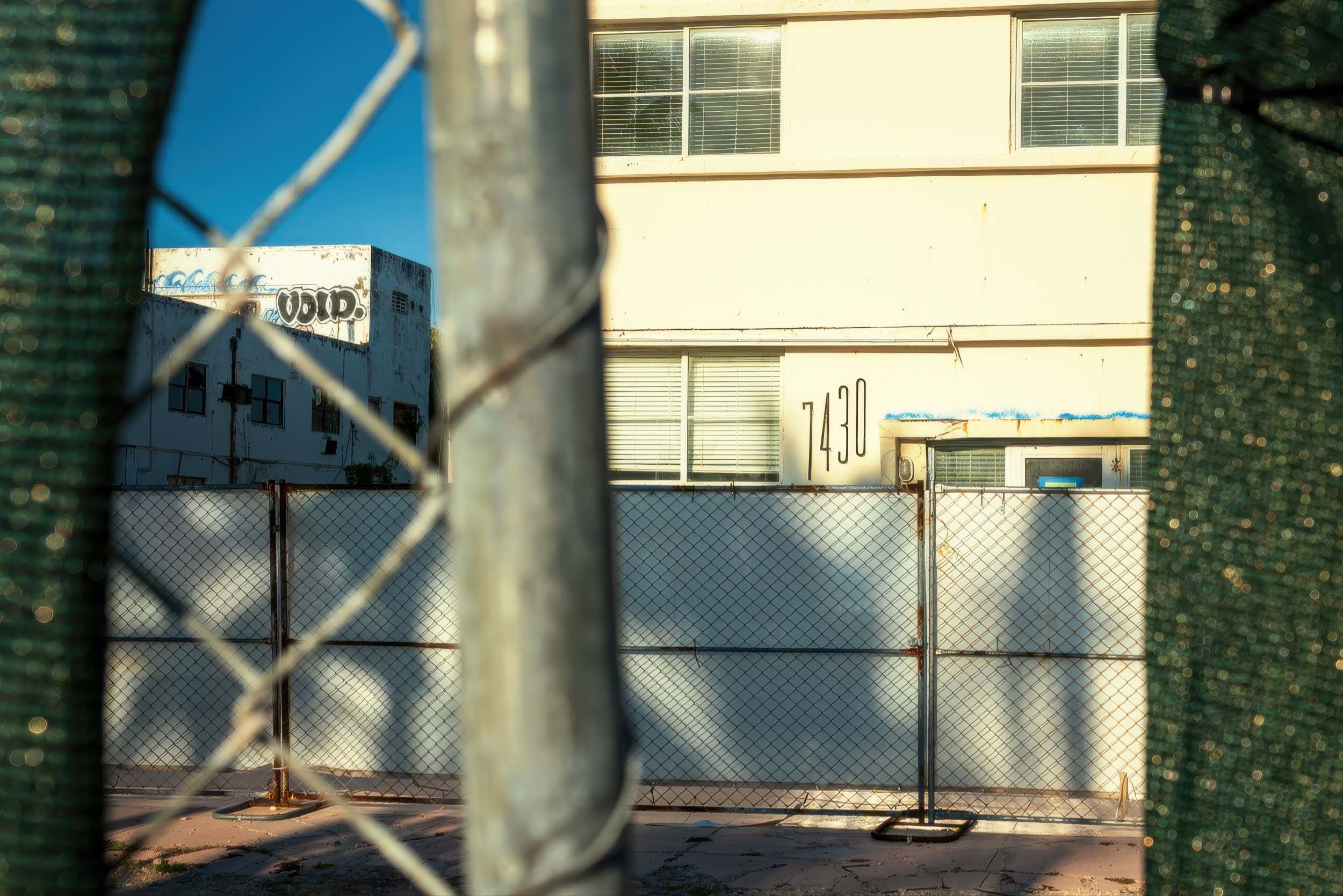
7430, the old Ocean Way and later, the Hawaii Hotel is holding on as a split-color block of white stucco and mustard-yellow brick, a Recreational Design & Construction banner draped over the upper floor. The address numbers are still mounted over the door.
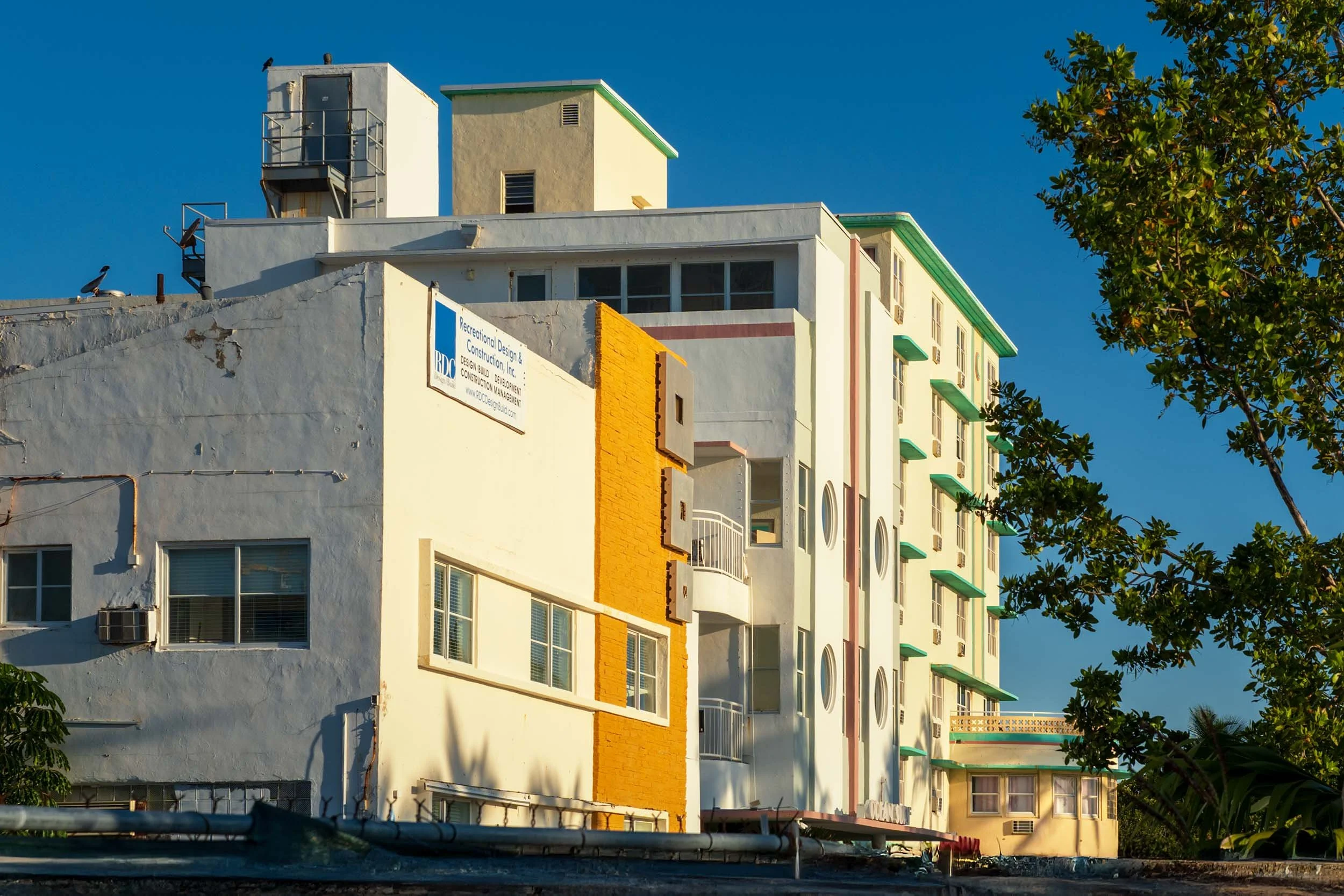
7436, the Ocean Surf, is the block's showpiece and still reads exactly like the ocean liner Skislewicz designed it to be. Twin porthole windows stack in pairs down a pink vertical stripe, curved balcony rails wrap the corner. The OCEAN SURF lettering sits low over the entrance colonnade, largely intact.
7450, the Broadmoor, anchors the corner at 75th and is the only one of the six still open to guests in the traditional sense. It's also the best preserved, green Deco banding and glass block detailing lit up against a construction backdrop, its snack shop awning still open for business under a green-and-black canopy.
What Comes Next
That block held on this long mostly because of what happened in 2015. A developer put a ballot measure to Miami Beach voters asking to raise height and density limits so eleven of the thirteen historic buildings between 73rd and 75th could come down for a pair of towers. Voters said no, 55 to 45 percent. The city and the developers went back to the table, and in 2016 landed on a compromise: a new zoning overlay that let the project get taller and denser in exchange for keeping the historic street-facing facades intact and restored.
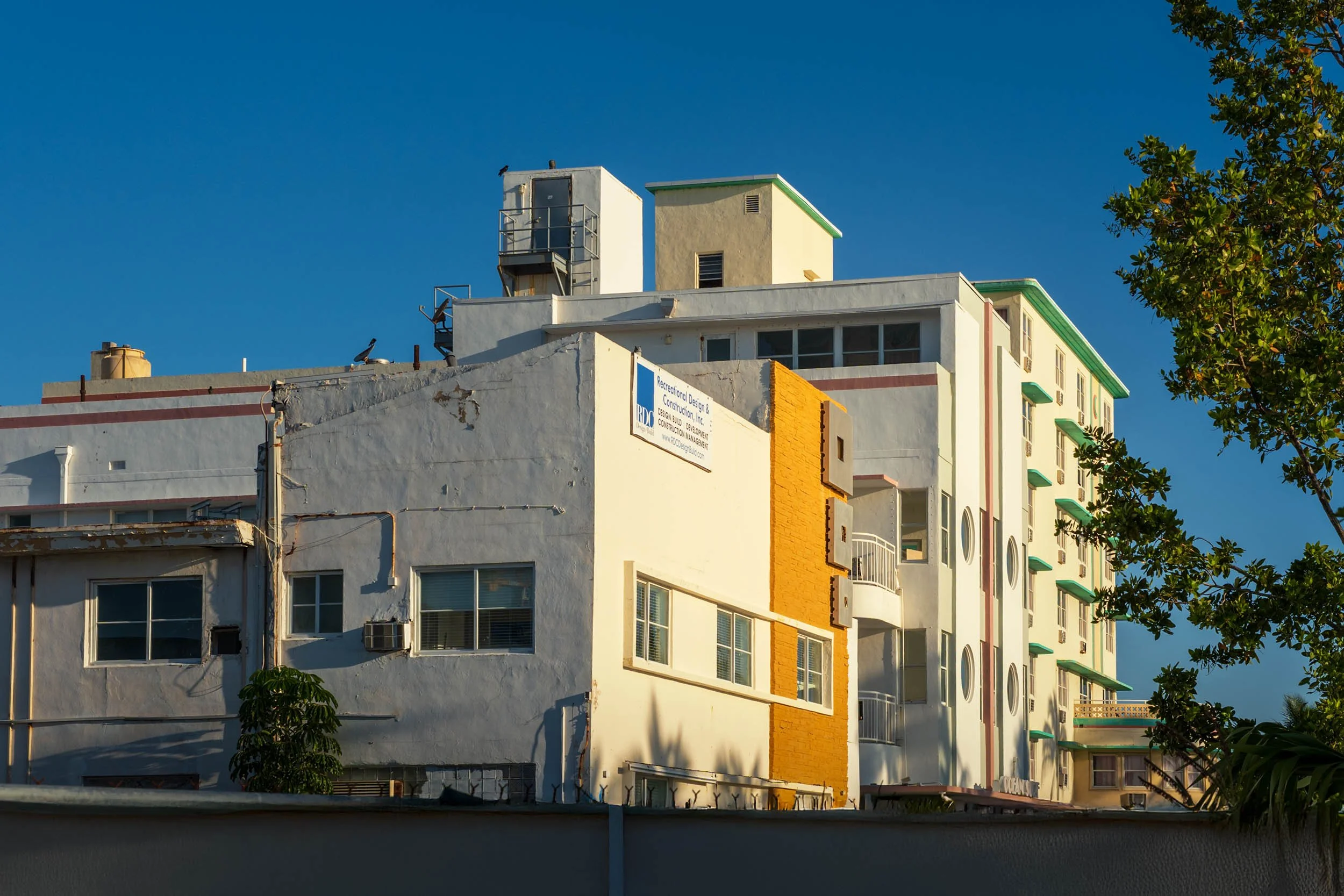
The unified project is called the Ocean Terrace Residences. Under the plan, the Broadmoor and Ocean Surf get combined into a single boutique hotel footprint. The other four historic buildings on the block are being reduced to preserved facades, structurally anchored and rebuilt into the base of a new 20 story residential tower going up behind them. A public park is part of the deal too, the tradeoff the city negotiated in exchange for letting the height limit go from 125 feet up to 235.
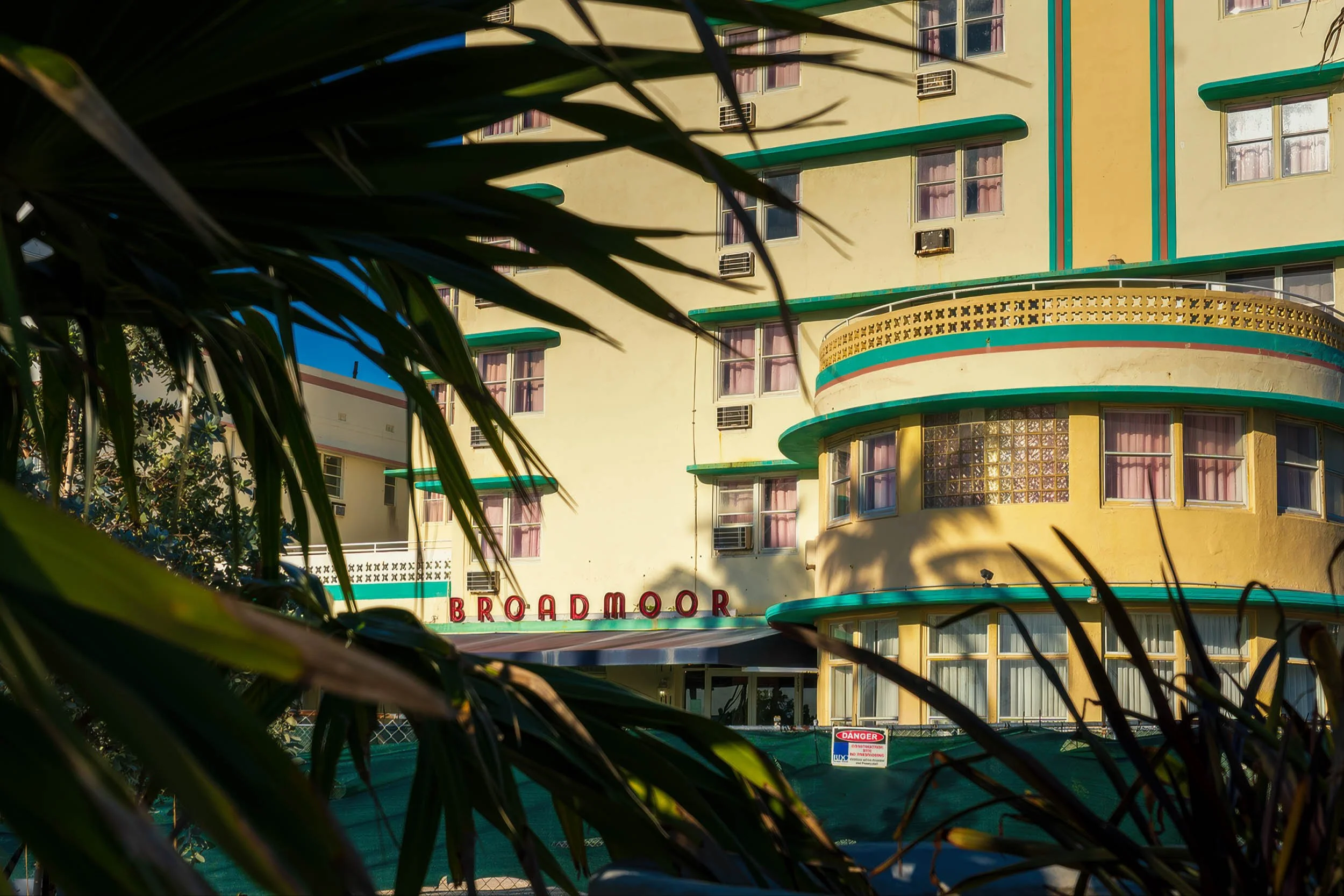
R.J. Heisenbottle Architects and Revuelta Architecture International are handling the design, working to bring the street-facing facades back to something close to their original mid-century look even as everything behind them gets rebuilt from scratch.
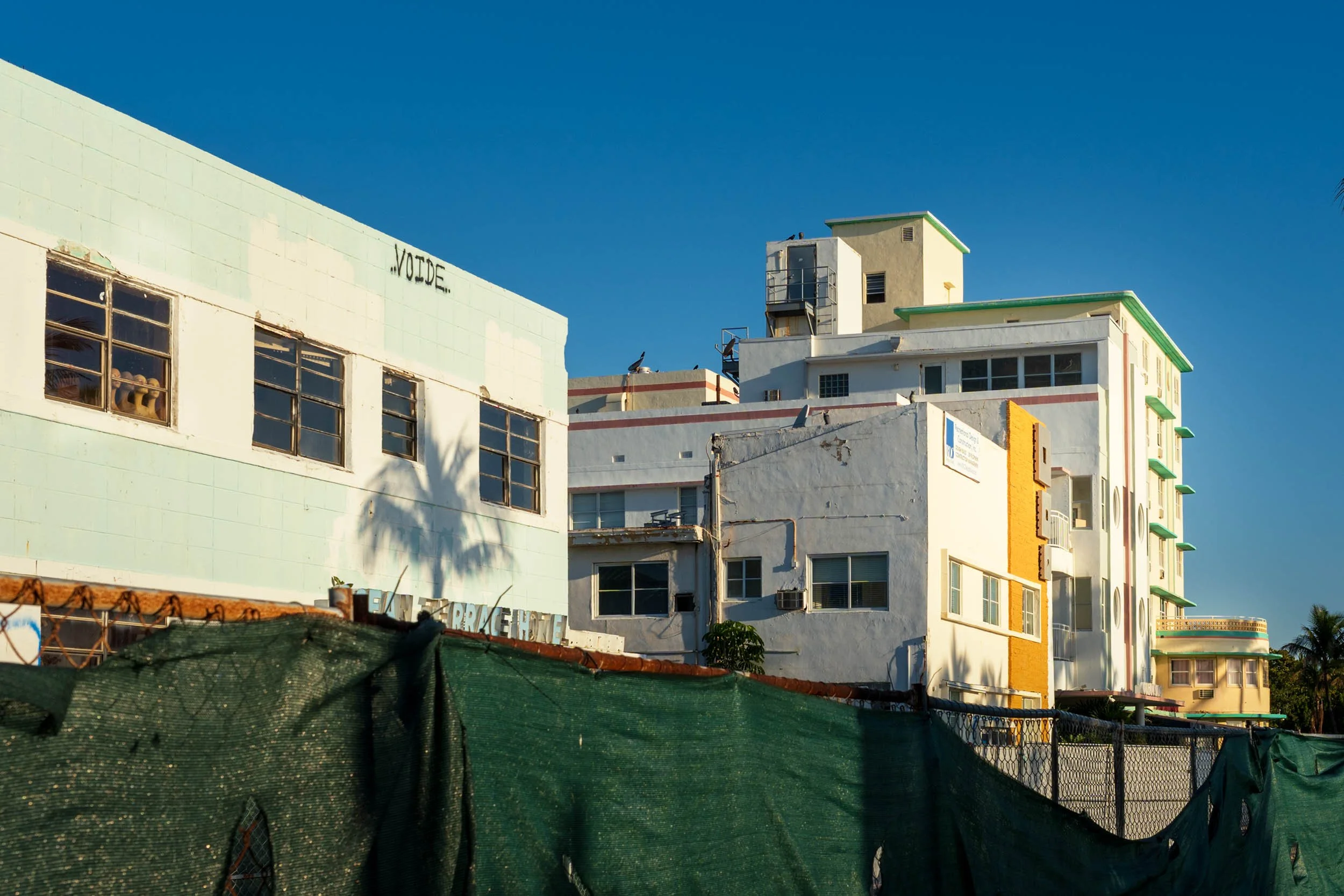
If you want to see this block as it actually stood for eighty years, this is the window. Once the tower structure comes out of the ground, what's left of the original streetscape will only exist behind glass and steel.
A walk through Buena Vista before it disappears
A walk through Miami’s Lummus Park Historic District