
Many people taking pictures on Ocean Drive are focused on the buildings and the classic cars parked out front. Very few think about the shadows. On a clear morning, the palms in Lummus Park throw their shadows across the street and onto the Art Deco hotels, and some of the best ones are well above eye level. Don’t just look straight ahead. Look up.
The hotels face east, toward the park and the ocean, so the shadows land right on the facades. Every shadow in this post comes from the sun sitting at least partly behind the palms, with the trees between it and the hotels. Where each shadow lands, and at what angle, depends on where the sun is. It doesn’t last.
Each section below shows a different way you can capture the shadows, from soft and hard shadows to the frames where there are none. Last week’s post, Four Ways I Shoot Shadows, was about the shadows people cast. This one is about the shadows the palms cast.
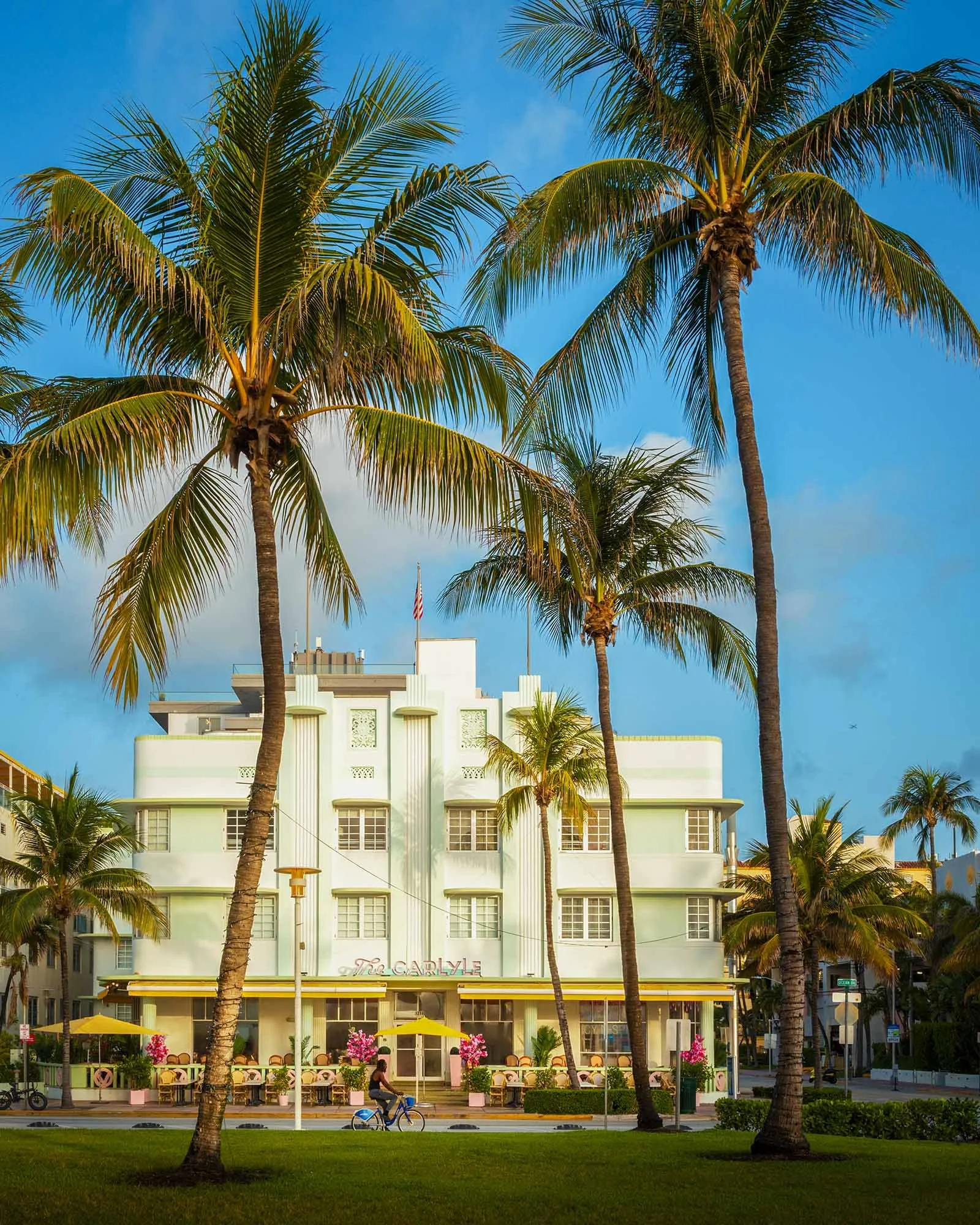
The Carlyle from Lummus Park. The palms in the foreground are the ones that put the shadows on the hotels.
Soft Shadows
Early in the morning, the sun is low enough to come through the palms instead of over them. Add a few clouds and the light softens, so the shadows lose their hard edges and spread across the building.
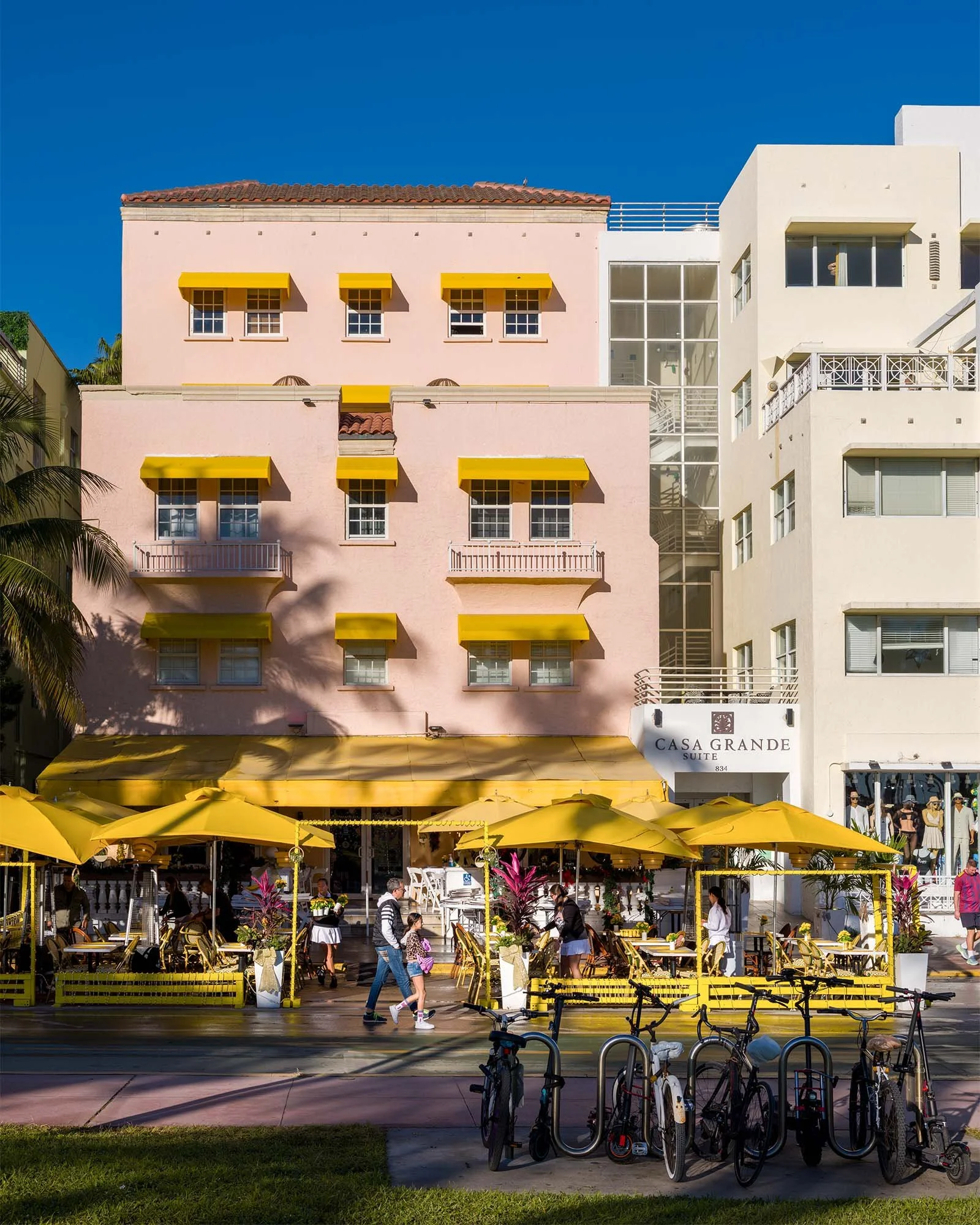
Soft shadows on the pink facade of the Casa Grande Suite Hotel, above the yellow café umbrellas.
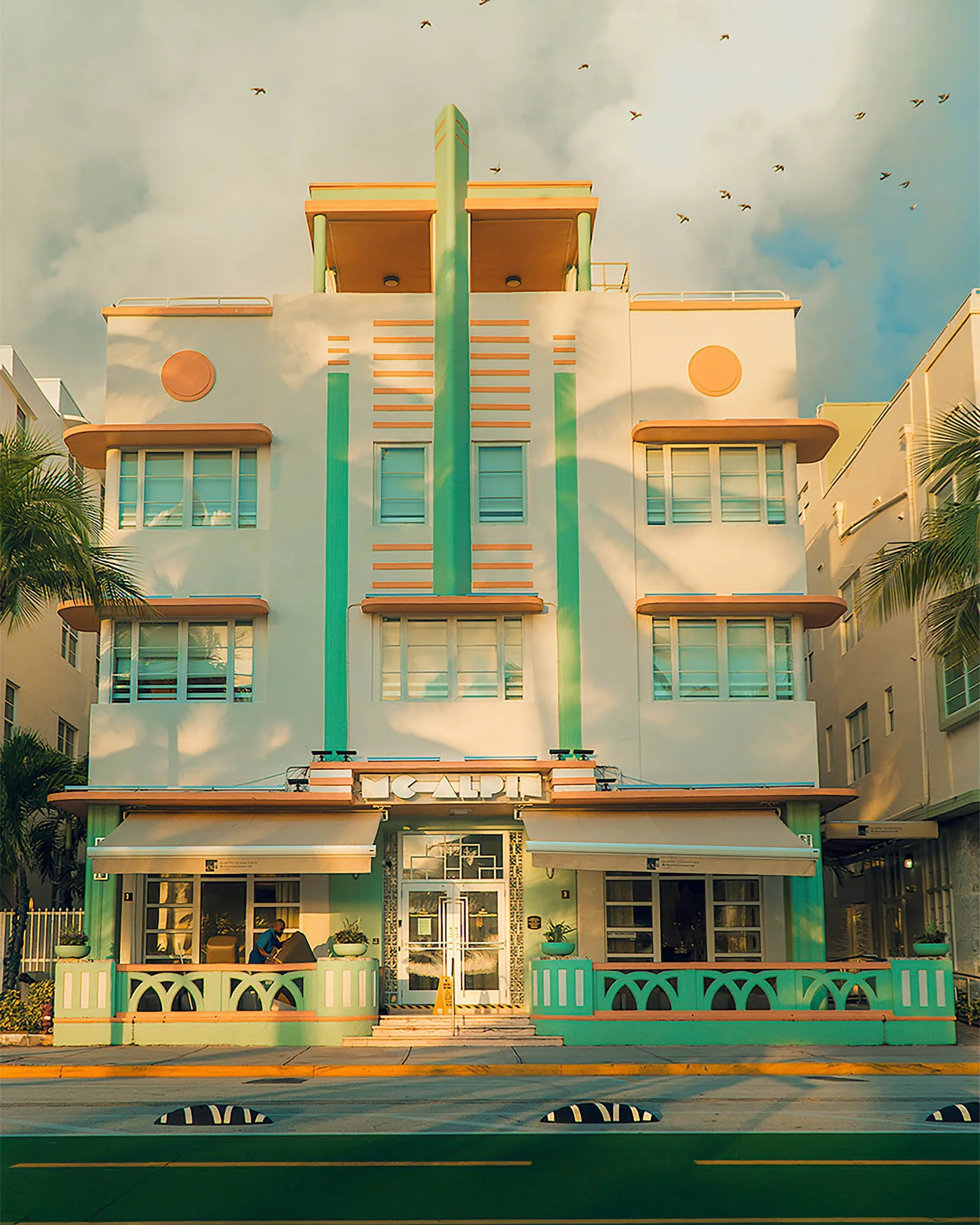
The McAlpin on a cloudy morning, with the shadows blurred across the pastel front and birds overhead.
Hard Shadows
Later in the morning, with clear skies and direct sun, the shadows are hard. The edges are sharp, and every frond shows up on the wall.
A single palm and its shadow on the Van Ness. This frame is one of my photos in Trope: Miami.
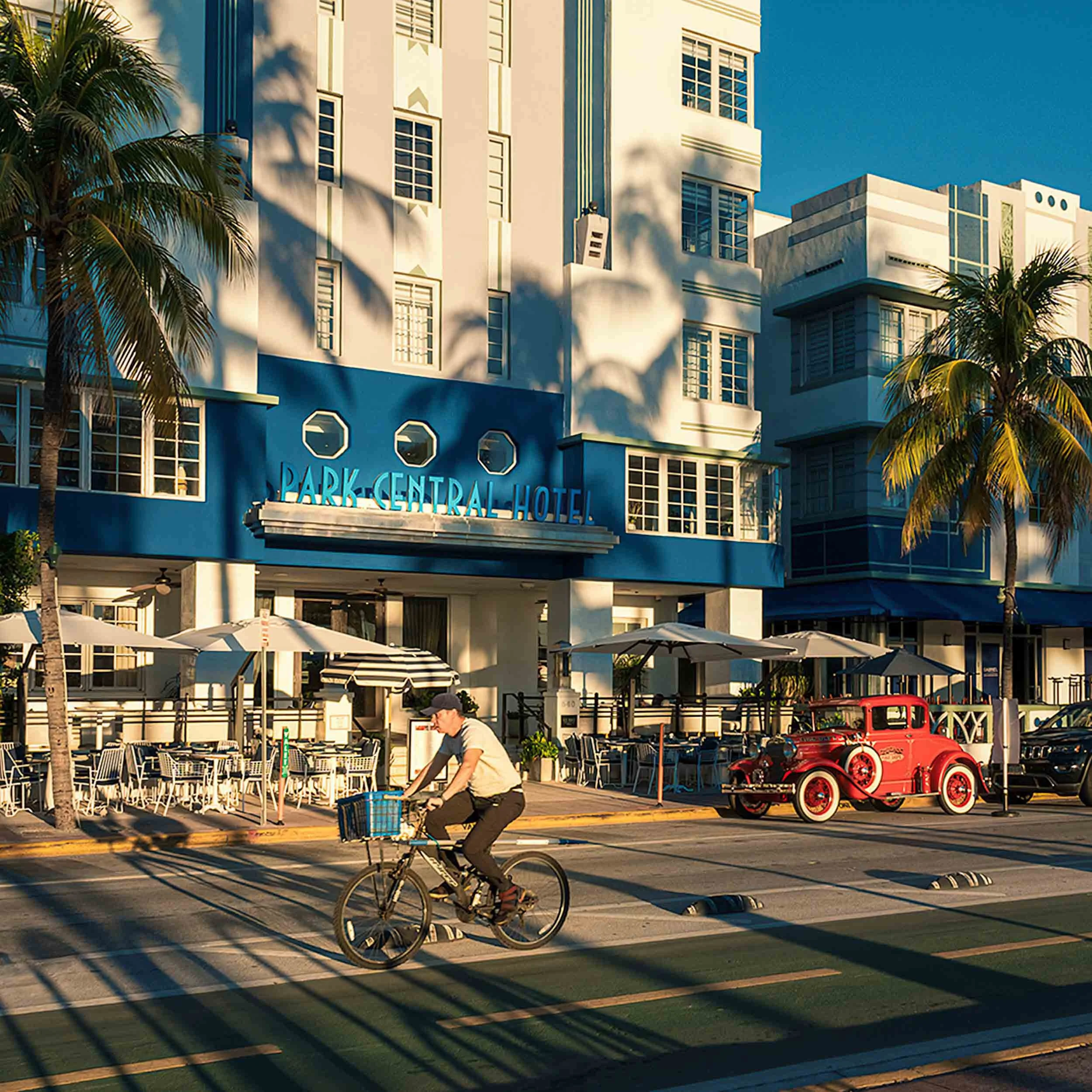
Shadows across the blue and white front of the Park Central, while a cyclist rides past a red vintage car.
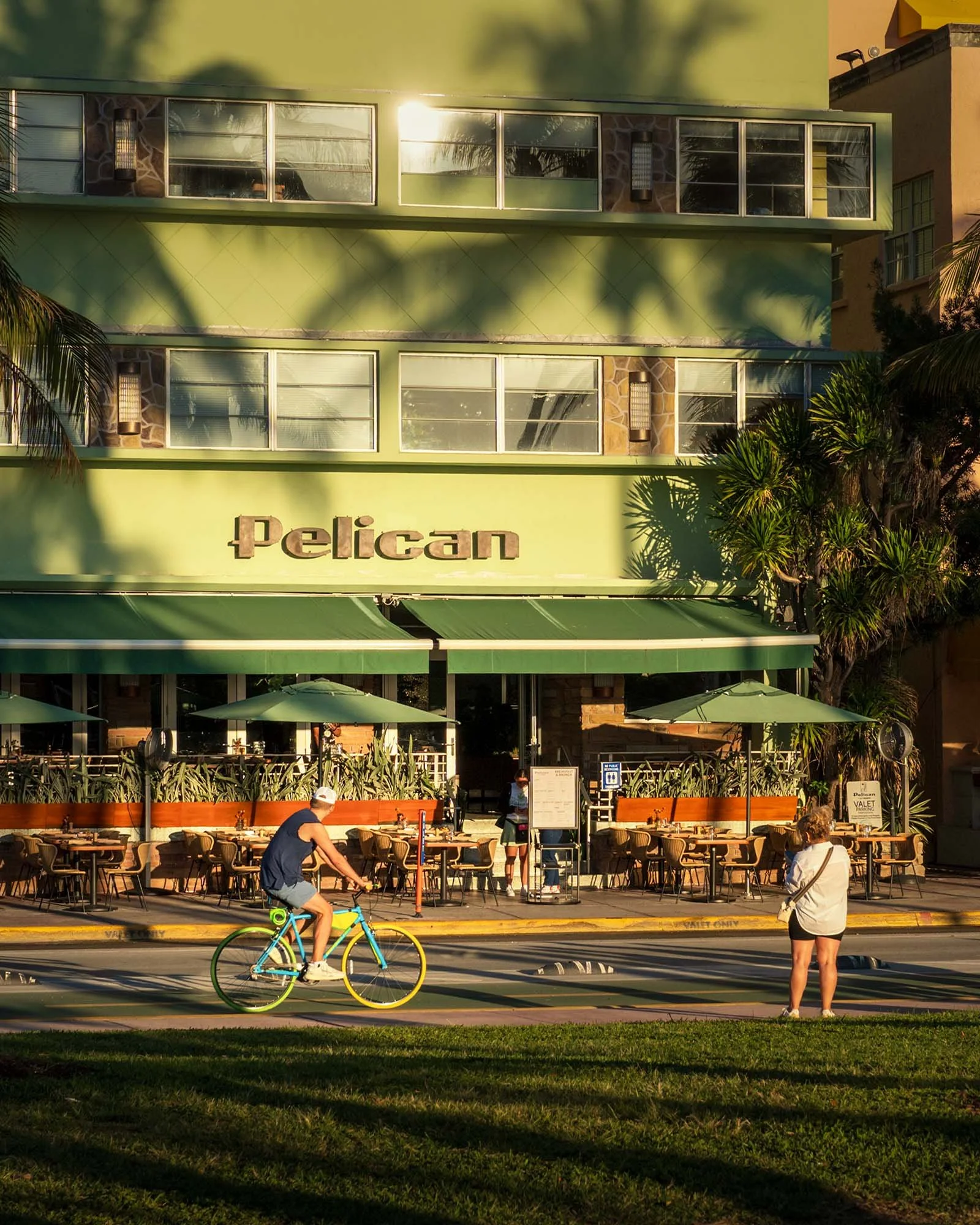
Dappled palm shadows across the Pelican’s green facade, right over the name.
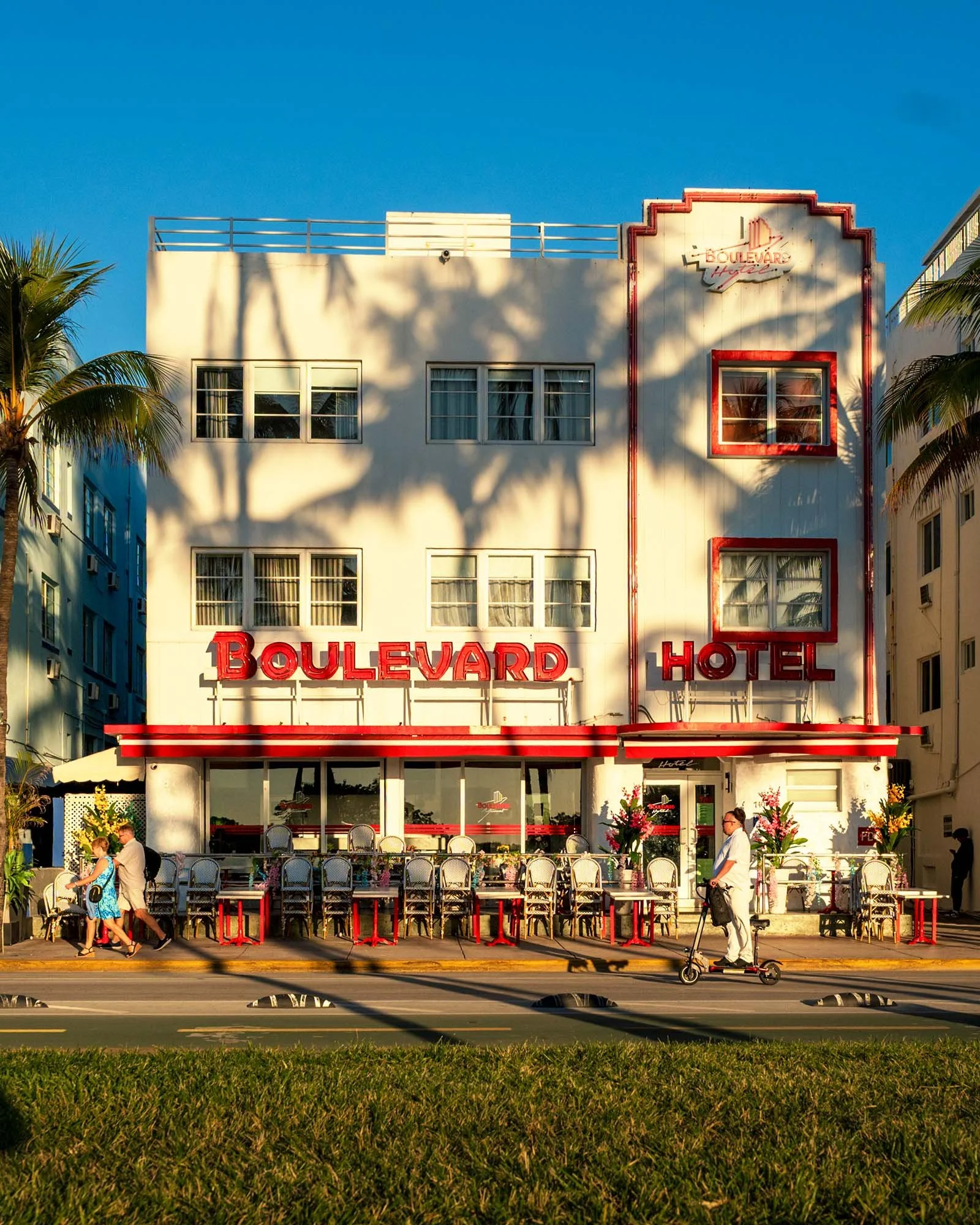
The Boulevard Hotel, with palm shadows across the whole front and over the red lettering.
When the Shadow Is the Subject
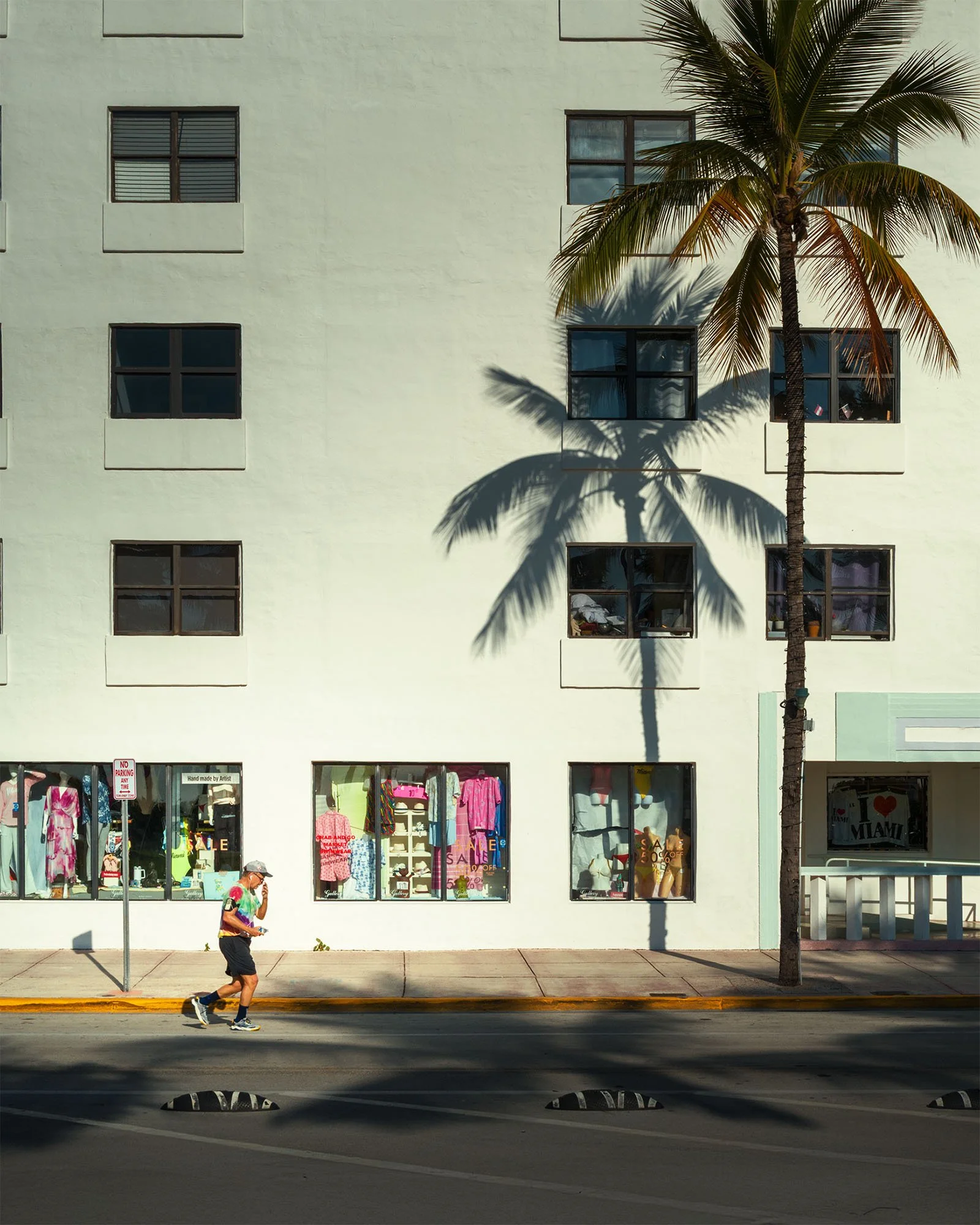
Sometimes the building is only the surface. This is where looking up matters most. I get closer, or shoot up from the sidewalk, and let the shadow fill the frame.
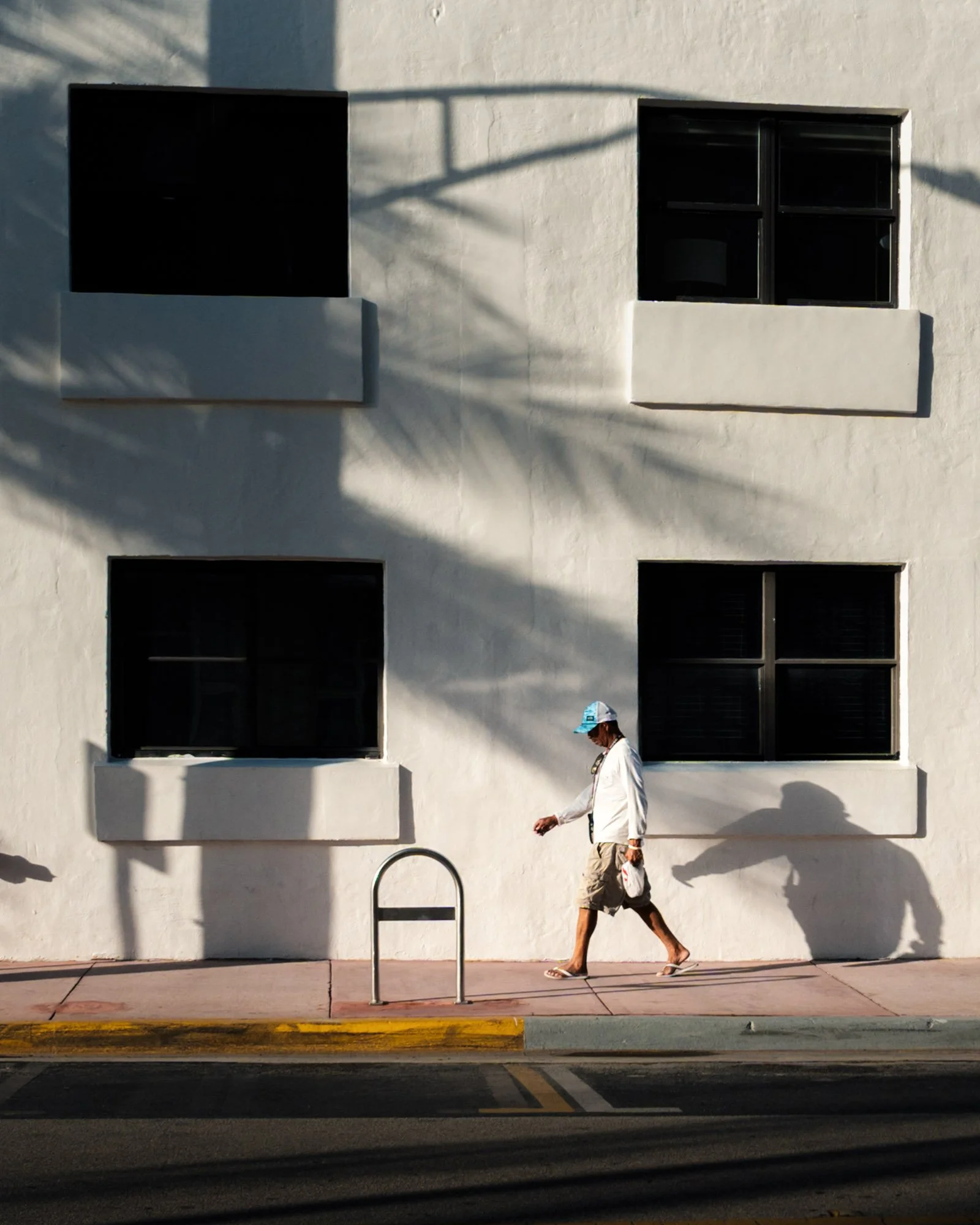
A palm trunk and its fronds across a white wall, with the windows as dark blocks. A man in a blue cap walks past, and his own shadow trails behind him on the wall.
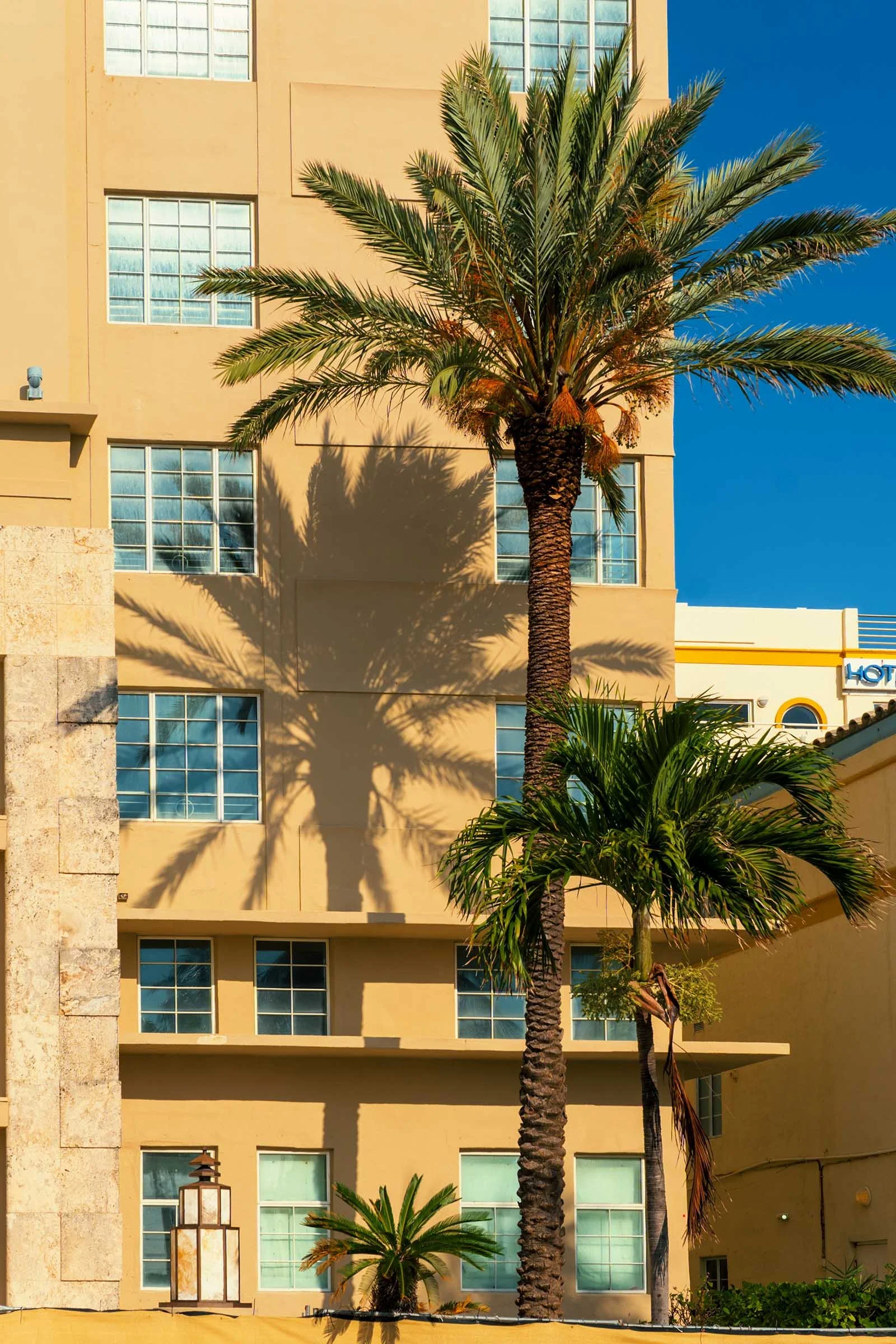
The palm and its shadow side by side on the Tides.
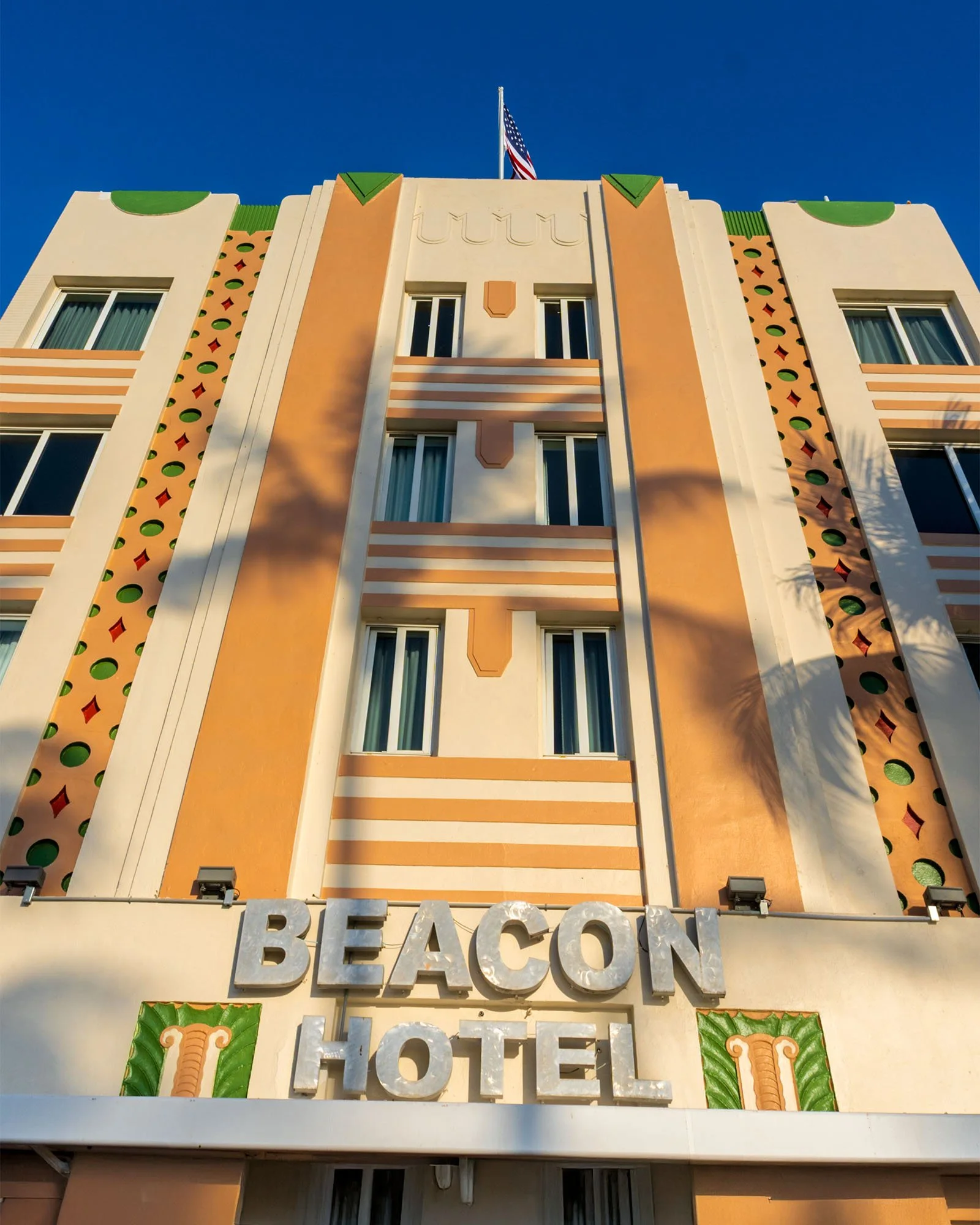
Looking up at the Beacon, with fronds crossing the orange stripes and the sign.
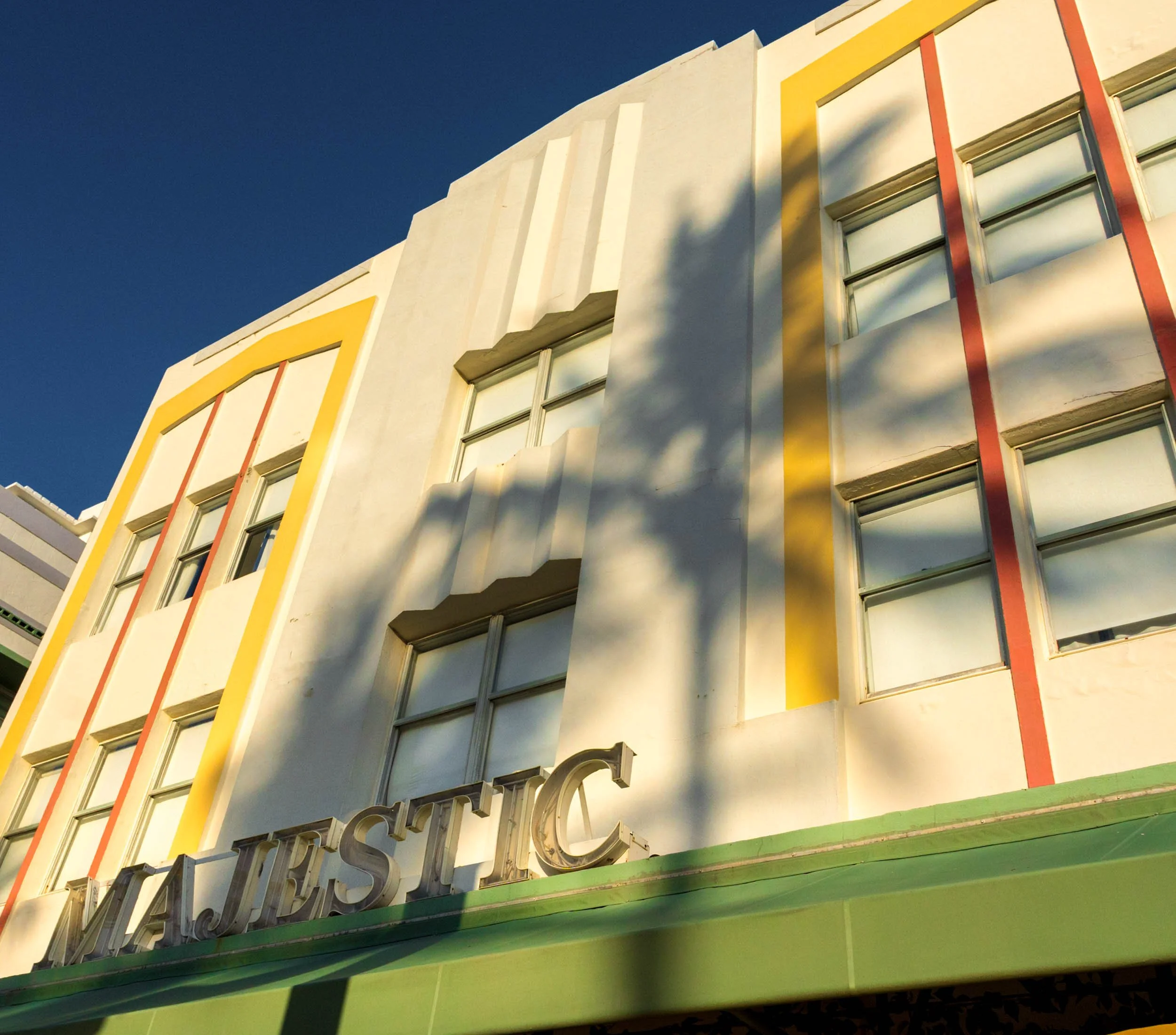
The Majestic from below, with a palm shadow cutting across the lettering.
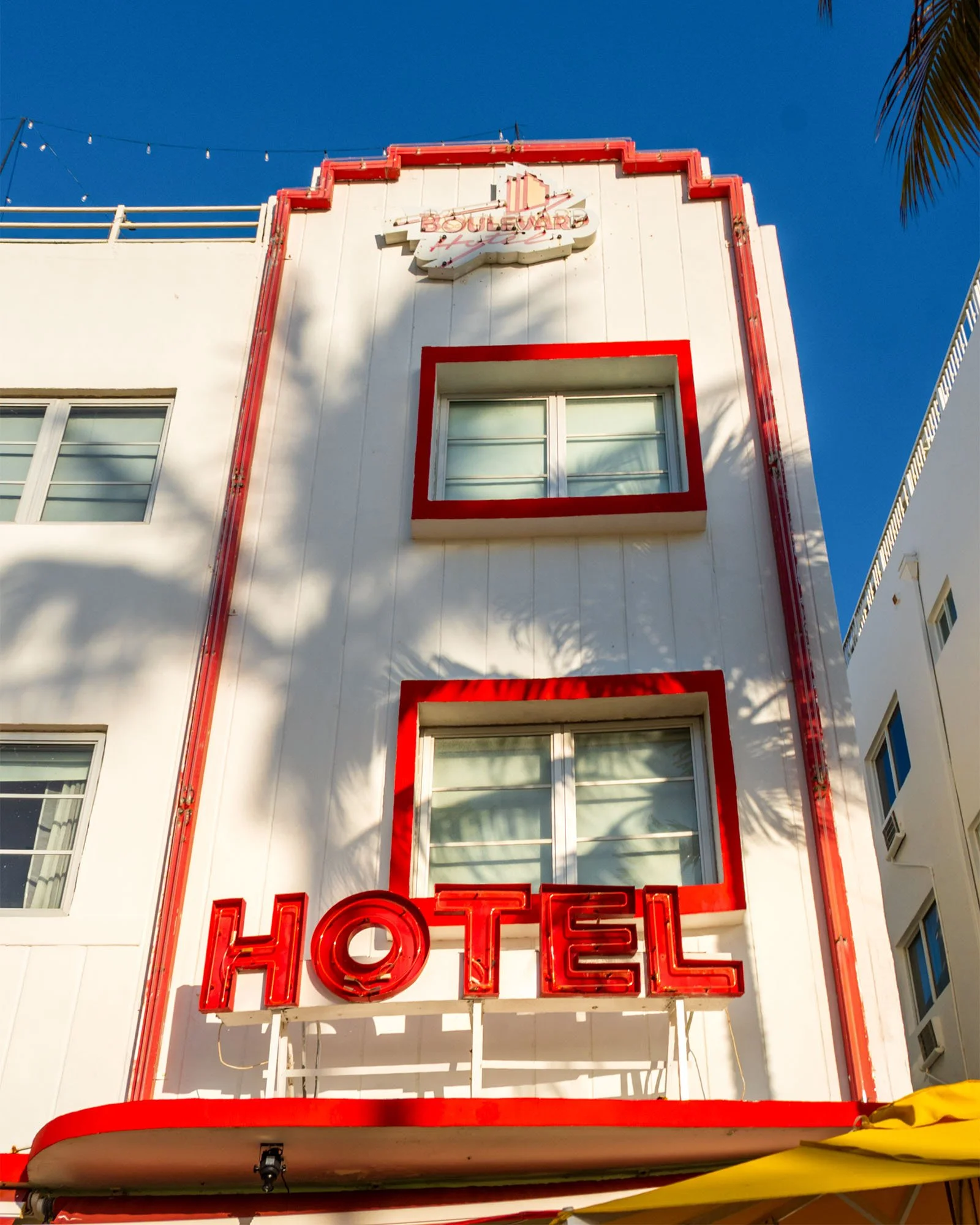
The Boulevard again, close in on the tower and the red HOTEL sign.
Across Ocean Drive
The same palms put shadows on the street. Shooting from the park side, the trunks stretch across the bike lane and the road in front of the hotels, which gives the frame a foreground. I wrote more about that in What’s in the Foreground.
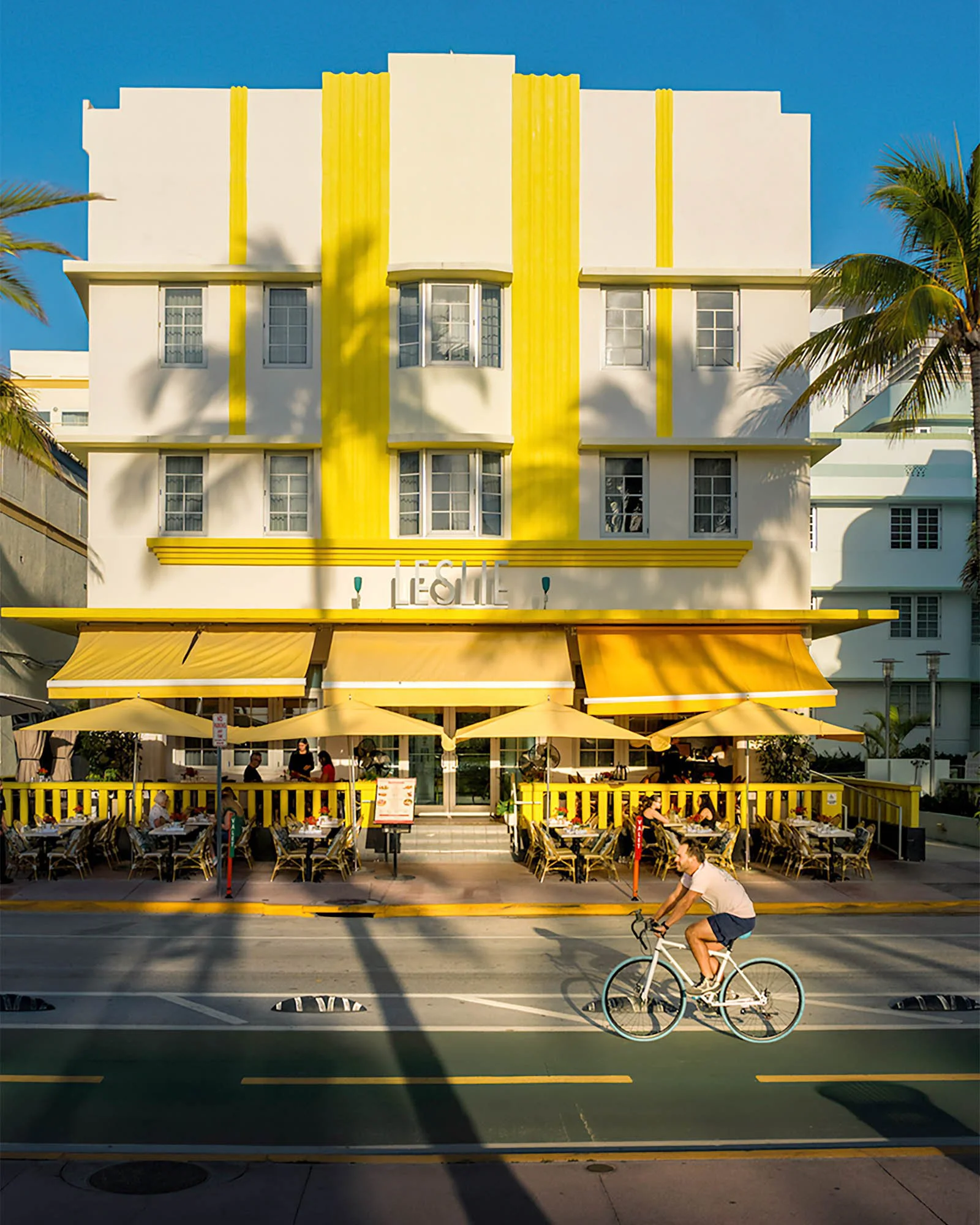
Long trunk shadows across Ocean Drive in front of the Leslie, with a cyclist riding through them.
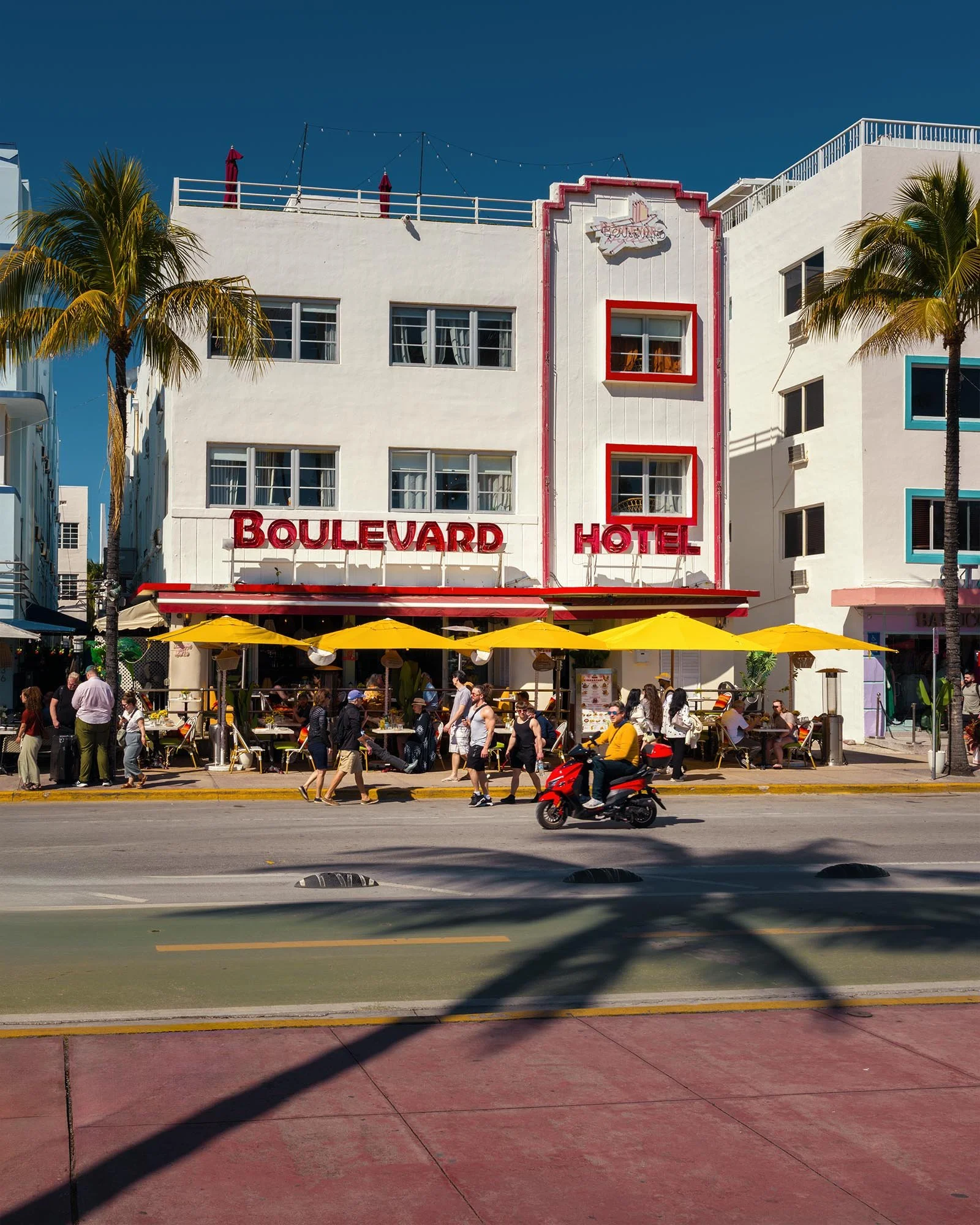
A palm shadow across the sidewalk and the street in front of the Boulevard, while a scooter passes the café.
No Shadows
Wait too long and the shadows are gone from the buildings. Once the sun is up over the Lummus Park palms, the shadows land across the street and off to the right instead of on the facades.
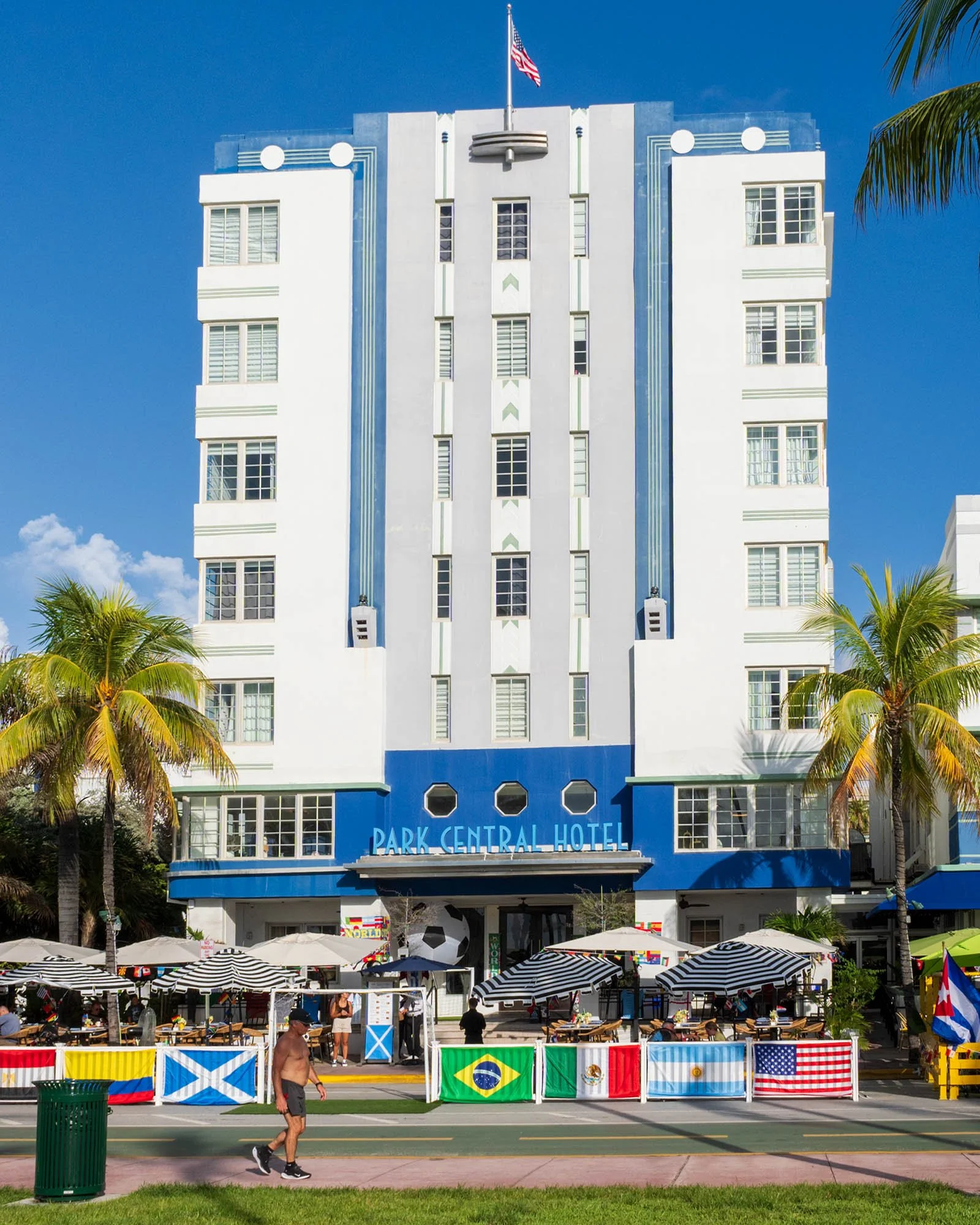
The Park Central with no shadows on it. Compare it with the Park Central frame in the Hard Shadows section.
My Settings
Two cameras. I shot these on my Sony A7 V and my Leica SL3.
Auto ISO. I always shoot with Auto ISO, so the settings I change are the aperture and exposure compensation.
f/8 to f/11. Normally, on Ocean Drive I shoot at f/8, but at times I go up to f/11.
A third of a stop under. I often shoot a third of a stop under. Even when the light isn’t hard, it keeps bright points from blowing out, and shooting slightly underexposed gives me more vibrant colors.
For more on how I use exposure compensation, see Exposure Compensation in Hard Light.
If you want these shots, go early and stand on the park side of Ocean Drive. Check where the shadows are landing before you pick a hotel, because they move as the sun comes up.