
This post is about timing. On Ocean Drive, the morning light comes through the palms and between the buildings in patches. They're the same palms I wrote about in Palm Shadows on Ocean Drive. A person walking or riding through one of those patches is only lit for a step or two. Shoot a moment early or a moment late, and the same person is in the shade.
I wrote about finding those patches in Finding Pockets of Light. This one is about catching someone while they're in one, and what happens when you miss.
Too Early, Too Late
The light stays where it is. The subject moves through it. These two pairs show what a step either way does to the same frame. Both were shot in burst mode, which is how I came away with the miss and the keeper a moment apart.
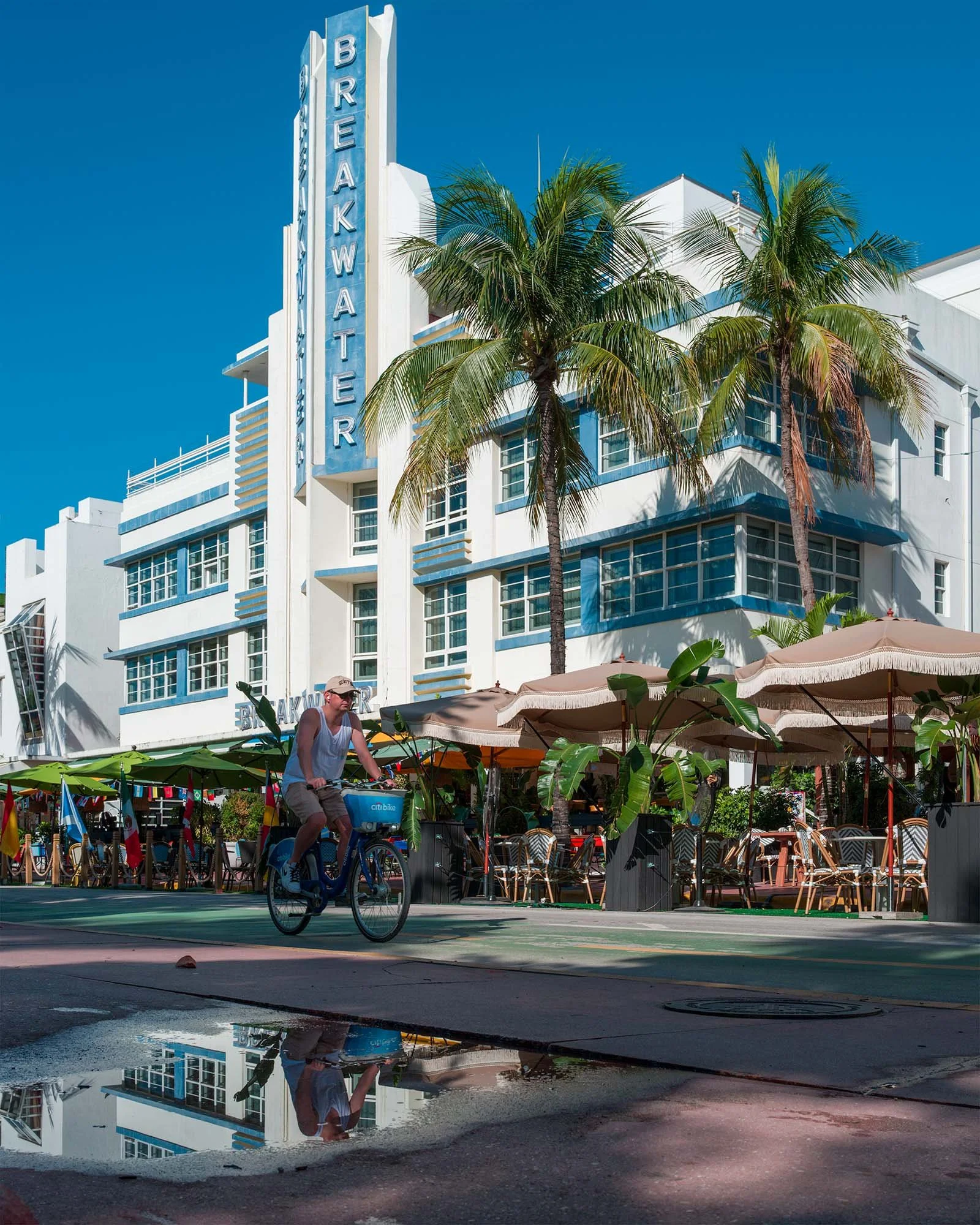
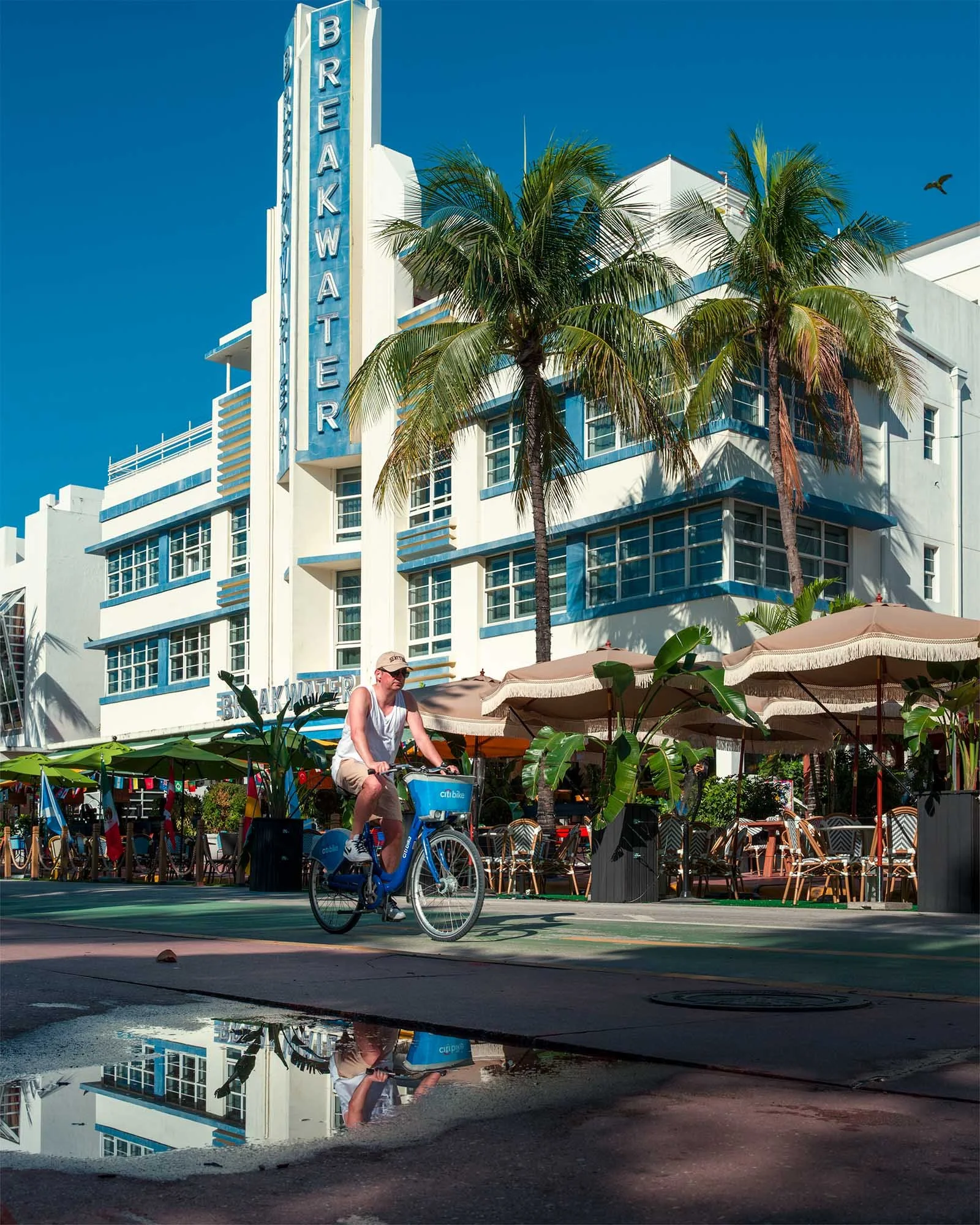
I knew I could get a reflection in the puddle, and the Breakwater sign makes a strong background. There was light hitting the pavement between the cyclist and the puddle, and I knew it would bounce up and light his face as he rode through. In the first frame, I shot too soon. He hasn't reached the light yet, and his face is in shade. In the second, he has ridden into it. I gave up part of the reflection, but his face is in full light. The first frame could be saved in Photoshop, but it would take work. The second doesn't need any.
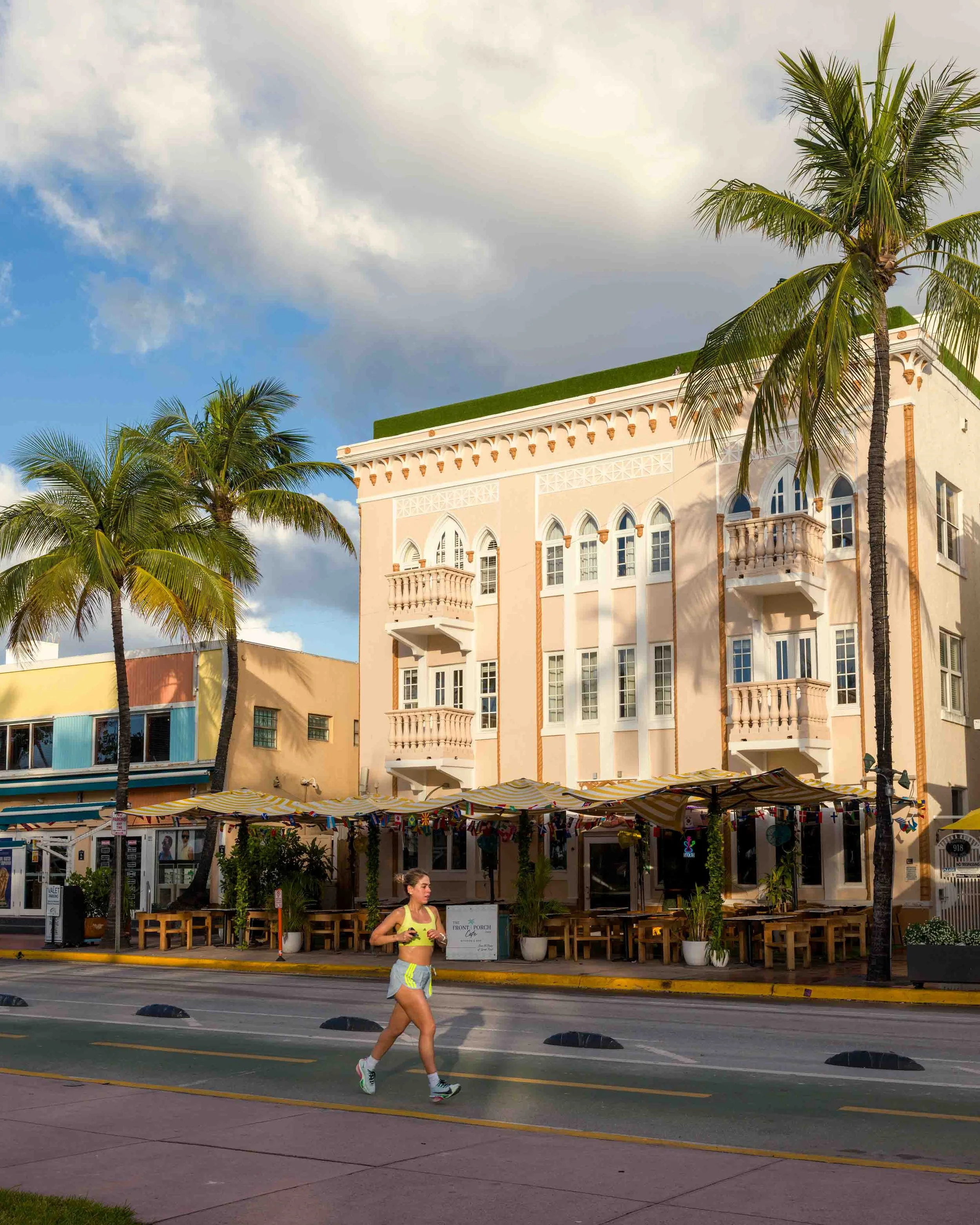
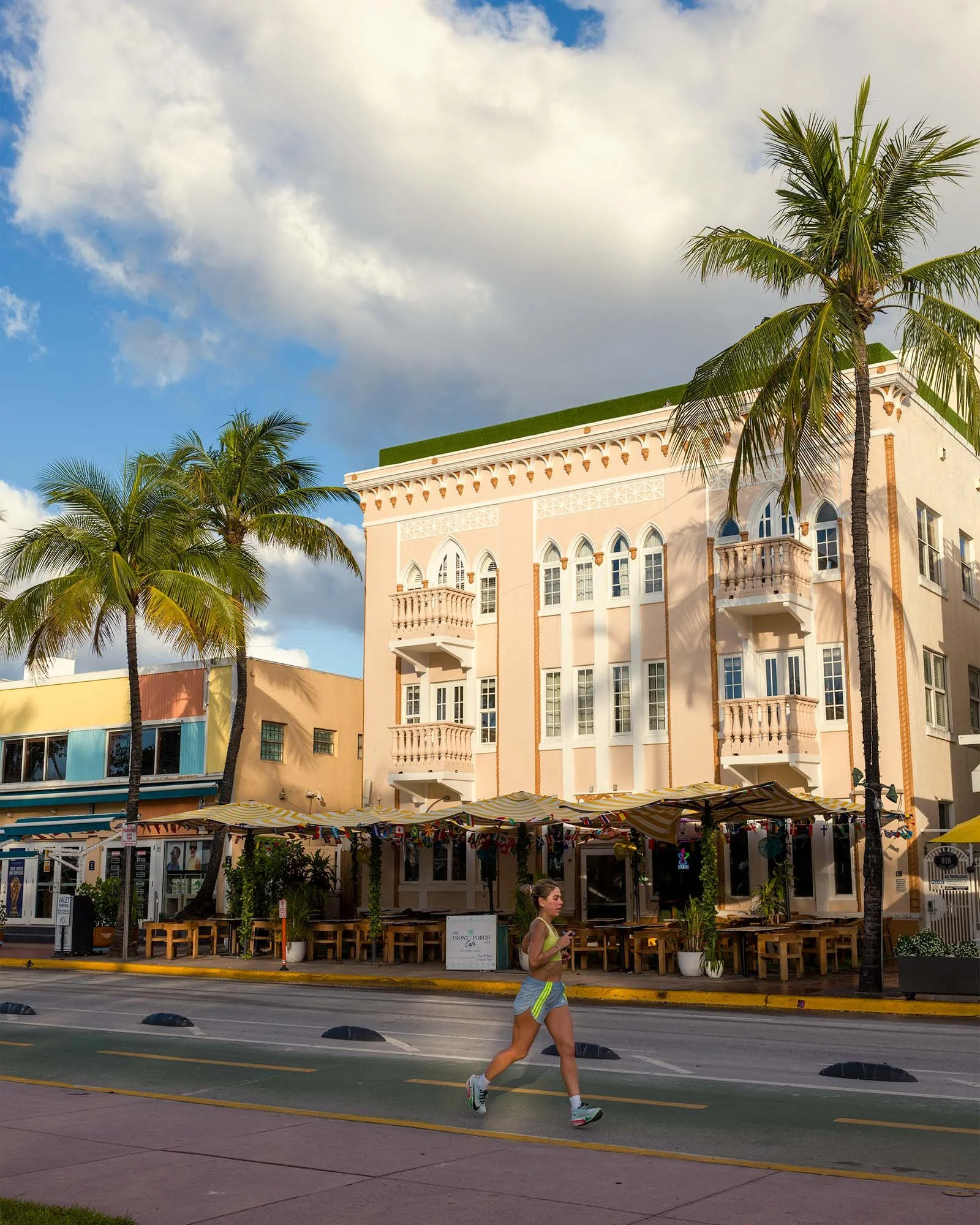
At 918 Ocean Drive, the timing went the other way. The light was hitting the bike lane between two of the lane barriers, so I knew that if I caught the runner between them, she would be in full light, and her body would throw a shadow on the lane. In the first frame, that's what happened, and it's well lit straight out of the camera. One step later, she has run out of the light, and the photo goes flat.
Placing the Subject in the Light
Most of the time, I find the light first and wait for someone to move into it. I know where the patch starts and where the shade begins, so the only question is when to press the shutter.
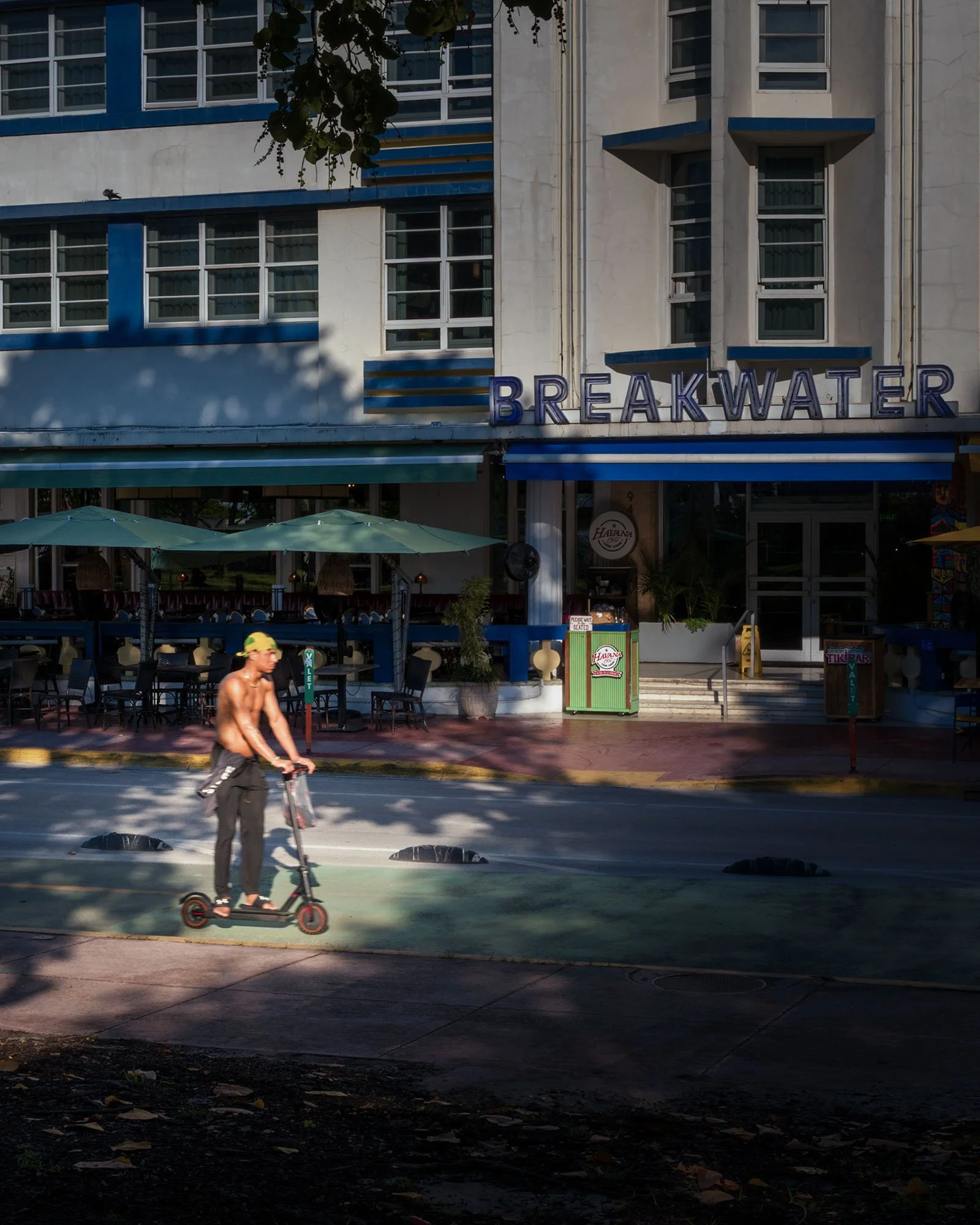
I set up at the Breakwater and waited for someone to move through a large pocket of light, knowing they would be lit from top to bottom. The man on the scooter rode right into it. The light on the pavement also leads the eye to the front door of the hotel.
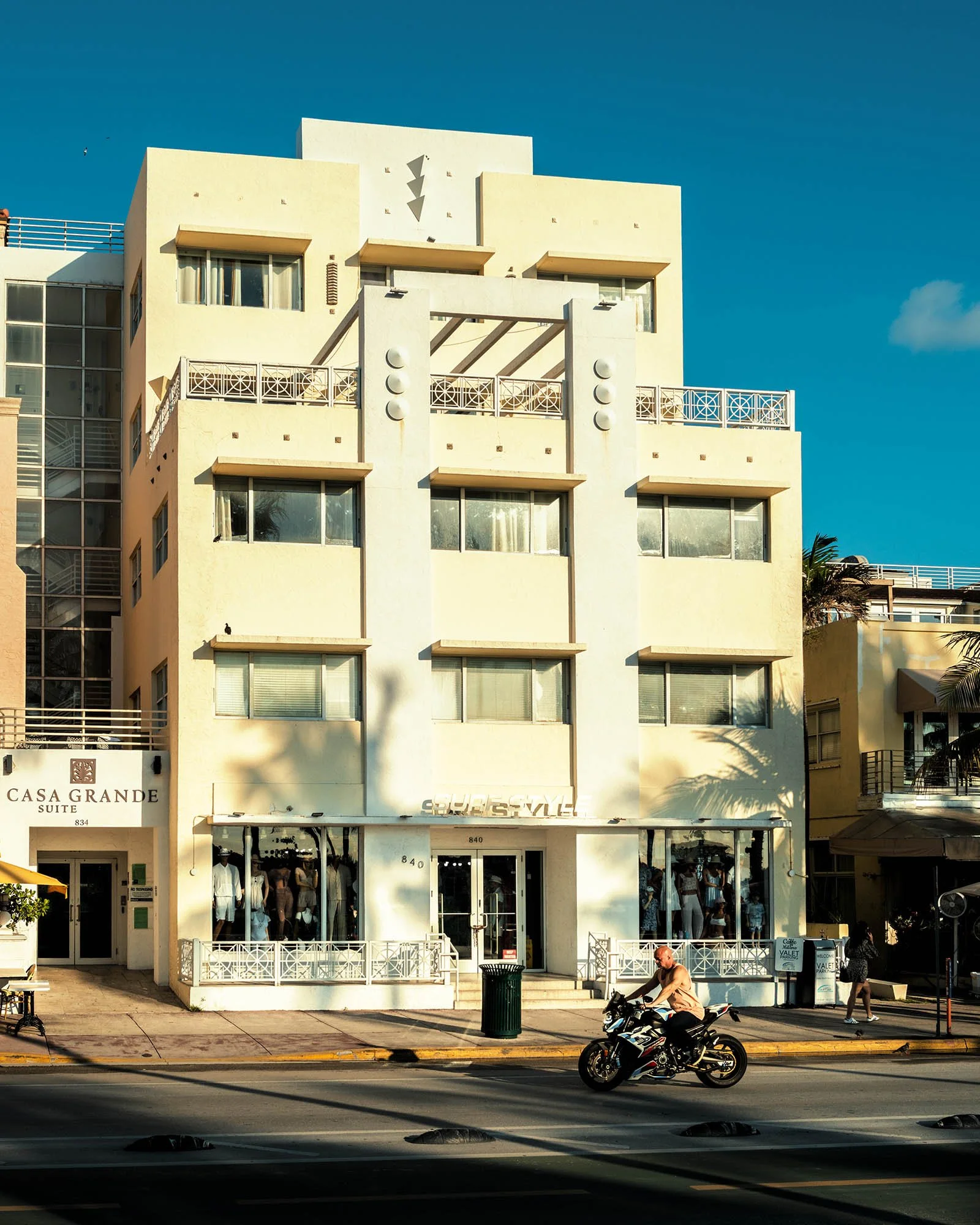
Same approach, a few blocks south at 840 Ocean Drive. The light runs from the bottom of the frame right up to the building, which told me anyone passing through it would be lit. The timing was in catching the motorcyclist before he rode into the shade ahead of him.
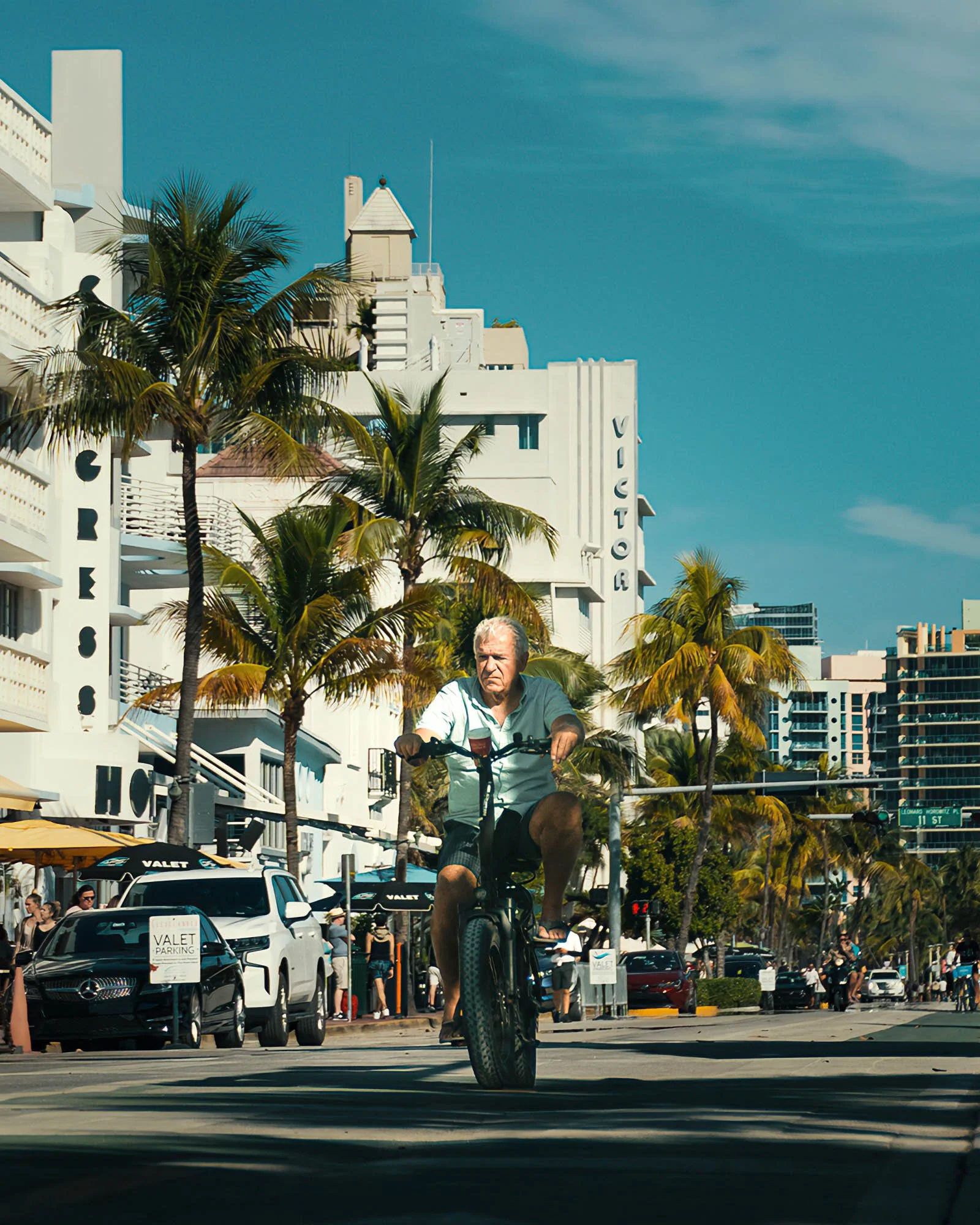
The road in the foreground was in shadow. Anywhere else in the frame, I knew his face would most likely be lit, so the only thing to avoid was catching him in that dark band. I wasn't concerned about lighting his whole body. Only his face mattered. The Congress and the Victor fill the background behind him.
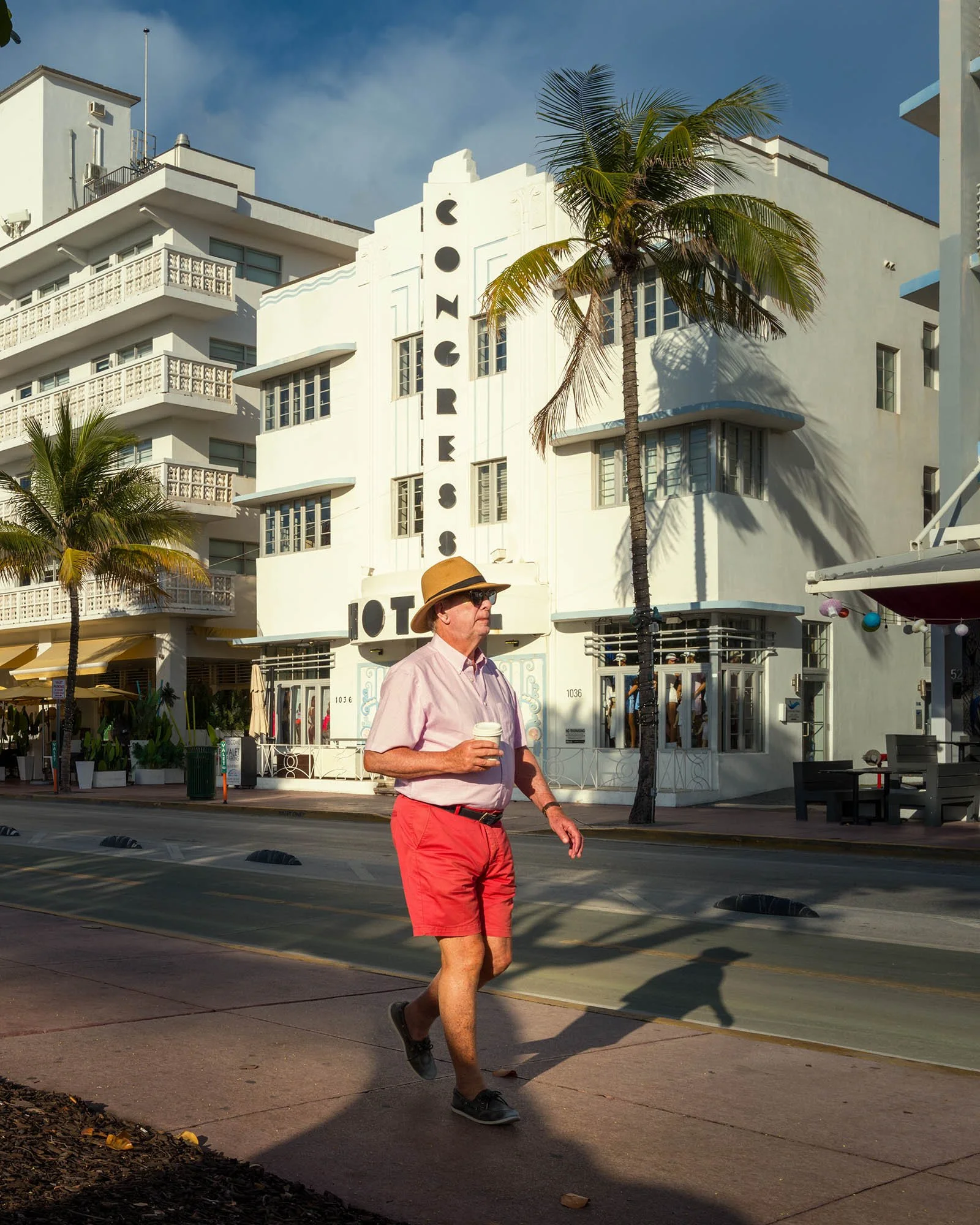
I've shot at the Congress many times, and knowing a location helps with this kind of shot. I used the tree's shadow on the sidewalk as my mark. It also works as a leading line to the subject, so I waited for someone to walk up to it. A second shadow on the pavement told me the light was coming in from the side, so it would light the subject and also throw his shadow across the bike lane.
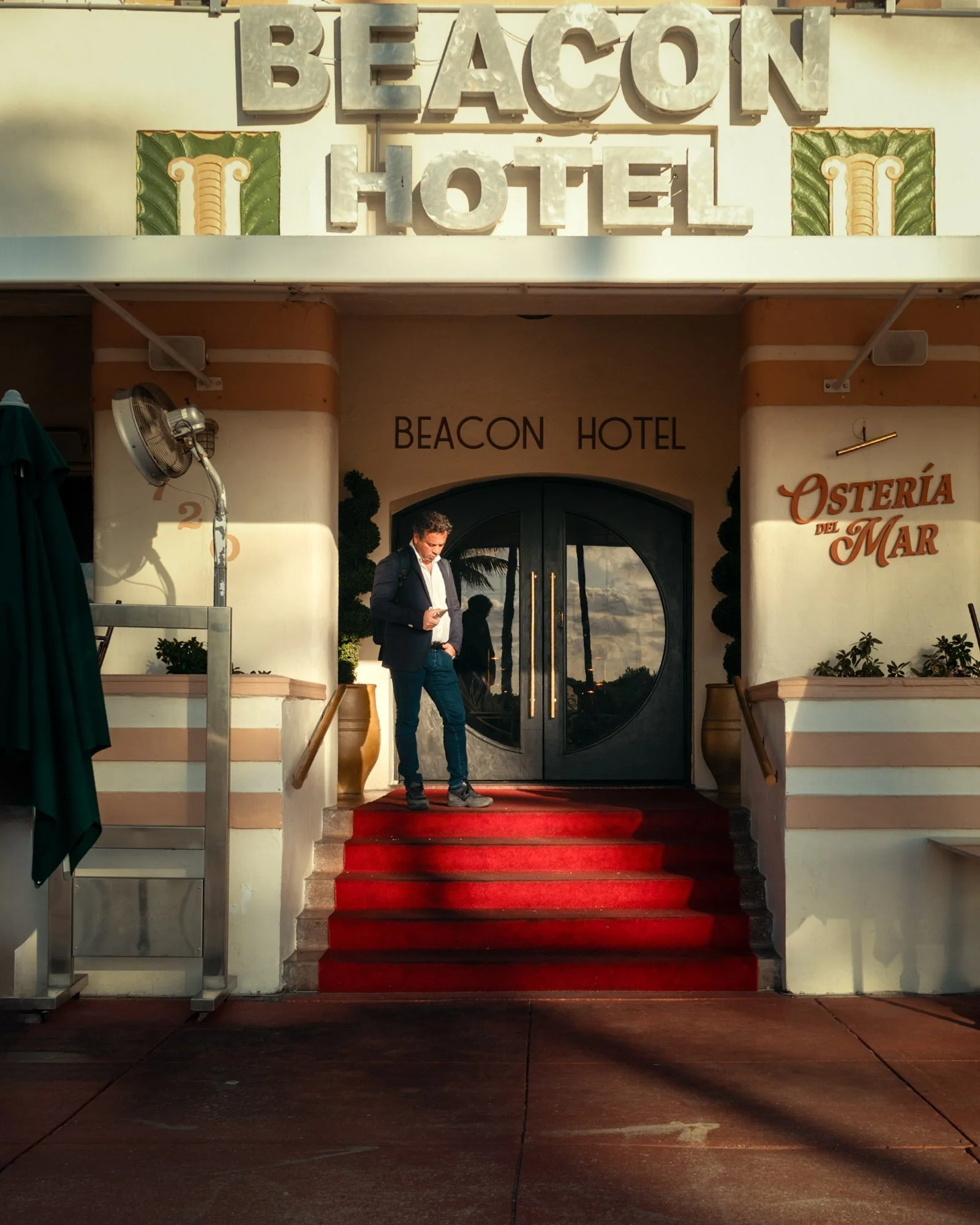
A really interesting scene at the Beacon. A large patch of light was moving up the red staircase, and I was waiting for someone to walk out the door into it. What happened was better. The man walked out, then stopped in the light to check his phone, so there was no step to time. His reflection in the glass door behind him is a bonus.
Light and Shade in the Same Frame
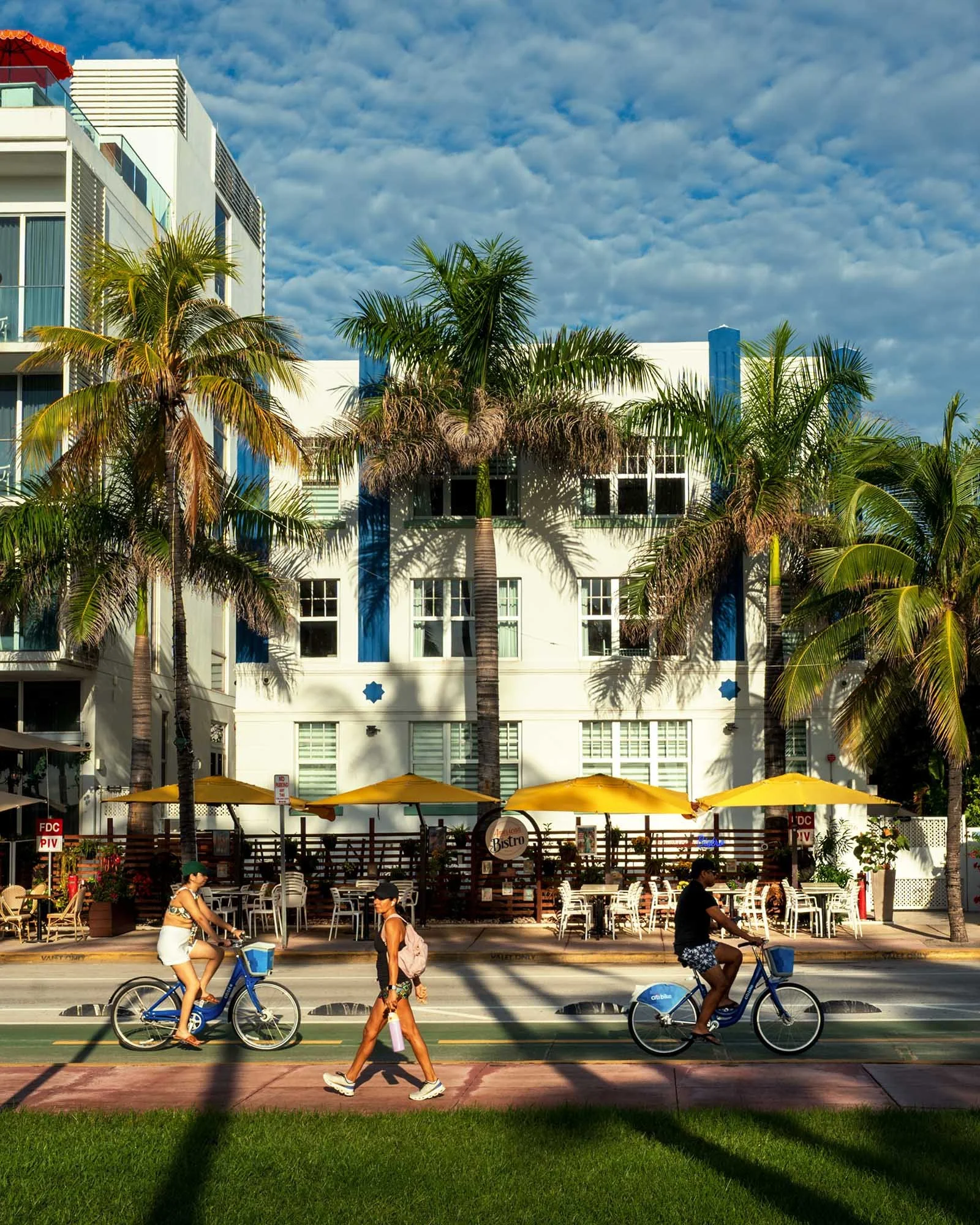
In front of the Heathcote, I knew there were two spots in the frame where a subject would be in the light. The woman walking in the middle had light on both sides of her, so her timing was easy. The cyclist on the left needed more care, and I had to shoot before she rode into the shadow. The cyclist on the right was in a large pocket of shade, so there was nothing to time with him. He was never going to be lit. Three people is a good number for a frame like this, and having one of them in the shade adds interest. It also makes the other two stand out more.
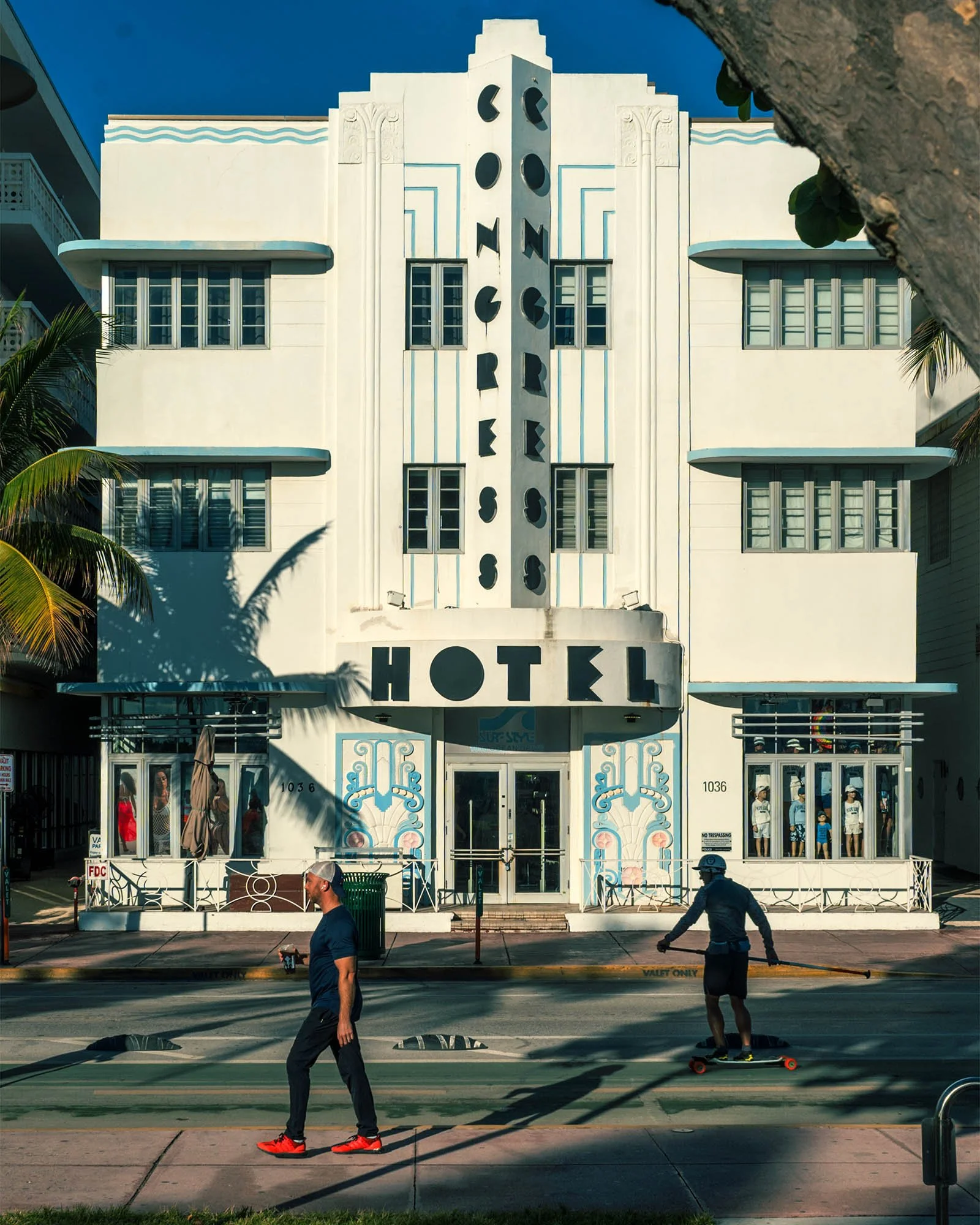
Back at the Congress, I used the tree shadows to put one subject in silhouette while a second one stood in the light. The man walking is in the light, and the paddle skateboarder behind him is in the tree's shadow. To make sure the skateboarder stayed a silhouette, I brought the exposure down two thirds of a stop.
Shooting a Silhouette
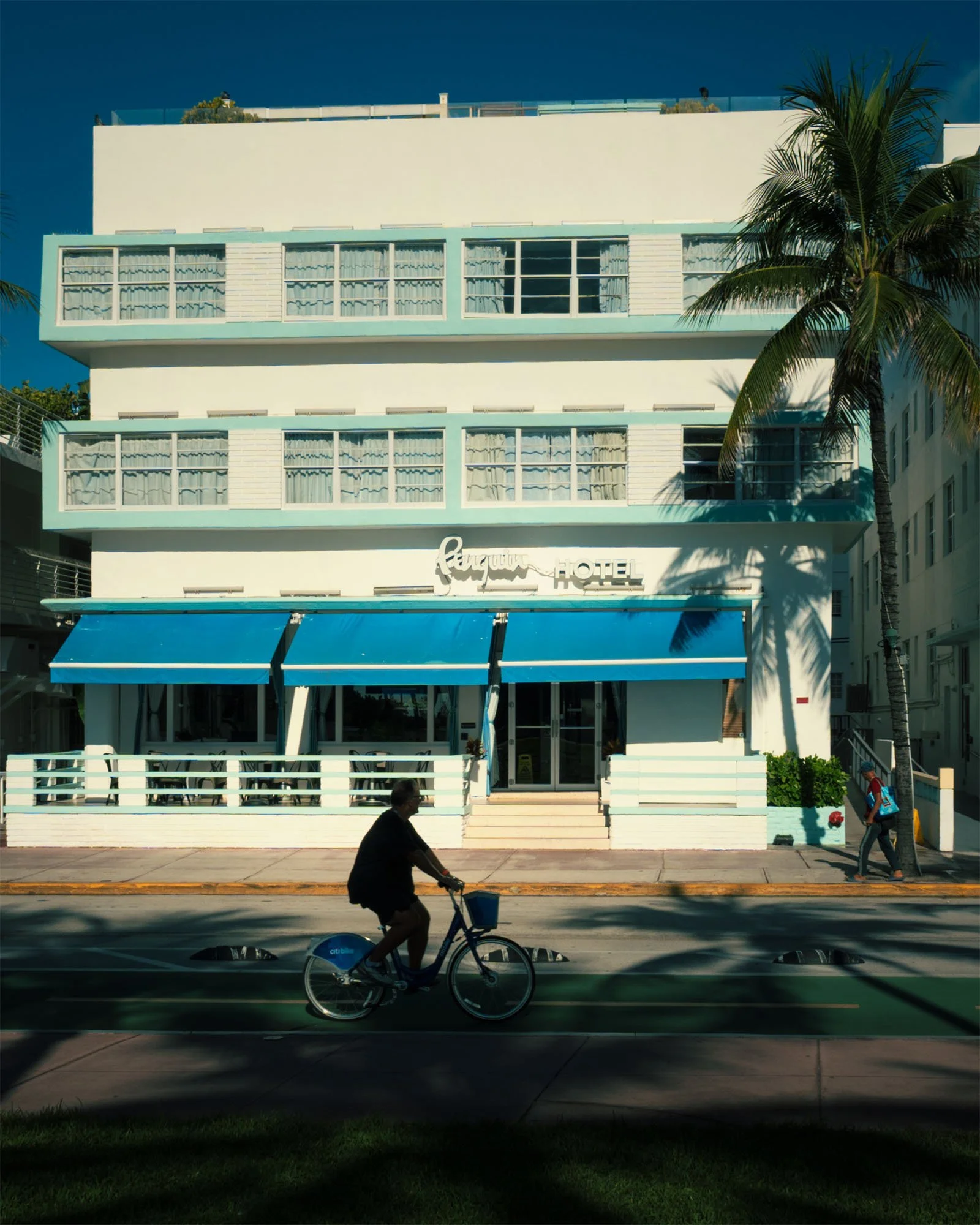
At the Penguin, the silhouette was the shot. I underexposed by two thirds of a stop and kept the camera at chest level, so the background behind the cyclist would be the sidewalk and the fence, not the road. The palm shadow fills the foreground in front of the bike, so I knew no light would reach him.
When the Light Misses
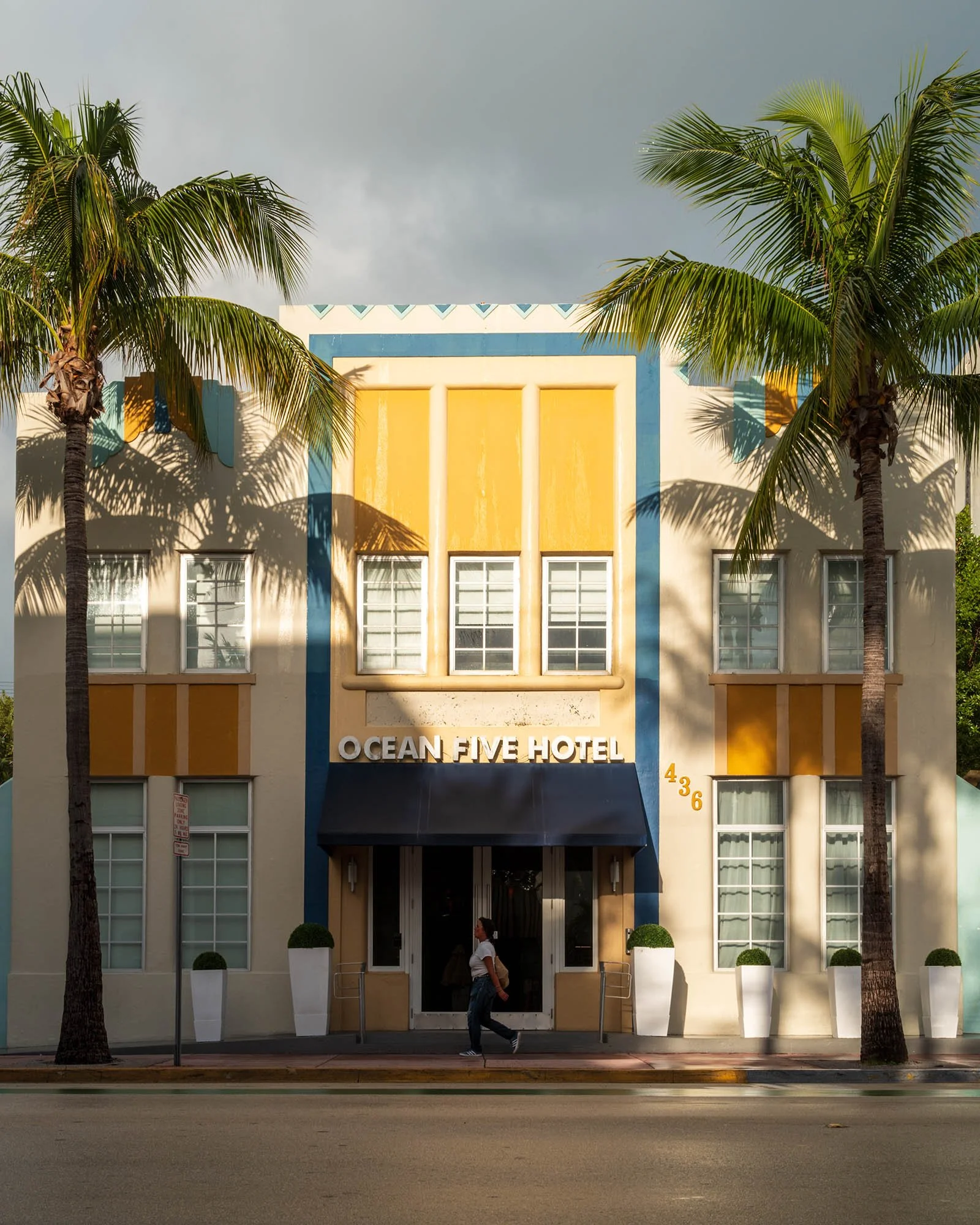
Not every frame works. At the Ocean Five, the woman is walking through the shade in front of the door. The light on the building is to the right of the door and above it, so it never reached her. I could add light to her in Photoshop, but I think the frame would be more interesting with no one in it.
My Settings
Aperture Priority and Auto ISO. I almost always shoot in Aperture Priority with Auto ISO, so the f-stop and exposure compensation are the only settings I'm changing.
f/5.6 to f/8. Every shot in this post was somewhere in that range.
A third of a stop under. Many of these were underexposed by a third of a stop, to protect the highlights and give me richer colors.
Two thirds under for a silhouette. For the Congress skateboarder and the Penguin cyclist, I brought the exposure down two thirds of a stop, so the subject stayed dark against the lit background.
For more on how I set exposure compensation in hard light, see Exposure Compensation in Hard Light
Next time you're on Ocean Drive, or anywhere with similar light, find the light on the pavement first. Then look at where the shade starts on either side of it, because that's how much time you have.